

Surgery and equipment
MetaSCOPE vs. the surgical microscope: when to choose a wearable exoscope
A practical comparison between MetaSCOPE and the conventional surgical microscope: posture, shared visualization, recording, streaming, and criteria for evaluating a demonstration.
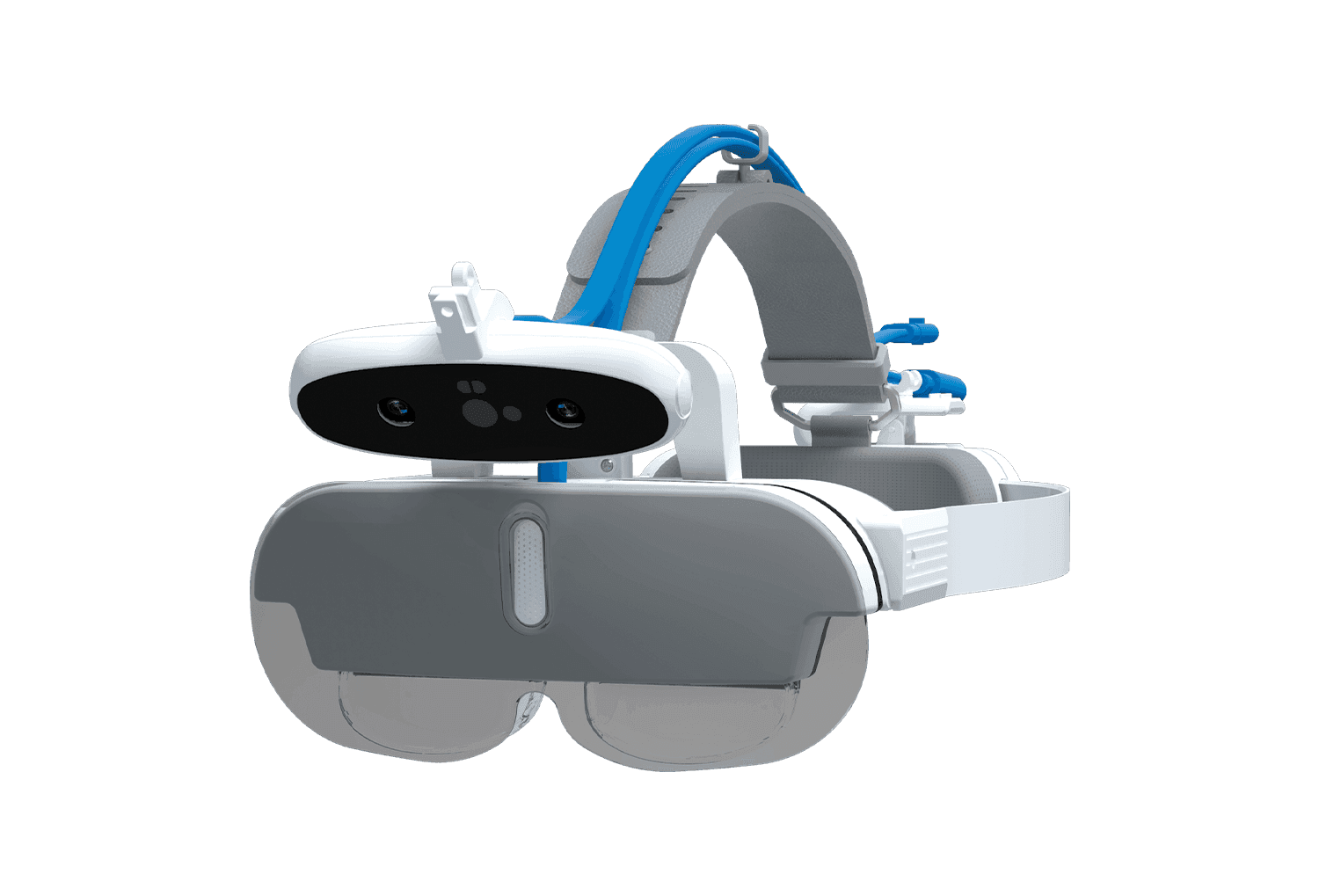
MetaSCOPE is a wearable digital exoscope designed to provide stereoscopic 3D visualization without working through fixed eyepieces. Compared with the conventional surgical microscope, it changes the way you look, share the image, and document the procedure, so it should be assessed according to specialty, space, and team workflow.
MetaSCOPE and the surgical microscope: two ways of visualizing the field
The conventional surgical microscope has long been a reference in procedures that require magnification, coaxial illumination, and visual stability. Its working logic is based on an optical head, eyepieces, and a professional posture conditioned by the equipment’s position and the surgical field.
MetaSCOPE proposes a different architecture. It is a wearable digital exoscope: image capture is performed by cameras, and visualization is projected in a stereoscopic 3D environment integrated into the system worn by the professional. Instead of bringing the eyes up to eyepieces, the user views an enlarged digital image while maintaining a different relationship with the field and the rest of the team.
Within the surgical equipment from Optimedic Surgery range, MetaSCOPE belongs to the advanced visualization segment. It does not automatically replace every microscope, nor does it fit every room simply because it is digital. Its value becomes clear when visual ergonomics, teaching, documentation, or team mobility carry significant weight in the decision.
The comparison, therefore, should not be reduced to “microscope yes or no.” It is more useful to analyze what each procedure requires, how the surgeon works, who needs to see the image, and what role recording or streaming plays in the center’s activity.
Main differences between MetaSCOPE and a conventional surgical microscope
The first difference is the observer’s position. With a microscope and eyepieces, the professional aligns with the equipment’s optical axis. With a wearable exoscope such as MetaSCOPE, visualization is less dependent on the physical eyepiece and is supported by a digital 3D experience.
The second difference is shared imaging. In many microscopes, the main visualization is concentrated on whoever uses the eyepieces, even if video outputs or accessories are available. With MetaSCOPE, digital visualization makes it easier for other team members to follow the image on connected devices, within the intended configuration.
The third difference is documentation. MetaSCOPE integrates functions oriented toward image capture, recording, and transmission, which can be useful for training, clinical sessions, or case review. This should not be confused with a clinical outcome: it is a change in the visualization and recording workflow.
| Criterion | MetaSCOPE | Conventional surgical microscope |
|---|---|---|
| Visualization type | Wearable digital stereoscopic 3D | Optical through eyepieces |
| Relationship with posture | Less dependent on fixed eyepieces | Conditioned by the head and eyepieces |
| Shared image | Streaming possible to compatible devices | Depends on video outputs or accessories |
| Recording | Integrated into the digital workflow | Variable depending on configuration |
| Learning curve | Requires getting used to wearable visualization | Familiar to users accustomed to microscopes |
| Fit in the room | Depends on the procedure and team workflow | Depends on the space and equipment location |
This table is not intended to establish a hierarchy. Both approaches may be appropriate in different contexts. The decision usually depends on the combination of surgical technique, visualization needs, team habits, and the working environment.
Working posture: when it matters to change the relationship with the eyepieces
Posture is one of the criteria that most influences the adoption of visualization systems. In long or repetitive procedures, the need to keep the head aligned with eyepieces can affect the neck, shoulders, and back. This does not mean that a microscope is problematic in itself, but rather that it requires precise setup and constant postural discipline.
MetaSCOPE allows for a different way of working because the image is viewed through a wearable system. The professional does not rely in the same way on leaning into fixed eyepieces. This can be relevant in procedures where the field changes, access is complex, or the team needs to alternate positions.
Even so, ergonomics must be assessed in real conditions. Table height, chair or stool type, patient position, instrument handling, and procedure duration all influence the experience as much as the visualization system. That is why a demonstration should reproduce, as far as possible, the center’s usual environment.
The practical analysis should include specific questions: does the professional maintain a stable posture, can they comfortably preserve anatomical landmarks, does changing magnification alter the surgical gesture, can the assistant team position themselves without interference? These answers are more useful than a generic assessment of ergonomics.
Shared visualization, teaching, and team coordination
Another distinguishing feature of MetaSCOPE is shared visualization. The system enables work with stereoscopic 3D visualization and supports real-time streaming to up to 3 devices. This capability can be valuable when several people need to follow the procedure with a common visual reference.
In teaching, shared imaging helps observers, residents, or trainees see the same field as the operator without depending on their physical position around the microscope. In team sessions, it can also facilitate communication about structures, planes, or steps in the procedure.
The conventional surgical microscope can be integrated with cameras and monitors, but the level of shared experience depends on the available configuration. In centers where training or documentation carries significant weight, it is worth comparing not only image quality, but also how easily that image reaches other people.
To explore this aspect further, you can read the article on shared visualization in surgery with an exoscope, which develops the role of the common image in surgical teamwork.
Integrated recording and real-time streaming
Integrated recording is an adoption criterion when the center documents procedures, reviews cases, or produces internal teaching material. In a digital system such as MetaSCOPE, image capture is a natural part of the visualization workflow, which can simplify certain processes compared with more fragmented setups.
Real-time streaming should also be assessed from a practical standpoint. The possibility of transmitting the image to up to 3 devices may be useful for observation, coordination, or training, provided that applicable privacy, consent, and data processing regulations are respected. The technology facilitates the flow, but the center must define how it is used.
MetaSCOPE works with MS-1 and MS-2 cameras and offers a zoom range of 2x to 9x. These data are important because they place the system in scenarios where variable magnification and digital visualization are required. The choice of magnification level should be related to the type of procedure, the working field, and the professional’s preferences.
By comparison, a surgical microscope can offer a highly established optical experience, with magnifications and configurations depending on the model. The question is not only which system magnifies more, but which integrates better into the center’s visual, documentation, and training workflow.
For a comparison more focused on visualization architecture, the post on digital exoscope vs. surgical microscope provides complementary context.
Situations where a wearable exoscope may be a better fit
MetaSCOPE may be especially appealing when the center is looking for a solution that combines magnification, digital visualization, and image-sharing capability without relying exclusively on eyepieces. This is not a universal rule, but a usage profile that must be confirmed with a real trial.
It may fit procedures where the professional values maintaining a working posture less tied to a microscope head. It can also suit environments where teaching is part of everyday practice and several observers need to follow the field clearly. Stereoscopic 3D visualization may provide a more immersive experience than a flat monitor image, although user adaptation is a key factor.
It may also make sense when the center wants to integrate recording or streaming more directly into its workflow. In these cases, the question should not be limited to the surgical act, but should also include what happens before and after: preparation, explanation to the team, case review, and archiving of the material.
Compatibility with prescription glasses is another practical aspect. For professionals who need vision correction, this point may affect comfort of use and the evaluation during a demonstration. As with any wearable system, it is advisable to test it with the user’s real configuration.
When a microscope with eyepieces may still make sense
Comparing MetaSCOPE with a surgical microscope does not mean ruling out the conventional microscope. Some teams prefer direct optical visualization because it is familiar, because of internal protocol, or because of the type of intervention they perform. The accumulated experience with eyepieces also has operational value.
A microscope may fit well when the team already has a highly optimized workflow, when documentation is not a priority, or when the room is configured around that system. It may also be the natural option if all key users work comfortably and there is no clear need for shared visualization or streaming.
The decision should take into account the cost of change in terms of training, adaptation, and space reorganization. A wearable system introduces new possibilities, but it also requires the team to become accustomed to another way of looking and coordinating.
That is why the most prudent choice is to compare both approaches in representative procedures, with the professionals who will actually use them. The MetaSCOPE wearable digital exoscope product page allows you to review the device before requesting a more specific evaluation.
Practical criteria for evaluating a MetaSCOPE demonstration
A demonstration is more valuable when it is prepared with clear criteria. It is not just a matter of seeing the device in operation, but of checking whether it meets the center’s real needs.
Type of procedure
It is advisable to select representative procedures, not exceptional cases. The team should assess the 2x to 9x zoom range, depth perception, image stability, and the ease of maintaining references during routine steps.
Teaching and observation
If the center trains other professionals, it is useful to test how the image is shared. Streaming to up to 3 devices should be evaluated with the actual flow of observers, screens, or devices planned, avoiding basing the decision on a demonstration that is too far removed from everyday use.
Workspace
The room conditions any visualization system. You need to observe how the professional moves, where the assistant team is positioned, what happens with cables or connected devices, and whether the wearable solution facilitates access to the field without creating new interference.
Team workflow
Adoption depends on all participants. The surgeon, assistant, scrub nurse, and trainees may have different visual needs. A useful trial should collect these perspectives and review how communication changes during the procedure.
Users with corrective lenses
Compatibility with prescription glasses should be checked with real users. Confirming the technical specification is not enough: it is advisable to test fit, stability, and comfort for long enough to assess the intended use.
Frequently asked questions
What is MetaSCOPE?
MetaSCOPE is a wearable digital exoscope for surgical visualization. It offers stereoscopic 3D imaging, works with MS-1 and MS-2 cameras, provides 2x to 9x zoom, and allows real-time streaming to up to 3 devices, depending on the usage configuration.
Does MetaSCOPE replace the surgical microscope?
MetaSCOPE should not be considered a universal replacement for the surgical microscope. It may be a better fit when wearable visualization, shared imaging, integrated recording, or streaming is desired. The microscope with eyepieces may still be suitable for teams accustomed to that optical workflow.
When is it worth evaluating MetaSCOPE in a demonstration?
It is worth evaluating MetaSCOPE when the center wants to review working posture, teaching, documentation, or the team’s visual coordination. The demonstration should reproduce routine procedures, with the real users and with attention to the available space, the surgical workflow, and comfort of use.
Is MetaSCOPE compatible with prescription glasses?
Yes, MetaSCOPE is compatible with prescription glasses. Even so, each professional should test the fit during a demonstration, especially if they plan to use the system in lengthy procedures or if they need specific visual correction in daily practice.
Next step to make an informed decision
The choice between MetaSCOPE and a conventional surgical microscope should be based on real use, not on an abstract preference for optical or digital systems. Procedure, teaching, space, and team workflow are the criteria that best guide the decision.
To review the fit for a specific center, you can request information about MetaSCOPE and arrange a demonstration focused on the team’s procedures, users, and visualization needs.