Shared visualization in surgery: the role of the exoscope
The evolution of surgery does not depend solely on new techniques, but also on how teams visualize the operative field. We examine the role of digital exoscopes in collaboration, ergonomics, and surgical training.
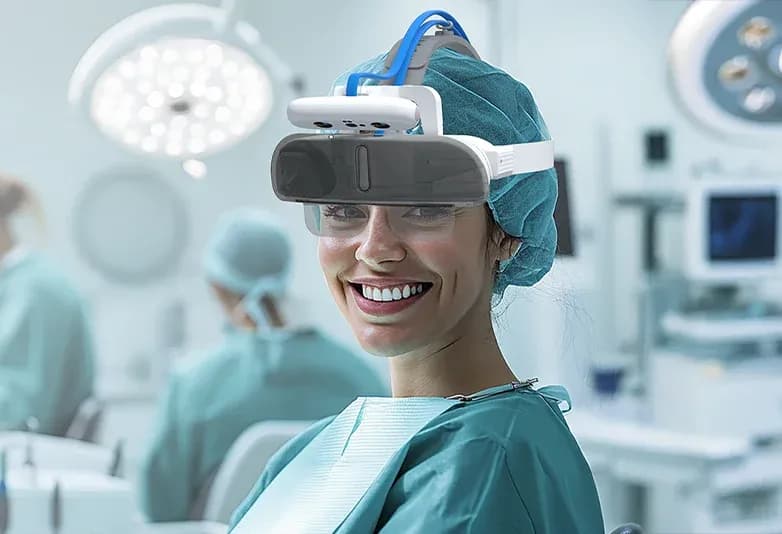
The integration of the digital exoscope is changing the way surgical teams work in the operating room. Beyond providing a magnified image, these technologies make it possible to share the same view among all professionals involved in the procedure, supporting a more collaborative, ergonomic, and training-oriented approach to surgery.
The operating room is also undergoing digital transformation
In recent years, surgical innovation has been shaped by the arrival of new navigation, robotics, and medical imaging technologies.
However, there is a less visible change that is also transforming daily clinical practice: the way the team views the surgical field.
For decades, magnification has depended mainly on surgical loupes or microscopes. Although these solutions remain essential in many specialties, they share a common feature: visual information is largely limited to the professional performing the procedure.
Today, the trend is moving toward systems capable of turning visualization into a shared experience.
When the whole team sees the same thing
Communication in the operating room depends largely on the ability to share information.
When anesthesiologists, scrub nurses, assistants, or residents can observe the same surgical field as the lead surgeon, it becomes easier to coordinate certain stages of the procedure and anticipate the team's needs.
This shared visualization also offers advantages in training new specialists, as it allows them to follow the procedure from the same perspective as the primary operator.
More than simply displaying a magnified image, the goal is to enable a shared understanding of the procedure.
From the microscope to the digital exoscope
Technological progress has led to a new generation of visualization systems: digital exoscopes.
Unlike a conventional microscope, an exoscope uses high-resolution digital cameras to capture the operative field and project it onto a visualization system.
This approach opens up new possibilities for collaborative work, procedure documentation, and surgeon ergonomics.
It is not just about replacing one piece of equipment with another, but about transforming the way the image is used during surgery.
MetaSCOPE: a new way to visualize the surgical field
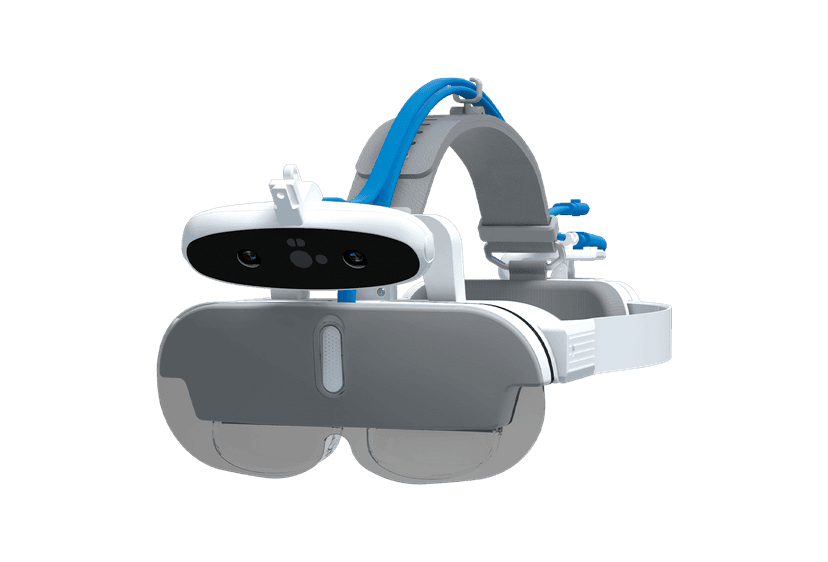
As part of this technological evolution, MetaSCOPE is a wearable digital exoscope developed by MediThinQ.
Its Eyes Up Display (EUD) technology allows the surgeon to view the stereoscopic image directly in front of their eyes, avoiding the need to work through a traditional eyepiece.
In addition, the system includes:
- 3D stereoscopic visualization.
- High-resolution cameras of up to 108 MP depending on the model.
- Digital magnification.
- Procedure recording.
- Wireless streaming to share the image with other devices.
These features make it possible to integrate visualization into an increasingly connected and collaborative surgical environment.
You can find more information about MetaSCOPE at:
Beyond the image: collaboration, teaching, and documentation
One of the most significant changes brought by digital exoscopes is that the image is no longer exclusive to the surgeon.
Thanks to features such as recording and real-time streaming, MetaSCOPE supports a range of applications:
- Resident training.
- Clinical sessions.
- Discussion of complex cases.
- Procedure documentation.
- Collaboration between specialists.
These possibilities reflect a reality that is becoming increasingly common in hospitals and specialized centers: surgery is also part of continuous learning.
A technology designed with the professional in mind
The digital transformation of the operating room is not only about improving image quality.
It also aims to optimize the professional's experience.
By projecting the image through the Eyes Up Display system, MetaSCOPE promotes a more natural working posture, reducing the need to maintain strained positions in front of an eyepiece during prolonged procedures.
This approach reflects a growing trend in the design of surgical equipment: developing technologies that improve both precision and ergonomics.
What does a digital exoscope bring to a clinic?
For a hospital or specialized clinic, incorporating a digital exoscope means much more than adding a new visualization device.
| Value for the center | Practical application |
|---|---|
| Shared visualization | Improves collaboration within the surgical team |
| Training | Facilitates learning for residents and specialists |
| Documentation | Recording of procedures for clinical review |
| Ergonomics | Supports a more comfortable working posture |
| Digitalization | Integrates new tools into the surgical workflow |
More than a technological evolution, it represents a new way of understanding surgery.
Frequently asked questions
What is a digital exoscope?
It is a visualization system that uses high-resolution cameras to display the surgical field through a magnified image, replacing direct observation through a conventional eyepiece.
What is the difference between a microscope and an exoscope?
Although both allow magnification of the operative field, the exoscope offers new possibilities for shared visualization, recording, streaming, and ergonomics thanks to its digital technology.
What does MetaSCOPE bring to clinical practice?
MetaSCOPE combines 3D visualization, Eyes Up Display technology, recording, and wireless transmission to support a more collaborative form of surgery adapted to today's digital environments.
In which specialties can it be used?
It can be used in different specialties that require precise visualization of the operative field, such as plastic surgery, neurosurgery, ENT, maxillofacial surgery, or microsurgery, among others.
The future of surgery also depends on sharing the view
The evolution of the operating room does not depend solely on new techniques or new instruments. It is also related to the way professionals observe, share, and analyze information during a procedure. MetaSCOPE represents this new generation of digital exoscopes, combining 3D visualization, ergonomics, and connectivity to meet the needs of increasingly collaborative surgery.
If you would like to learn about the capabilities of MetaSCOPE or request a demonstration for your healthcare center, visit https://optimedic.es/en/surgery/products/metascope or contact the Optimedic team at https://optimedic.es/en/contact?product=metascope.