Surgery and equipment
Digital Exoscope vs Surgical Microscope: How Visualization Changes in the Operating Room
The digital exoscope offers an alternative to the classic surgical microscope with 4K recording, improved ergonomics and shared visualization. We compare technical and clinical differences.
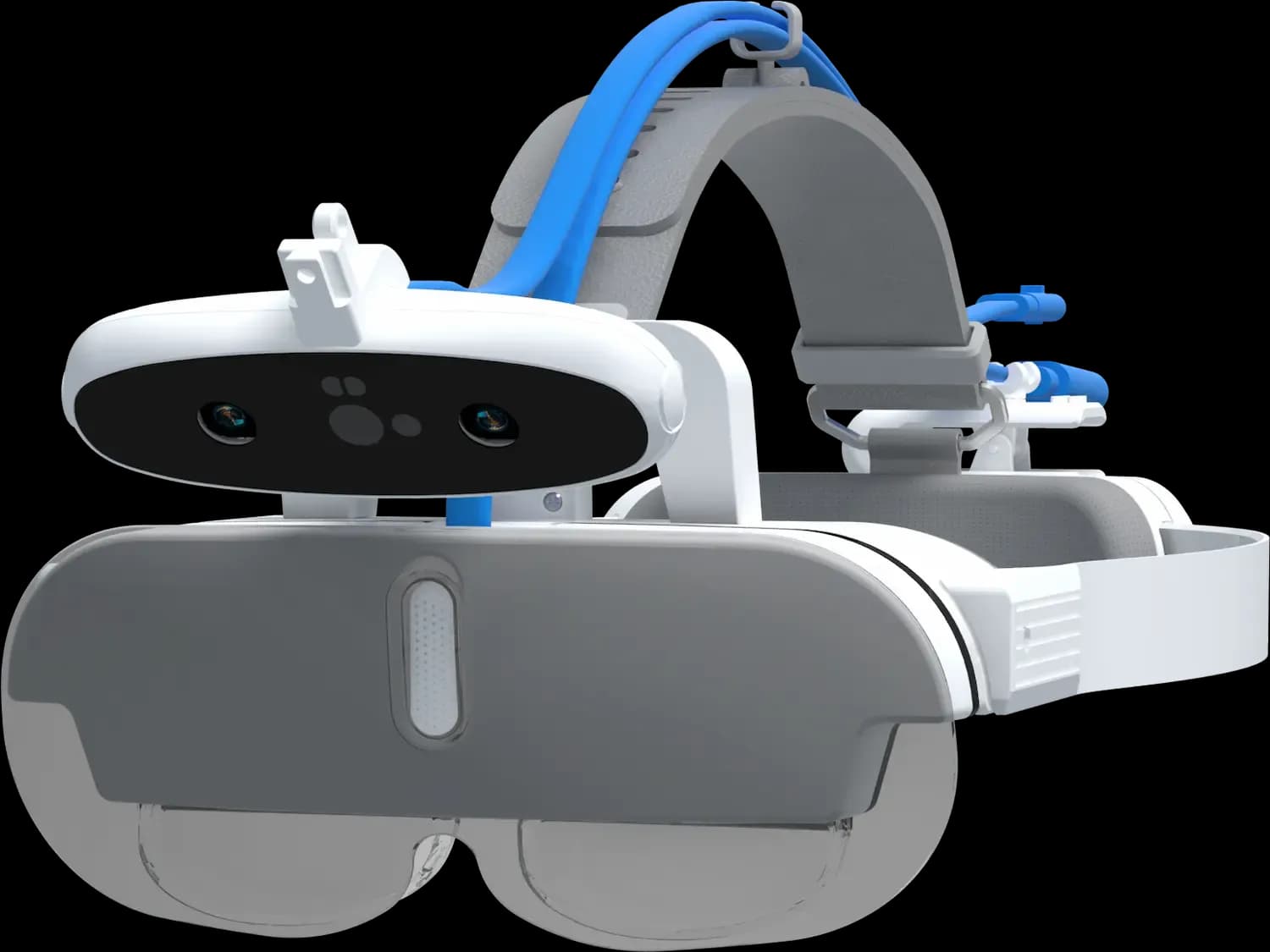
The digital exoscope replaces the optical eyepieces of the classic surgical microscope with a high-resolution sensor and a 4K monitor. Compared to the microscope, it improves the surgeon's cervical ergonomics, allows recording and live streaming, and lets the whole operating-room team share the magnified field view without loss of optical quality.
What a classic surgical microscope is
The surgical microscope is the consolidated standard for high-magnification procedures: neurosurgery, vascular microsurgery, ENT, spine and fine plastic surgery. It combines precision optics, a coaxial illumination system and binocular eyepieces through which the surgeon directly observes the magnified field.
It has been operating-room equipment for decades and its optical performance is the clinical benchmark against which any alternative is measured. However, it has two structural limitations that modern practice is beginning to question: it forces the surgeon to adopt a fixed cervical posture throughout the procedure and it restricts the view of the magnified field to whoever has their head pressed against the eyepieces.
What a digital exoscope is
An exoscope is a visualization system consisting of a high-resolution optical sensor mounted on an articulated arm and a large monitor displaying the image in real time. The surgeon does not look through eyepieces: they watch the monitor while working.
This architecture changes the operating-room dynamic profoundly:
- The surgeon's head remains in a neutral position, facing the monitor in front of them, not tilted over the field
- The whole team —assistants, scrub nurse, residents, anesthesia— sees the same magnified image simultaneously
- The video signal can be recorded, transmitted live or archived for later review
Systems such as MetaSCOPE implement this architecture with a 4K sensor, a motorized articulated arm and zoom/focus control via keyboard or touch panel.
Technical comparison: exoscope vs microscope
| Parameter | Classic surgical microscope | Digital exoscope |
|---|---|---|
| Optical path | Direct through eyepieces | Sensor + monitor |
| Surgeon cervical posture | Fixed, tilted toward eyepieces | Neutral, looking at monitor |
| Team visualization | Primary surgeon only | Entire OR simultaneously |
| Native magnified field recording | Requires accessory camera | Built-in, 4K |
| Live streaming | Not native | Yes, without quality loss |
| Depth of field | High (optical benchmark) | Good, sensor-dependent |
| Learning curve | Standard, well known | Eye-hand coordination adaptation |
| Equipment cost | High | Comparable or lower depending on model |
| Maintenance | Mechanical-optical, periodic | Electronic, firmware updates |
Exoscope advantages: ergonomics, recording and training
Three areas where the digital exoscope offers an objective difference versus the classic microscope:
Cervical ergonomics. The posture maintained for hours in front of eyepieces is the documented cause of chronic cervicalgia in microsurgical specialties. The exoscope allows working with the head in neutral position, reducing sustained load on the cervical spine.
Recording and clinical archive. The native 4K signal documents the complete procedure without accessory equipment. Useful for complication records, postoperative review, medico-legal defense and institutional archiving.
Surgical training. Residents see the same image as the primary surgeon, not a downgraded reproduction through an accessory camera. In teaching centers this factor changes the dynamics of instruction: what is being seen is discussed simultaneously, not after the fact.
Current limitations of the exoscope
The exoscope does not replace the microscope in all contexts. Three limitations to consider:
Disassociated eye-hand coordination. The surgeon watches the monitor while their hands work in another spatial plane. The learning curve in surgeons trained for years with eyepieces can be real, especially in sub-millimeter precision gestures.
Video signal latency. Minimal in modern systems but not zero. In vascular microsurgery with very fine anastomoses, some surgeons perceive a preference for direct optical vision.
Resolution versus high-end optical microscope. Current 4K exoscopes sit in a range comparable to optimal microscopes, but premium optical microscopes in specific configurations still set the benchmark in absolute terms.
Clinical cases where the exoscope adds most value
Not all contexts benefit equally. The exoscope offers a clear difference in:
- Cranial and spinal neurosurgery: long sessions with awkward viewing angles
- Spine surgery: cervical posture is historically the worst in these procedures
- Advanced ENT: middle-ear and skull-base surgery where shared visualization is useful
- Teaching centers with high training volume: the learning factor becomes central
- Operating rooms with telementoring or remote consultation: field transmission to remote experts is native
In pure vascular microsurgery for veteran surgeons trained on the microscope, the decision is more nuanced and usually resolves around willingness to invest time in visual coordination transition.
Frequently asked questions
Does an exoscope fully replace the surgical microscope?
In most procedures yes, especially neurosurgery, spine, ENT and reconstructive plastic surgery. In very fine vascular microsurgery some surgeons still prefer direct vision through eyepieces. Adoption is usually progressive: the exoscope is added as a complement and, over time, takes the primary role.
Is the learning curve long?
It depends on the profile. Younger surgeons used to screens (video-laparoscopy, endoscopy) adapt within a few procedures. Veteran surgeons trained exclusively with optical microscope may require between 10 and 20 procedures to feel fully comfortable with eye-hand disassociation.
What resolution does the exoscope monitor need?
4K is the current standard in professional systems. Lower resolutions penalize anatomical detail perception and reduce the difference compared to a mid-range accessory camera. Monitor size also matters: 55 inches or larger improves depth-of-field perception.
Can it work in stereoscopic 3D?
Advanced systems offer 3D visualization with polarized or passive glasses. For surgeons who value depth perception as a critical factor —microsurgery— it is a relevant feature. For more superficial procedures, 2D 4K is usually sufficient.
Can the surgery be recorded and shared live?
Yes, it is one of the structural advantages of the digital exoscope. The signal is natively digital, without loss from external capture. It allows recording to internal disk, streaming to an adjacent room or secure transmission over institutional network for telementoring.
Adopting a digital exoscope in the operating room
The transition from surgical microscope to digital exoscope is one of the most relevant structural changes in operating-room equipment of the last decade. It provides objectively improved ergonomics, integrates native recording and multiplies the training value of every procedure.
It is not a universal replacement: there are contexts in which the classic optical microscope remains the benchmark. The decision is taken by evaluating the procedure mix of the service, the primary surgeon's profile, training volume and existing operating-room infrastructure.
To evaluate the implementation of MetaSCOPE in your service, request a personalized technical assessment.