Surgical Loupes · Clinical applications
Which Magnification to Choose for Surgical Loupes: 2.5x, 3.5x or 4.5x
Choosing the right magnification in surgical loupes affects field of view, depth of focus and posture. We compare 2.5x, 3.5x and 4.5x by specialty and procedure.
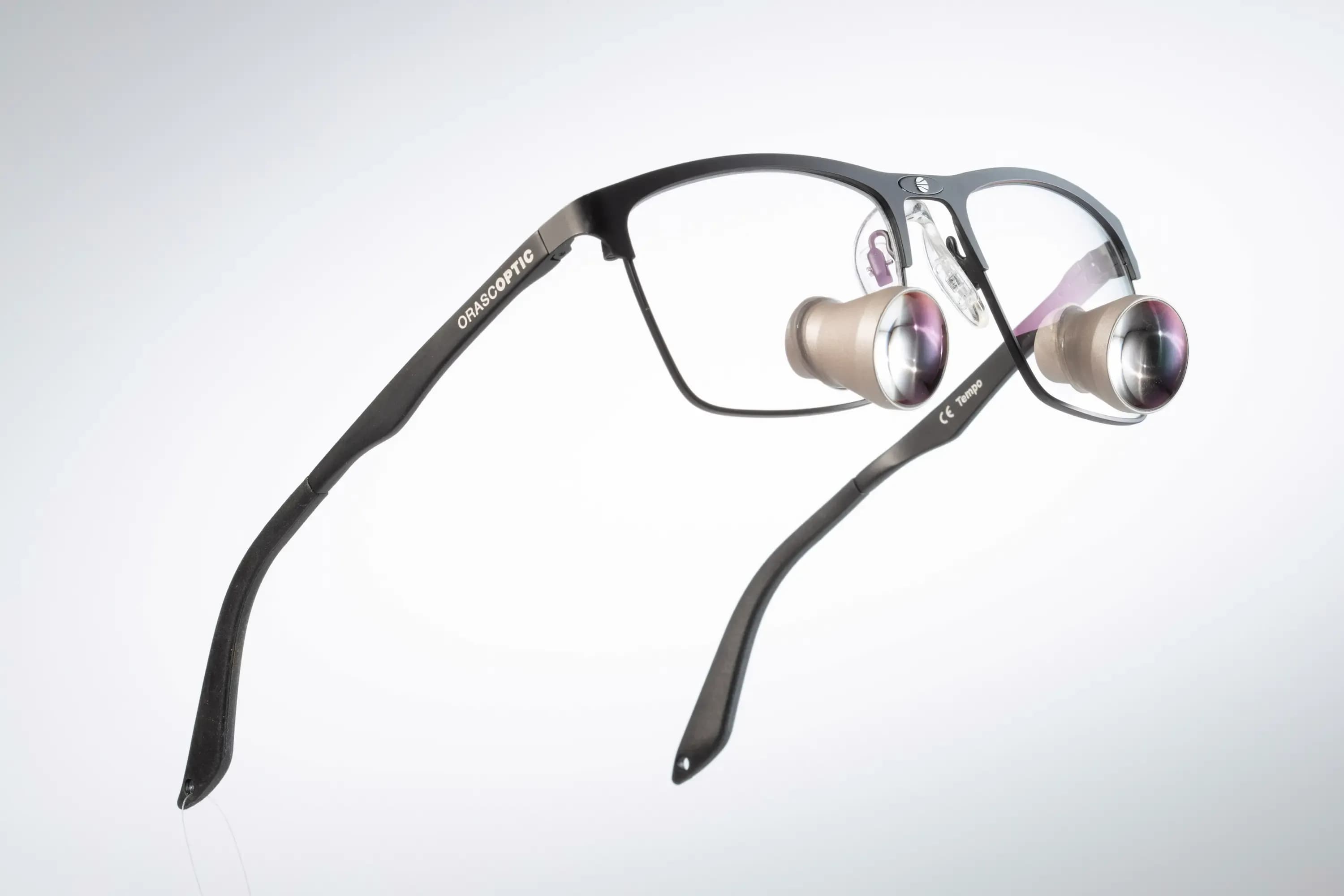
Magnification in surgical loupes determines the balance between detail, field of view and depth of focus. 2.5x offers general vision and a wide field; 3.5x is the versatile standard; 4.5x is reserved for procedures of maximum technical demand. Choosing well depends on specialty, working distance and procedure duration.
What magnification means in a surgical loupe
Magnification indicates how many times the apparent size of the observed object is increased compared to natural vision. In surgical loupes, higher magnification is not automatically better: each increment reduces the field of view and depth of focus, and demands a more precise working distance.
Before choosing magnification, three optical parameters should be considered:
- Field of view: how much surface is visible at once. The higher the magnification, the smaller the field
- Depth of focus: range of distance in which the image remains sharp. Decreases with magnification
- Working distance: separation between the surgeon's eyes and the operative field. Must be custom-fitted in TTL systems
The relationship between these three parameters determines the real usability of magnification in each specialty.
2.5x: the entry magnification for general vision
2.5x is the most widespread magnification in surgical loupes. It offers the largest field of view in its category and the broadest depth of focus, which facilitates procedures in which the surgeon alternates between global vision and specific zones.
Typical specialties and use cases:
- General surgery and broad procedures
- Introductory-level microsurgery
- Professionals adopting loupes for the first time
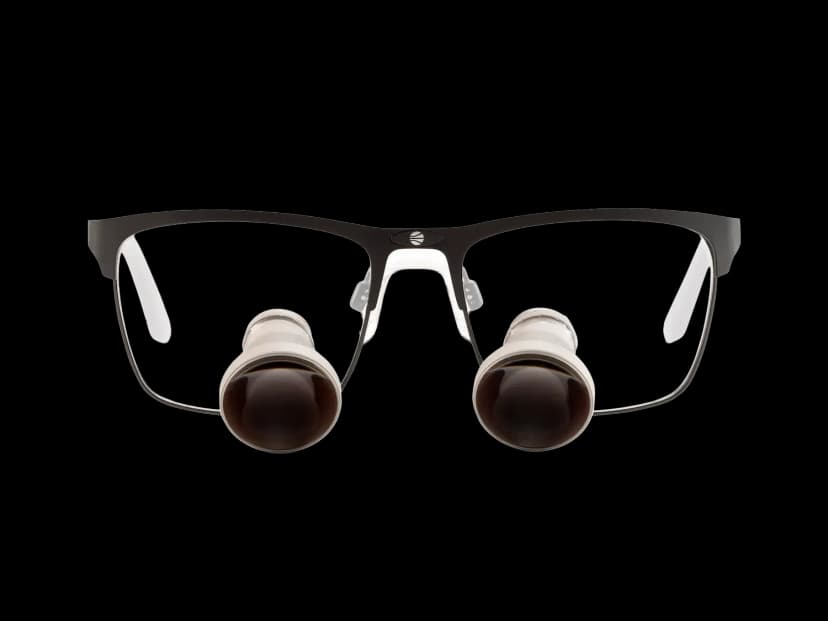
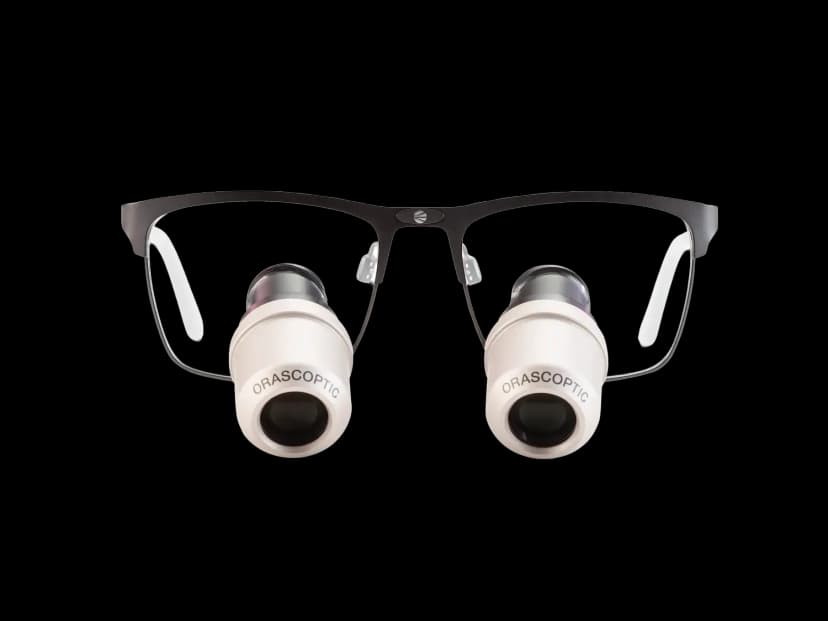
A representative model in this range: HDL™ 2.5 Macro, a fixed 2.5x optic with an elongated bevel and pronounced declination angle, designed to reduce cervical fatigue during long sessions.
3.5x: the versatile standard
3.5x is the most versatile magnification and the one most surgeons choose once they have experience with loupes. It is considered the balance point between detail and field of view: enough magnification to identify fine anatomical structures without compromising peripheral vision.
Typical specialties and use cases:
- Plastic and reconstructive surgery
- Maxillofacial surgery
- Orthopedics and traumatology in articular procedures
- Ophthalmic surgery of medium scope
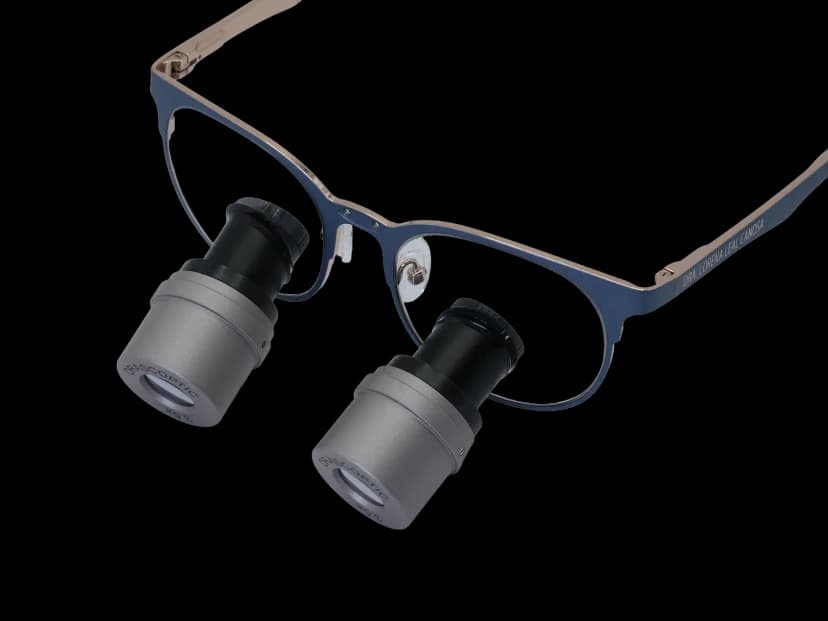
It is also the most common magnification in ergonomic loupes with deflection prisms, designed to maintain the surgeon's posture without giving up an intermediate magnification level.
4.5x: technical precision for demanding procedures
From 4.5x, the field of view narrows considerably, but detail resolution increases significantly. This magnification is reserved for microsurgery and procedures in which the difference between adjacent structures is measured in tenths of a millimeter.
Typical specialties and use cases:
- Vascular and nerve microsurgery
- Fine reconstructive surgery
- Ophthalmic procedures where central resolution prevails over peripheral vision
- Maxillofacial in fine sutures
At 4.5x, working distance and declination angle must be perfectly calibrated; a personal measurement error translates immediately into loss of sharpness and postural compensation.
Quick comparison: 2.5x, 3.5x and 4.5x
| Parameter | 2.5x | 3.5x | 4.5x |
|---|---|---|---|
| Field of view | Wide | Medium | Narrow |
| Depth of focus | High | Medium | Reduced |
| Anatomical detail | Sufficient | Good | Very high |
| Postural tolerance | High | Medium | Low |
| Adaptation curve | Fast | Intermediate | Slower |
| Typical procedures | General surgery, introduction | Plastic, orthopedics, maxillofacial | Microsurgery, fine reconstructive |
Other factors that influence magnification choice
Beyond the number, three factors weigh as much as the magnification itself in daily clinical experience.
Personal working distance. In through-the-lens (TTL) systems the distance is custom-fitted, and any compromise with the chosen magnification becomes permanent. Measurements should be taken with the professional in real operating-room position, not in neutral consultation posture.
Optical weight. The higher the magnification, the greater the prism mass. Over long sessions, this difference accumulates in the cervical area. If the option is 4.5x on a lightweight frame, comfort changes compared to the same magnification on a traditional frame.
Integration with frontal illumination. Higher magnifications require greater localized lighting. When working in deep cavities or with insufficient overhead light, a coaxial headlight compensates for shadows and improves perceived contrast over the magnified field.
Fixed or variable magnification: when each option fits
Fixed magnification (2.5x, 3.5x, 4.5x) is the classic choice: lighter, simpler optics and predictable response. It covers most needs when the specialty and procedure type remain stable over time.
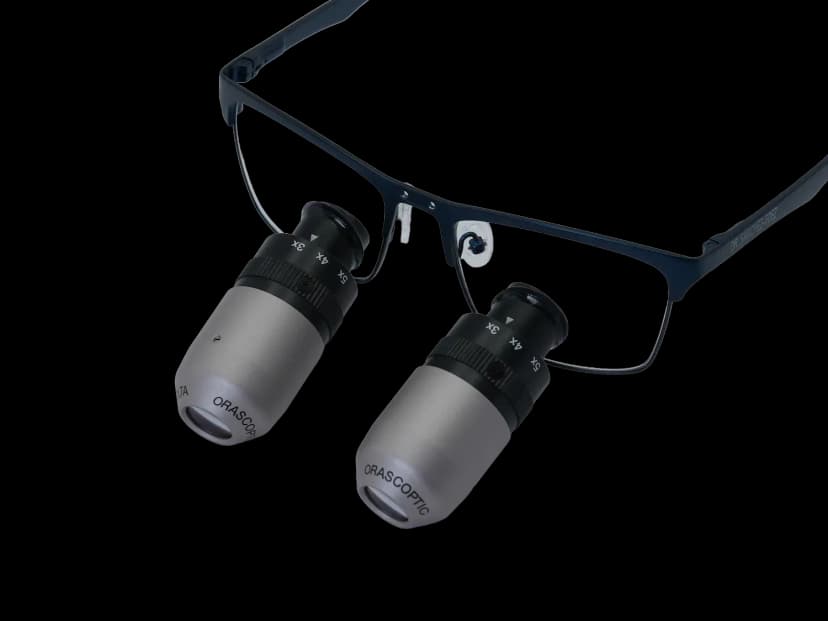
Variable magnification, represented in the range by systems such as EyeZoom™, allows switching between magnifications without removing the loupe. It fits profiles combining heterogeneous procedures —for example, plastic surgery moving from general vision to microsurgical suture— or professionals in training, where the ideal magnification is not yet defined.
Frequently asked questions
What magnification is best for starting to use surgical loupes?
2.5x is usually recommended as a first loupe for two reasons: it offers the largest field of view and the greatest depth of focus, which facilitates postural adaptation. The learning curve is faster and lets the professional discover whether higher-magnification loupes are justified in their daily practice.
Can the magnification be changed later?
In through-the-lens (TTL) loupes, magnification is integrated into the lens and is not interchangeable; changing it means a new optic. In flip-up systems, magnification can be replaced at lower cost. An alternative is to opt from the start for a variable magnification system, which covers several ranges in a single optic.
Does higher magnification tire the eyes more?
Not because of the magnification itself, but because of the reduced field of view and lower depth of focus it implies. This demands greater postural stability and frequent gaze readjustment. Over long sessions, fatigue appears earlier with 4.5x than with 3.5x if the loupe is not precisely calibrated.
Does the weight of the chosen magnification matter?
Yes. Prisms of higher magnifications weigh more and shift the center of gravity forward, increasing cervical load. In long procedures, it is worth evaluating ergonomic designs with deflection prisms, which maintain posture without sacrificing intermediate or high magnification.
Does magnification influence the choice of headlight?
Indirectly. Higher magnifications are often accompanied by deep cavities or fine procedures where the operating-room overhead light creates shadows. A coaxial headlight aligned with the visual axis provides homogeneous illumination over the magnified field, particularly useful from 3.5x upwards.
Choosing magnification with criterion: the surgical fitting
The decision between 2.5x, 3.5x or 4.5x cannot be resolved with a size chart. It depends on the specialty, the type of habitual procedures, the average session duration, and the surgeon's natural posture in the operating room.
In the approach we apply at Optimedic —we call it surgical fitting— the choice of magnification is made after evaluating these parameters with the surgeon in their real environment. That methodology is what distinguishes buying a loupe from effectively adopting a magnification system that the professional uses every day.
To evaluate the most suitable magnification and configure personal working distance, the right starting point is an in-person demonstration: request personalized technical advice.