Surgical Loupes · Clinical applications
Surgical Loupes for Plastic Surgery: Selection Criteria
Surgical loupes in plastic surgery must combine medium-high magnification, ergonomics and proper lighting for long sessions. We review technical criteria by subspecialty.
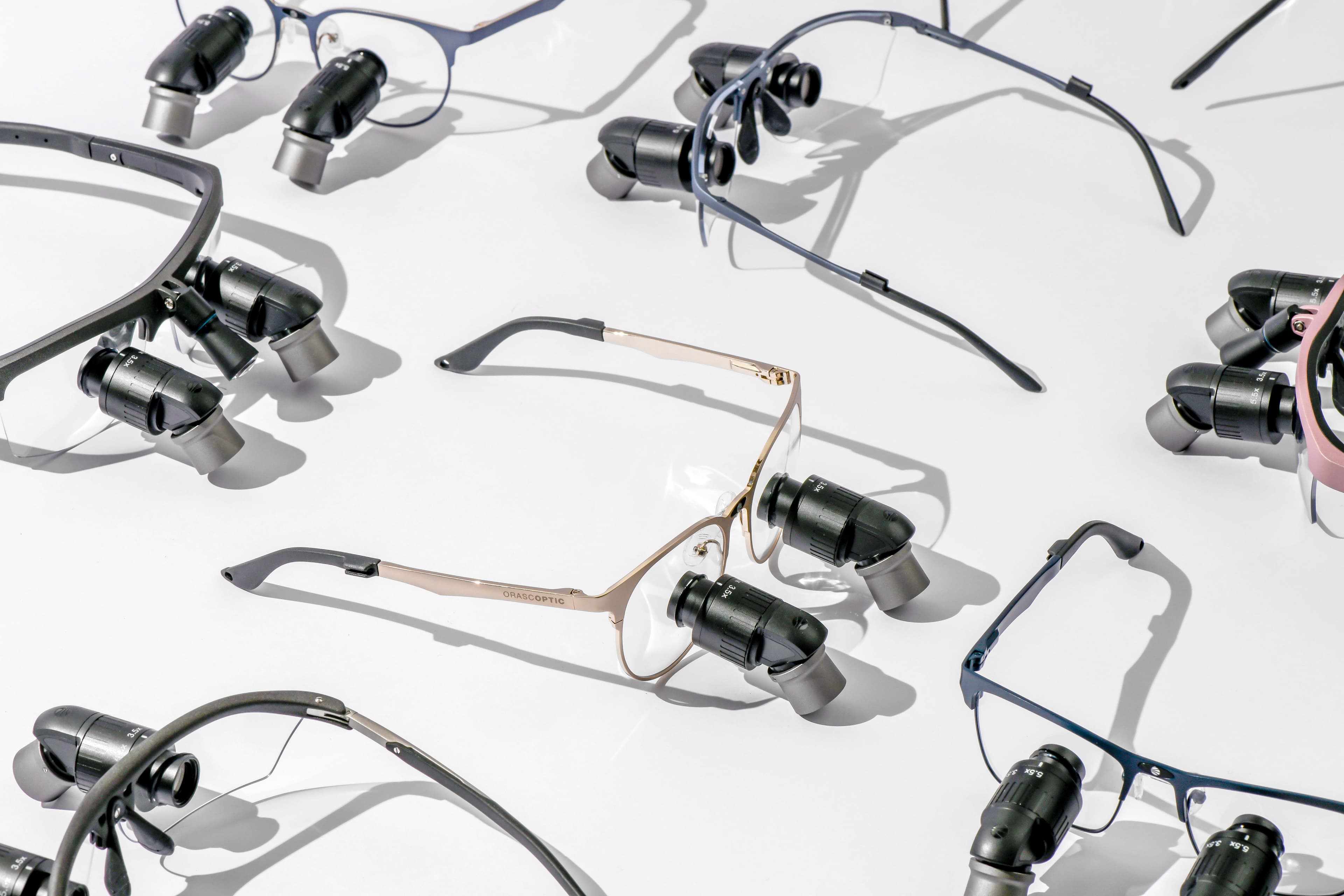
Surgical loupes for plastic surgery must combine medium-high magnification (3.5x–4.5x), a personalized working distance and an ergonomic design that supports long sessions. The choice depends on subspecialty —reconstructive, aesthetic, breast, rhinoplasty, microsurgical— and on the type of habitual procedures in the operating room.
What plastic surgery demands from surgical loupes
Plastic surgery combines long procedures, delicate gestures and anatomical zones with complex relief. Three factors condition the choice of surgical loupes for this specialty:
- Session duration: reconstructive or breast surgery procedures can exceed several hours. Cumulative cervical load penalizes any ergonomic compromise
- Precision on superficial planes: facial sutures, blepharoplasties and rhinoplasties demand clear detection of millimetric structures and tissue edges
- Versatility between phases: a single procedure may move from general vision (undermining, flaps) to microsuture (vessels, nerves)
These three demands guide the criterion we apply in our surgical fitting methodology: the right loupe for plastic surgery is not the one with the highest magnification, but the one best calibrated to the surgeon's combination of gestures.
Recommended magnification by procedure
An orienting framework by procedure type within plastic surgery:
| Procedure | Recommended magnification | Technical rationale |
|---|---|---|
| Breast surgery (augmentation, reduction, mastopexy) | 3.5x | Balance between field and suture detail |
| Primary rhinoplasty | 3.5x – 4.5x | Millimetric bone and cartilage structures |
| Blepharoplasty | 3.5x – 4.5x | Fine tissue, precise margins |
| Reconstructive surgery (flaps) | 3.5x | Global vision of flap and vascular edges |
| Vascular and nerve microsurgery | 4.5x – 5.0x | Anastomosis in vessels < 2 mm |
| Liposuction and fat grafting | 2.5x – 3.0x | Wide vision, extreme detail not required |
| Aesthetic facial procedures | 3.5x – 4.5x | Combination of superficial planes and fine tissue |
In profiles combining heterogeneous procedures —typical of a generalist plastic surgeon— a variable magnification system such as EyeZoom™ allows switching between 3x, 4x and 5x without removing the loupe, a real advantage in operations moving from undermining phase to fine closure phase.
TTL vs flip-up in plastic surgery
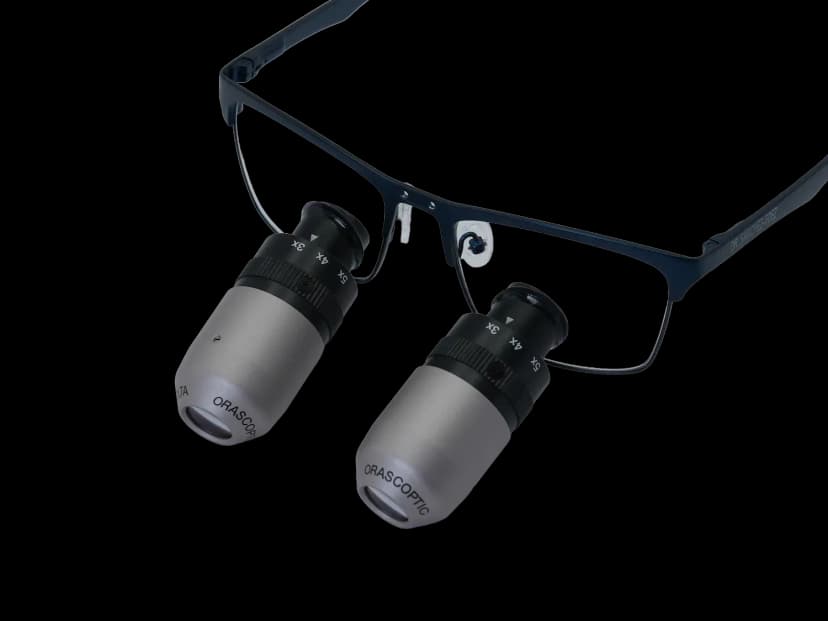
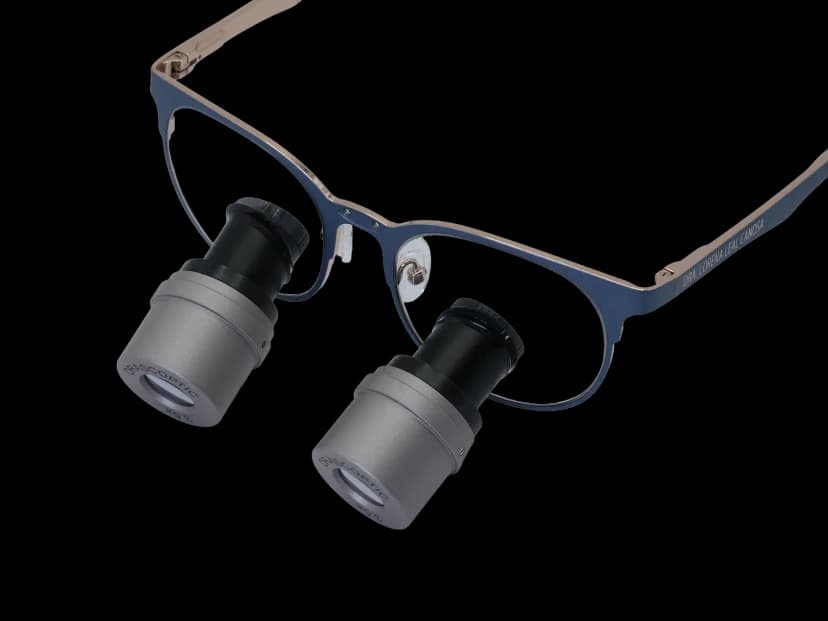
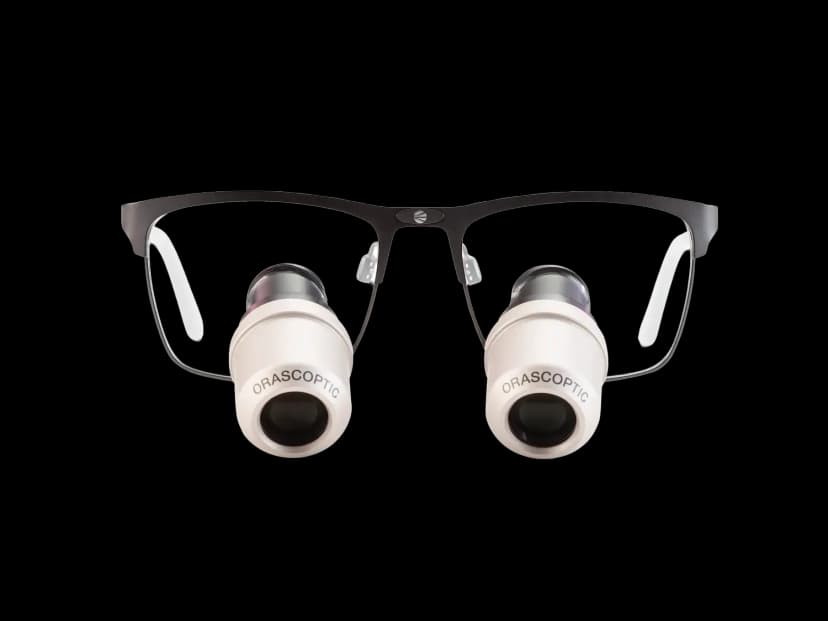
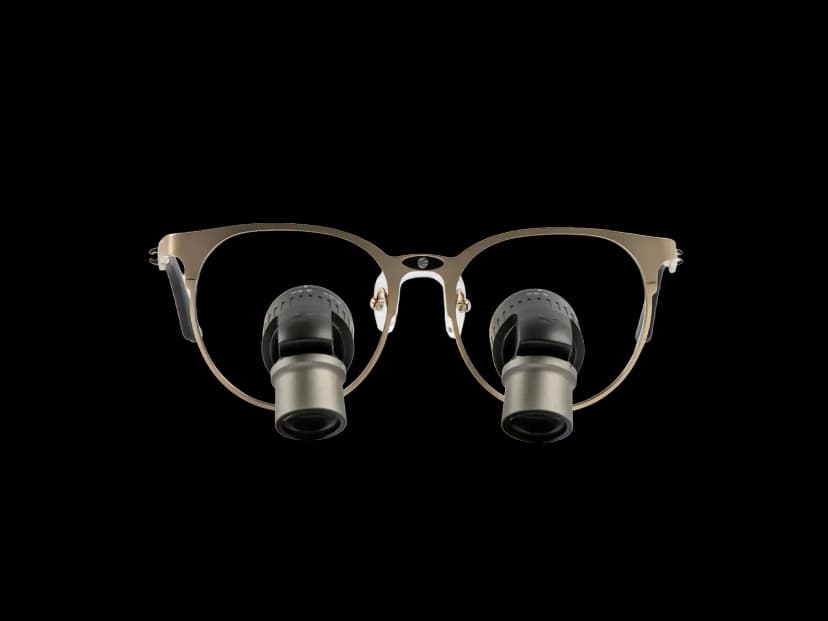
The decision between through-the-lens (TTL) and flip-up in plastic surgery usually resolves in favor of TTL for ergonomic reasons: weight is lower, the center of gravity sits closer to the face, and interpupillary distance is permanently calibrated.
Custom TTL loupes with a pronounced declination angle keep the head in a more neutral position, which is especially relevant in breast or reconstructive surgery where sustained cervical inclination is the leading cause of professional cervicalgia.
Flip-up retains an edge in two specific contexts: operating rooms where equipment rotates between several surgeons, and training centers where residents with changing profiles share the same set.
Frontal illumination: a necessary integration
From 3.5x onward the field of view narrows and anatomical cavities create shadows that overhead operating-room lighting does not resolve. In plastic surgery, especially in facial and reconstructive dissections, a coaxial headlight aligned with the surgeon's visual axis provides homogeneous illumination over the magnified field.
Headlight choice is not accessory: it conditions the final weight of the system on the professional's head and the battery life across long sessions. Loupe and headlight should be selected as a set, not as separate purchases.
Ergonomics and long sessions
In plastic surgery the decisive factor in the medium term is not the chosen magnification but the postural sustainability of the complete system. Loupes such as HDL™ 4.5x on ergonomic frames with deflection prisms —the case of the ErgoZoom and HDL Ergo range— maintain high magnification without forcing the surgeon to tilt the cervical spine to reach the working plane.
This kind of design is not a luxury in plastic surgery: it is the difference between practicing the specialty for 20–25 years or having to reduce activity due to chronic musculoskeletal conditions from the age of 50.
Other categories of instrumentation for plastic surgery
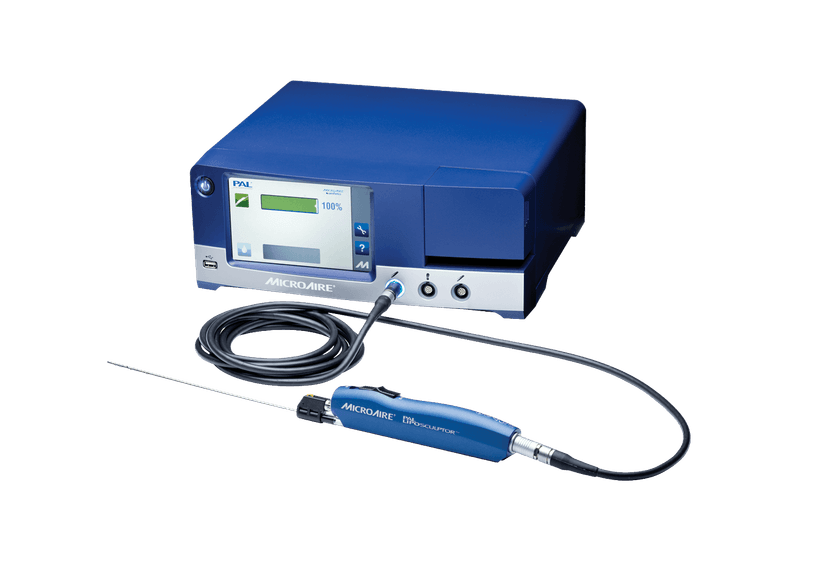
The loupe is only one of the elements defining technical performance in the plastic-surgery operating room. In procedures with an associated liposuction component —body contouring, fat grafting, remodeling—, the MicroAire PAL power-assisted liposuction system complements the optical setup by providing a vibration-assisted tissue fragmentation mechanism that reduces the surgeon's manual fatigue, along the same lines that loupes reduce visual and cervical fatigue.
This integrated view of the operating room —optics, lighting and motorized instrumentation— is what allows sustaining consistent technical quality throughout the working day.
Frequently asked questions
What magnification is most used by plastic surgeons?
3.5x is the most widespread magnification due to its balance between field of view and detail. Surgeons with caseload oriented to vascular or fine facial microsurgery typically move to 4.5x. In breast and major reconstructive surgery, 3.5x covers most gestures without penalizing global field vision.
Is variable or fixed magnification better in plastic surgery?
It depends on the profile. A surgeon focused on a specific subspecialty (breast only, aesthetic facial only) can optimize with a fixed magnification. A generalist alternating procedures —breast in the morning, blepharoplasty in the afternoon, reconstructive the following day— benefits from variable, which covers the usual range with a single optic.
Does working distance matter in plastic surgery?
A lot. Distance should be measured with the surgeon in real operating-room posture (head slightly tilted toward the field, arms in natural position). A mis-calibrated distance forces compensation with neck or back, which in a long session leads to muscular fatigue and loss of technical precision by the end of the day.
How much does the complete system weigh in real use?
A lightweight TTL loupe with a small headlight typically sits between 60 and 90 grams on the surgeon's nose. The difference between 60 and 90 grams seems minor on paper, but accumulated over five hours without pause it is perceived as a significant load.
Do the same loupes serve for aesthetic and reconstructive procedures?
Yes in most cases. What changes between the two contexts is the procedural phase (more undermining in reconstructive, more fine suture detail in aesthetic), not the required optical range. A 3.5x with good field covers both scenarios without sacrificing precision.
Choosing a surgical loupe for plastic surgery with professional criterion
The decision on loupes in plastic surgery is not reduced to comparing specification sheets. It involves evaluating the real mix of procedures, average session duration, habitual posture and the projection of the professional practice in the medium and long term.
In the surgical fitting approach we apply at Optimedic, that evaluation is done in person with the surgeon in their environment before recommending any configuration. It is the way to prevent a loupe that looks correct on paper from being uncomfortable in the actual operating room.
To configure a loupe adapted to your caseload in plastic surgery, request personalized technical advice.