

Surgical Loupes · Ergonomics and health
Surgical loupes for ophthalmology: magnification and working distance
A guide to assessing magnification, working distance, depth of field and frame design in surgical loupes for ophthalmology with technical and prudent criteria.
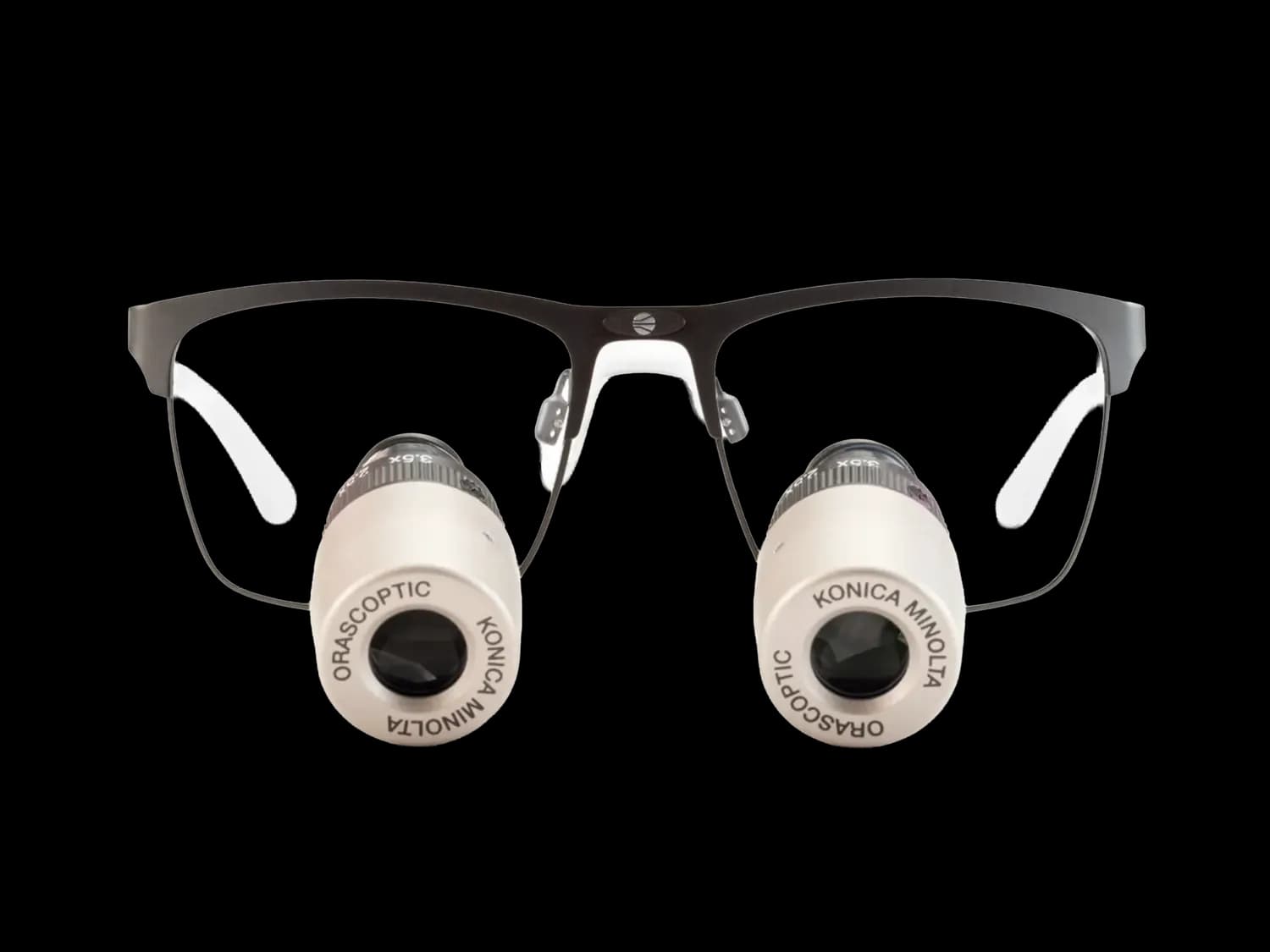
Surgical loupes for ophthalmology must be adjusted by combining magnification, working distance, depth of field and posture. The choice does not depend only on seeing more detail, but on maintaining a stable image, a comfortable position and a setup consistent with the procedure and the professional.
Surgical loupes for ophthalmology: the relationship between magnification and working distance
In ophthalmology, fine detail can influence the choice of magnification. However, more magnification does not always mean a more suitable setup. As magnification increases, the perception of the field, depth of field and sensitivity to small movements of the head or patient often change.
Working distance is the separation between the professional’s eyes and the intervention area when adopting their usual posture. If that distance is not measured accurately, the loupe may force neck flexion, raise the shoulders or require the user to lean in more than expected. In prolonged or repetitive procedures, that mismatch can lead to cervical, dorsal or visual discomfort.
Selection should start from a practical question: what level of detail does the procedure require, and at what distance can the professional work without straining their posture? Optimedic surgical loupes are assessed precisely on the basis of this combination of magnification, ergonomics and adaptation to real use.
It is also worth distinguishing between visual need and working habit. Two professionals performing similar tasks may require different distances because of height, arm length, patient position, type of table, chair or auxiliary microscope, and postural preference. That is why individual measurement is a critical part of the process.
How magnification affects visual comfort
Magnification allows small structures to be observed in greater detail, but it changes several aspects of the visual experience. In general, as magnification increases, the user may perceive a more restricted field and a greater demand for stability. This is not necessarily a problem, but it must match the type of work.
In high-precision procedures, moderate magnification can offer a balance between detail, spatial orientation and tolerance to small changes in position. Higher magnification can be useful when fine detail is the priority, provided the professional accepts more demanding depth of field and stability.
The key is to avoid choosing based on a single figure. Magnification should be interpreted together with:
- The actual working distance.
- The required field of view.
- The useful depth of field.
- Head stability during the procedure.
- Available lighting.
- Prior experience with loupes.
To expand on this criterion, it may be useful to review the guide on which magnification to choose in surgical loupes and depth of field, focused on the relationship between magnification and clinical use.
Working distance: measure before choosing
Working distance should not be estimated approximately. It should be measured in the position in which the professional actually works, with the patient or simulated field at the usual height and with the back, neck and shoulders in a sustainable posture.
A common mistake is to measure distance in an “ideal” posture that is not then maintained during the procedure. If the measurement is taken with the back too straight, the chair at an unusual height or the arms in an unreproducible position, the final setup may not match daily practice.
A useful measurement should consider:
- The professional’s height and arm length. These influence the natural separation from the field.
- The type of procedure. Not all procedures require the same proximity or the same viewing angle.
- The patient’s position. This changes head and trunk inclination.
- Table, stretcher or chair height. This can shift the posture toward cervical flexion.
- Use of frontal illumination. The beam must coincide with the observed field.
When the working distance is too short, the professional tends to move closer to the field. When it is too long, they may lose focusing comfort or adopt postural compensations. In both cases, the problem is not only visual: it affects working mechanics.
Depth of field and image stability
Depth of field is the range in which the image remains sharp without constantly readjusting position. In ophthalmology, where fine detail can be decisive in choosing the loupe, this aspect deserves specific assessment.
A wide depth of field offers more tolerance to small variations in distance. This can make adaptation easier, especially if the professional alternates between nearby working zones or makes frequent movements. In contrast, a narrower depth of field requires the user to maintain a very constant distance.
Image stability depends on several factors: magnification, perceived weight, frame fit, nasal support, declination angle and postural control. A highly magnified but unstable image may be less functional than a lower-magnification setup with better control.
To assess this point, it is advisable to try the loupe under conditions as close as possible to the intended use. It is not enough to look at text or an object on a table. It is better to simulate the height, angle and approximate duration of the professional gesture.
In surgical magnification, the balance between detail and control is often more important than choosing the highest magnification available.
Fixed configuration or variable magnification
Surgical loupes for ophthalmology can be set up with fixed magnification configurations or variable magnification alternatives, depending on the model and the intended use. The decision should not be based on a general preference, but on the variety of procedures, the required level of detail and user adaptation.
A fixed configuration may work well when the professional repeatedly works at a stable distance and with relatively constant magnification needs. It can also simplify adaptation, because the user becomes accustomed to a predictable field, depth of field and spatial relationship.
Variable magnification alternatives may be interesting when alternating between procedures with different visual demands or when more than one magnification level is needed without changing systems. In these cases, it is important to assess whether the magnification change alters depth of field, useful field or the sensation of stability.
| Criterion | Fixed configuration | Variable magnification |
|---|---|---|
| Typical use | Repetitive procedures and stable distance | Procedures with varied visual demands |
| Adaptation | More straightforward for a defined working pattern | Requires familiarity with magnification changes |
| Field and depth | More predictable during use | May vary depending on the selected magnification |
| Initial decision | Depends on measuring distance and posture accurately | Depends on trying ranges and use scenarios |
The range of Optimedic Loupe solutions allows the choice to be guided toward the appropriate magnification type, frame and accessories, without separating the optical aspect from ergonomics.
Frame, declination and sustained posture
The frame is not a secondary element. In a surgical loupe, image stability and comfort during use depend in part on how the system rests on the face, how the weight is distributed and how the viewing angle is maintained.
The declination angle is especially relevant. A properly adjusted declination allows the user to look at the field with less cervical flexion. If the angle is insufficient, the professional may tilt the head forward to align vision. If it is excessive or not adapted to the user, it can become uncomfortable or make orientation more difficult.
The nasal bridge, temples, lateral stability and compatibility with the user’s prescription, when applicable, also play a role. A stable frame helps keep the optical axis aligned, reducing the need to reposition the loupe during the procedure.
Before deciding, it is advisable to review the available frames for surgical loupes and consider which design best suits the intended use. For a more selection-focused explanation, the guide on how to choose a frame for surgical loupes goes into greater detail on fit, stability and ergonomics.
Signs of a posturally coherent setup
A well-designed setup should allow the professional to:
- Keep the neck in a reasonably neutral position.
- Avoid raising the shoulders to get closer to the field.
- Observe the working area without repeatedly readjusting the frame.
- Maintain a stable working distance.
- Coordinate lighting and visual axis without uncomfortable compensations.
These signs do not replace an individual assessment, but they help determine whether the loupe fits well into the professional gesture.
Preliminary steps before requesting a refined recommendation
Before requesting a recommendation for surgical loupes for ophthalmology, it is useful to prepare specific information. The more precise the description of use, the more tailored the technical guidance can be.
1. Define the main procedures
It is not the same to prioritise fine detail in very specific manoeuvres as it is to seek visual assistance for more general tasks. It is advisable to indicate which procedures are performed most often and what level of detail is desired.
2. Measure the actual working distance
The measurement should be taken in the usual posture, not in a forced position. If several working distances exist, all should be noted and the most frequent one specified.
3. Indicate previous experience with loupes
A professional accustomed to high magnification may adapt differently from someone starting out with loupes. It is also relevant to indicate whether TTL systems, flip-up or other configurations have been used.
4. Assess lighting requirements
In ophthalmology, lighting must be coordinated with the field of view and the selected magnification. If a headlight is used, how it integrates with the frame and working distance should be considered.
5. Review posture and environment
Working height, patient position, chair, stretcher or table all influence the choice. A good recommendation is based not only on optics, but on how the professional works during a real session.
6. Prepare prescription or visual requirements
If the user needs vision correction, this should be indicated from the outset. Integration of prescription, where applicable, is part of the technical adaptation.
With this information, guidance can focus on realistic options and avoid decisions based solely on nominal magnification.
Common mistakes when adjusting surgical loupes for ophthalmology
One of the most common mistakes is choosing the highest magnification without testing how it affects the field, depth of field and stability. In precision procedures, detail matters, but the ability to maintain a useful image throughout the entire gesture is also decisive.
Another mistake is accepting a working distance that forces a change in posture. If the loupe is adjusted to a position the professional cannot sustain, the setup loses its purpose. The optics should support the posture, not force it.
It is also advisable to avoid isolated decisions about the frame. A suitable lens mounted in an unstable structure can create a poor experience. Likewise, a comfortable frame with a poorly adjusted declination angle can limit the expected ergonomic benefit.
Finally, the choice of loupe should not be separated from lighting. Increasing detail without properly aligned lighting can make the field harder to perceive. Assessing loupe, frame and lighting together helps build a more coherent setup.
Frequently asked questions
What magnification is suitable for surgical loupes in ophthalmology?
There is no universal magnification for all professionals. The choice depends on the required detail, working distance, depth of field and the stability the user can maintain. In ophthalmology, it is advisable to test magnification in a scenario similar to the real procedure before deciding.
Does the working distance change depending on the magnification?
Working distance is defined by the professional’s posture and environment, but it must be consistent with the chosen magnification. If the optical system does not match that distance, the user may move closer, move away or flex the neck to compensate, which affects comfort.
How important is depth of field in ophthalmology?
Depth of field indicates the range in which the image remains sharp. In high-precision procedures, an adequate depth of field helps maintain focus with small changes in position. If it is too limited for the intended use, it may require greater postural control.
When should variable-magnification loupes be considered?
It may make sense to consider variable magnification when alternating procedures with different visual needs or when you want to explore more than one magnification in the same system. The decision should include field testing, stability, depth of field and comfort during magnification changes.
Does the frame influence posture?
Yes. The frame influences weight distribution, stability and declination angle. Proper adjustment can help achieve a more sustainable working position, while an unstable or misaligned frame forces the user to reposition the loupe or compensate with the neck.
Request a technical assessment
Choosing surgical loupes for ophthalmology requires integrating magnification, working distance, depth of field, frame and lighting. The most useful recommendation starts with measuring the real posture and defining the priority procedures.
To review a specific setup, you can request information about surgical loupes and prepare the usage data before the technical assessment.