

Surgical Loupes
Surgical loupe frames: how to choose
A practical guide to surgical loupe frames: fit, weight, stability, prescription compatibility and comfort during long clinical sessions.
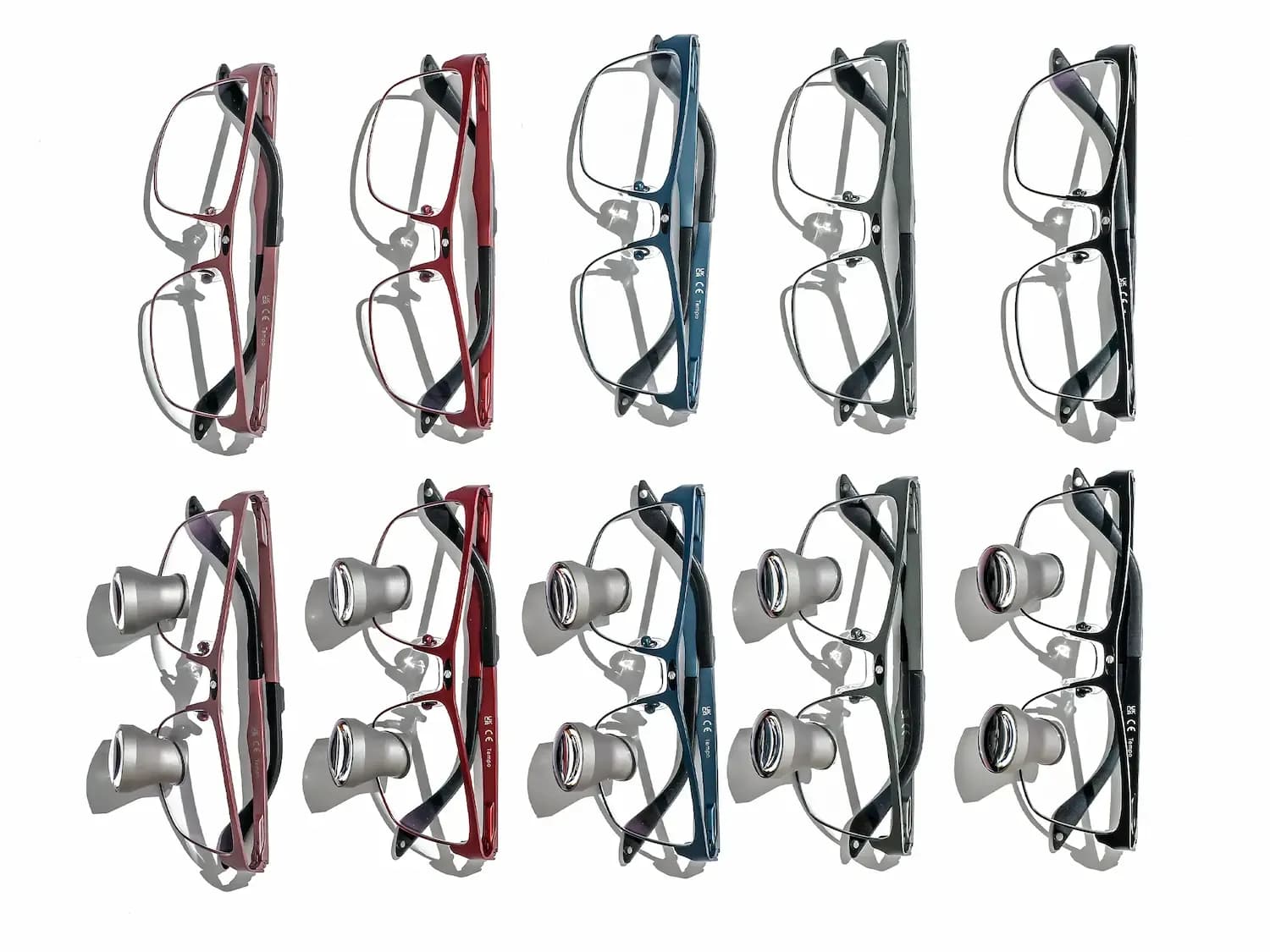
Surgical loupe frames affect fit, weight distribution, stability and comfort during long working days. The right choice should consider facial anatomy, prescription needs, loupe type, headlight use and the real posture adopted during clinical or surgical procedures.
How to choose surgical loupe frames
Frame selection should not start with appearance alone. The frame connects the clinician, the optical system and, when used, the headlight. It must keep the loupes in place without forcing the neck, nose or ears to compensate.
Within the Orascoptic frame range, Optimedic works with models such as Tempo, Tempo Refined Fit, DragonFly Pro, DragonFly Neo, Triumph, RDH Elevate, Phantom and Rydon. The frame should be selected together with the surgical loupes, not as a separate accessory.
Fit, weight and stability
The first criterion is stable support without excessive pressure. If the frame slides, the clinician often adjusts it repeatedly or changes posture to recover the visual field.
Key points to review include:
- Nose bridge height and pad support.
- Temple length and lateral hold.
- Space for prescription lenses.
- Compatibility with masks, caps, face shields or eye protection.
- Stability when looking down or changing position.
Perceived weight is not only about the frame. Loupe type, magnification, working distance and headlight use all contribute to the final feel. A very light frame may still feel unstable if the weight sits too far forward; a more supportive design may feel better if it distributes the load more evenly.
| Criterion | What to assess | If overlooked |
|---|---|---|
| Front weight | Loupes and headlight | Sliding or nasal pressure |
| Temples | Lateral retention | Movement when looking down |
| Bridge | Central support | Pressure marks or discomfort |
| Long sessions | Real working day | Progressive postural strain |
TTL, flip-up, prisms and prescription
The frame also affects how stable the optical system feels. With TTL loupes, the telescopes are positioned in the lens; with flip-up systems, a mobile mechanism must remain aligned. For that decision, the article on TTL vs flip-up loupes is a useful complement.
Higher magnification or prismatic systems may need a frame that controls weight and position more effectively. The comparison of prismatic vs Galilean surgical loupes explains how optics, field and weight interact.
The frame must be compatible with the clinician’s visual correction when needed. Magnification alone is not enough: prescription, working distance and telescope position need to work together for comfortable, stable vision.
Comfort during long clinical sessions
A useful frame test should reproduce real working posture: distance to the field, head inclination, shoulder position and habitual movements. Looking at the frame briefly in a mirror is not enough.
A suitable frame should remain stable, support consistent vision and avoid excessive tightening. For surgeons and hygienists working through long sessions, small fit issues can become more noticeable by the end of the day.
Checklist before choosing
- Test the frame with the intended loupe setup.
- Check nasal support and lateral stability.
- Confirm prescription compatibility.
- Assess headlight use if it will be added.
- Compare comfort in real working posture.
- Ask for guidance when changing magnification, working distance or loupe type.
Frequently asked questions
Do frames affect optical quality?
They do not change the optics themselves, but they can affect how consistently the clinician maintains the intended working position. If the frame moves or creates pressure, the user experience may be less comfortable even with a well-configured loupe.
What contributes most to weight?
The perceived weight comes from the full setup: frame, telescopes, magnification, working distance and lighting. That is why the assessment should be made with the actual or intended configuration, especially when a headlight is used.
Can surgical loupes be used with a prescription?
Yes, but compatibility must be checked. The prescription, working distance and telescope position need to be considered together so that the visual experience remains comfortable and stable during clinical work.
Next step
Choosing surgical loupe frames properly means reviewing the whole setup: magnification, working distance, prescription, lighting and posture. Optimedic can help assess the most suitable configuration through the contact page.