Surgical Loupes
Surgical Loupe Maintenance and Cleaning: Lifespan, Warranty and Best Practices
Proper maintenance of surgical loupes preserves their optical quality and extends their lifespan beyond 10 years. We review daily routines, common mistakes and warranty conditions.
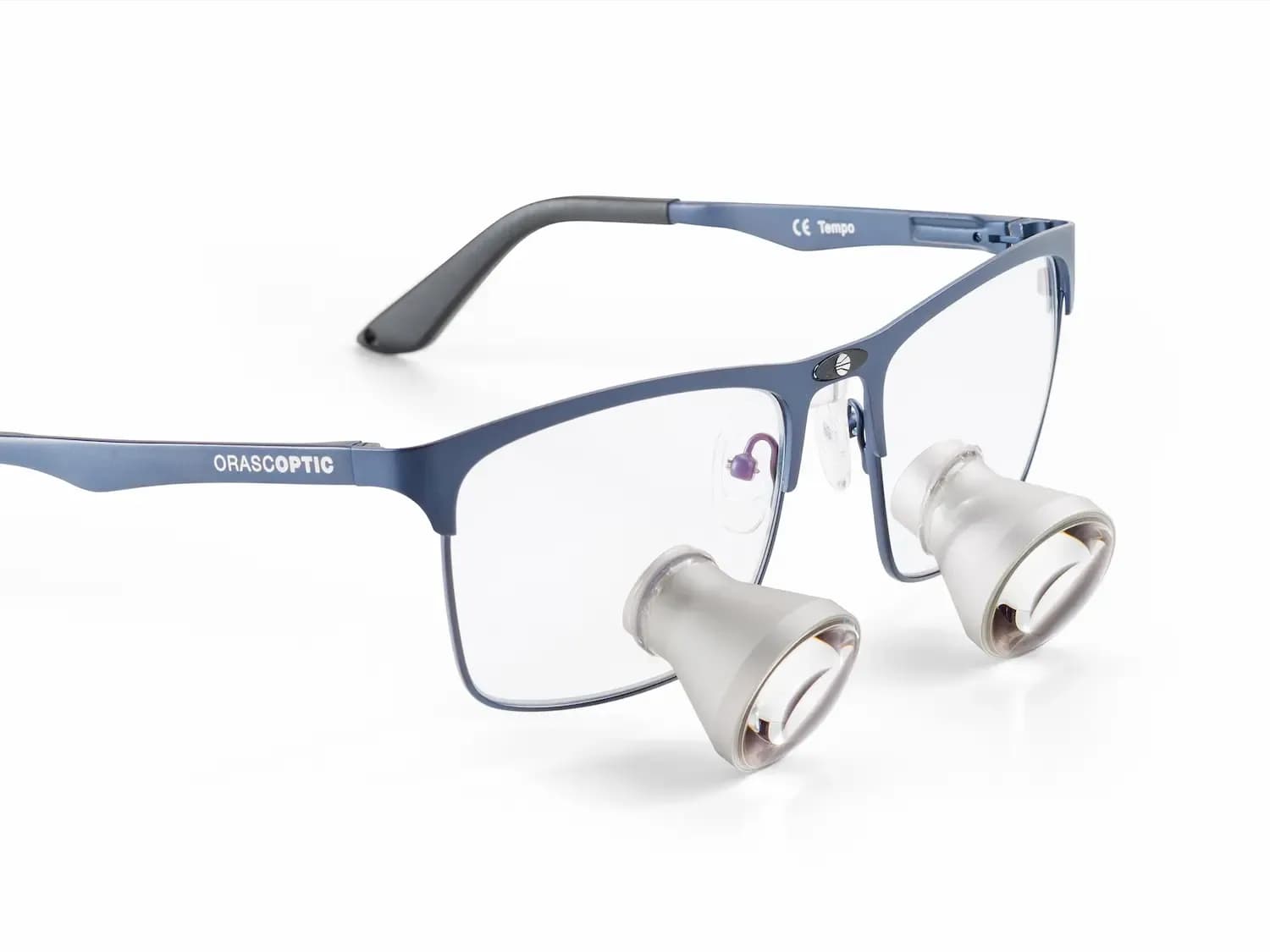
Proper maintenance of surgical loupes preserves their optical quality and extends their lifespan. With adequate daily routines, a professional loupe comfortably exceeds 10-15 years of intensive use while keeping original performance. Most premature damage is due to avoidable cleaning mistakes or the use of inappropriate chemicals.
Daily cleaning between procedures
The routine between procedures consists of removing fluid residue, fog and particles deposited during the surgical act. Three steps:
- Blow particles with an air bulb or gentle compressed air before touching the optic. Removing dust or lint minimizes the risk of microscratches
- Apply medical optics cleaner onto a clean microfiber cloth, never directly on the lens
- Clean with gentle circular motion from center to edge. One pass per zone; do not insist by rubbing
Professional surgical loupes carry anti-reflective and oleophobic coatings on their surface. These coatings withstand clinical use well, but degrade with inappropriate products —especially high-concentration alcohol or industrial solvents—.
Periodic cleaning of the complete system
Once a week a more complete cleaning is advisable, including:
- Frame and hinges: soft cloth dampened with warm water and neutral soap. Dry immediately
- Frontal headlight (if integrated): following manufacturer indications, normally microfiber cloth and specific cleaner
- Nose pads and temples: these elements absorb sweat and secretions. Replace when they show wear
- Visual frame check: tight screws, hinges without play, optic support firmly anchored
Once a year a fitting review with the distributor is advisable: interpupillary distance, declination angle, optic alignment. Calibration drifts slightly with use and annual review prevents accumulated fatigue from misalignment.
Frequent mistakes that damage the optics
The five mistakes that most shorten the lifespan of professional loupes:
- Cleaning with high-concentration alcohol (70% or more) directly on the lens. Degrades anti-reflective coatings
- Rubbing vigorously with paper or non-specific tissues. Generates microscratches invisible at first but cumulative
- Using industrial chemicals or aggressive cleaners not designed for medical optics
- Submerging the headlight or complete system in liquid. Professional loupes are not submersible even if the frame is
- Storing loupes without case or exposed to dust and impacts. The rigid case delivered with the product is the most underused accessory in the catalog
Expected lifespan
A well-maintained professional surgical loupe offers a documented lifespan of 10 to 15 years in intensive clinical use. Fine annealed glass optics and surface coatings withstand thousands of operating-room hours without appreciable degradation of image quality.
Consumable elements —nose pads, headlight batteries, cables if any— do have shorter lifespan and are periodically replaced. The initial investment in a professional loupe pays off over a full surgical career.
Premium prismatic models such as HDL™ 3.5x, HDL™ 5.5x or EyeZoom™ are built with materials and treatments designed precisely for that lifespan projection.
Warranty
Professional loupes ship with a manufacturer warranty covering manufacturing defects. Specific conditions depend on model and distributor; typical coverage includes:
- Optical defects not due to improper use
- Mechanical defects of hinges, frame and adjustment system
- Malfunction of integrated headlight under normal use conditions
Damage from falls, contact with unauthorized chemicals, equipment modification or use outside manufacturer indications is excluded. Keeping the proof of purchase and original packaging facilitates any warranty action.
Frequently asked questions
Can I use hospital disinfectant wipes on the loupes?
Not on the optics. Wipes with chlorine or high-concentration alcohol degrade anti-reflective coatings. They can be used on the frame and temples if the manufacturer allows it. For the lens, always microfiber cloth with specific medical-optics cleaner.
How is fog removed during a long surgery?
Anti-fog treatments are applied to the lens with a specific product before the procedure. There are gel or spray formats designed for medical optics. Do not use saliva or improvised solutions: they damage the surface treatment.
When should nose pads be replaced?
When they deform, show visible wear or fit becomes unstable. They are usually replaced every 12-24 months depending on use. Their replacement is inexpensive and notably improves comfort.
Can the loupes be sterilized?
The optics cannot. Frame and washable elements follow manufacturer indications: warm water with neutral soap, air drying. Autoclave or chemical sterilization procedures are not compatible with most professional loupes and degrade optical components.
When is a professional review advisable?
An annual review with the distributor verifies calibration, mechanical fit and headlight condition if applicable. If you notice focus drift, frame play or reduced battery autonomy, it is advisable to bring the review forward.
Protecting the investment: simple protocol, sustained results
Properly maintained professional surgical loupes are a profitable investment over the surgeon's full career. The maintenance protocol is not demanding: use the right cleaner, avoid aggressive chemicals, store the equipment in its case, and schedule an annual review with the distributor.
For queries on cleaning, maintenance or reviews of equipment purchased from Optimedic, contact the technical team directly.