Surgical Loupes
Prismatic vs Galilean Surgical Loupes: Optical Differences, Field and Weight
Galilean and prismatic loupes are the two main optical architectures in surgical loupes. We compare field of view, depth of focus, weight and useful magnification range of each system.
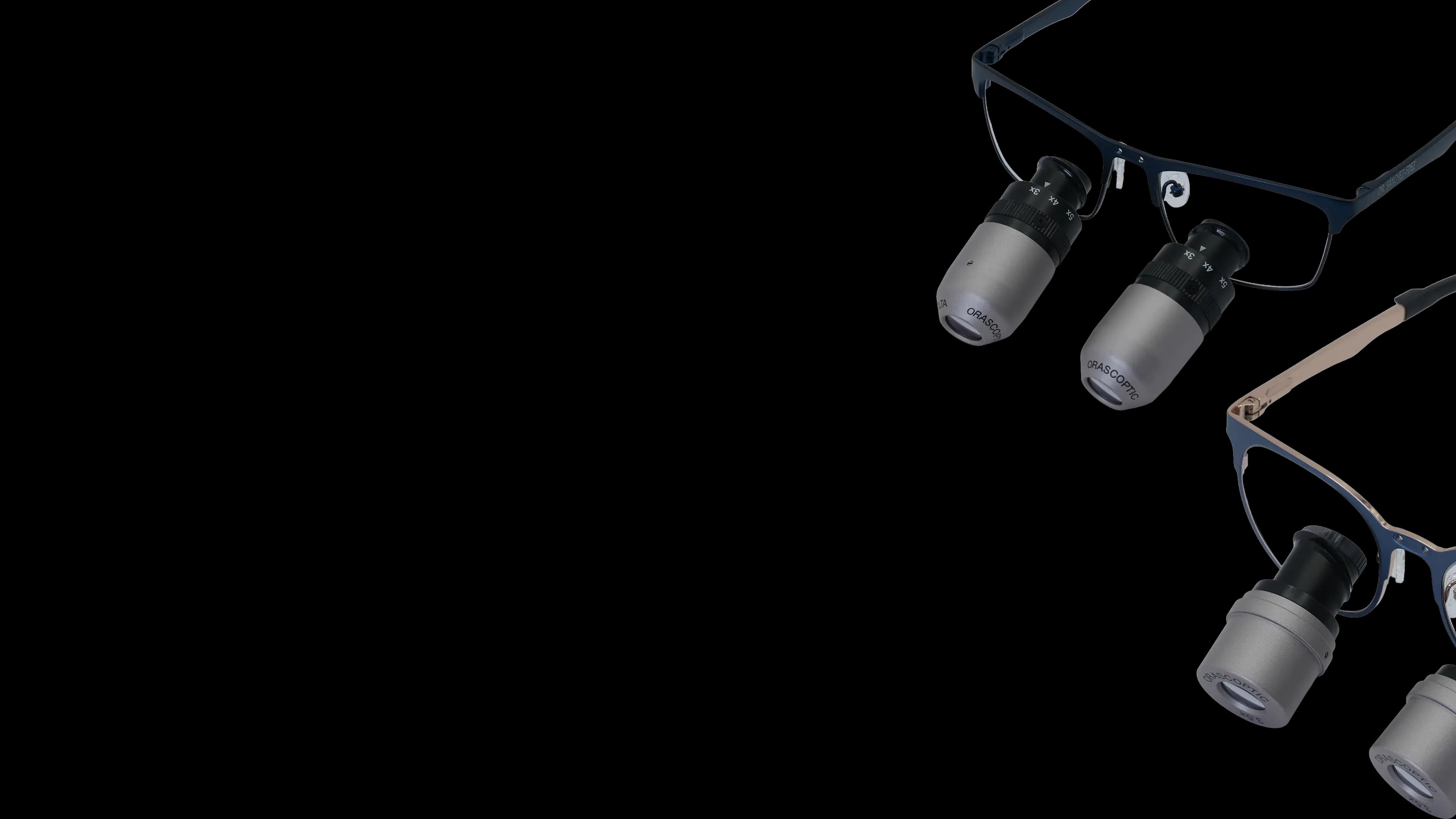
Galilean and prismatic surgical loupes are the two main optical architectures on the market. Galilean designs use a simple two-lens system and are lightweight but limited to low magnifications (2.5x–3.0x). Prismatic loupes incorporate Schmidt or Pechan prisms, allow higher magnifications (3.0x–6.0x) with superior optical quality, at the cost of greater weight. The choice depends on the magnification needed and on session duration.
How galilean loupes work
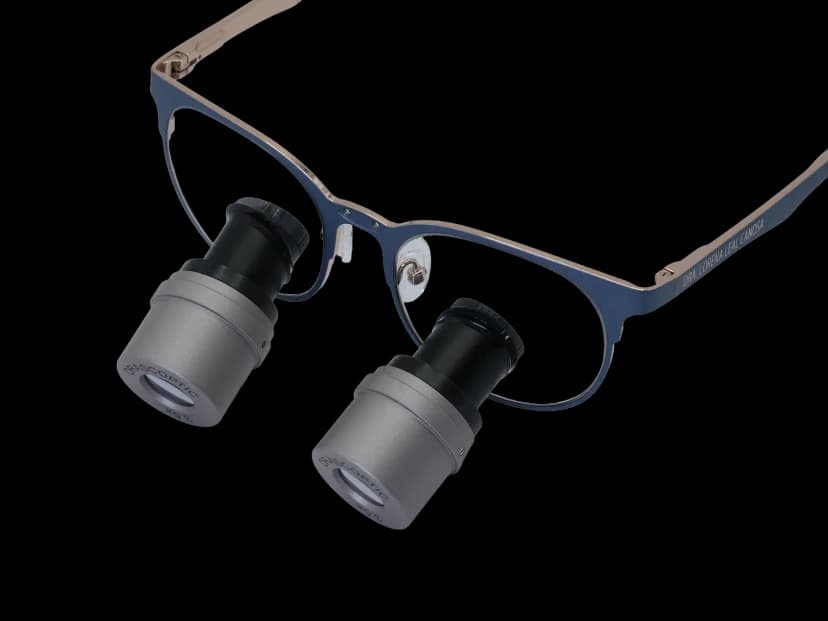
A galilean loupe is built with two lenses —one convergent, one divergent— aligned on the same optical axis, separated by a few centimeters. It is the oldest optical system, a direct descendant of the telescope Galileo described in 1609.
In the context of surgical loupes, the galilean architecture offers three structural advantages:
- Light weight: few optical pieces mean little weight. A well-designed 2.5x galilean typically weighs less than 20 grams per optic
- Mechanical simplicity: fewer components, lower manufacturing cost, greater robustness against intensive use
- Wide depth of focus: the range of distances in which the image remains sharp is high, tolerating slight surgeon posture variations
In exchange, the architecture imposes an optical ceiling: above approximately 3.0x, galilean loupes lose sharpness at the field edges, the image distorts and noticeable chromatic aberrations appear.
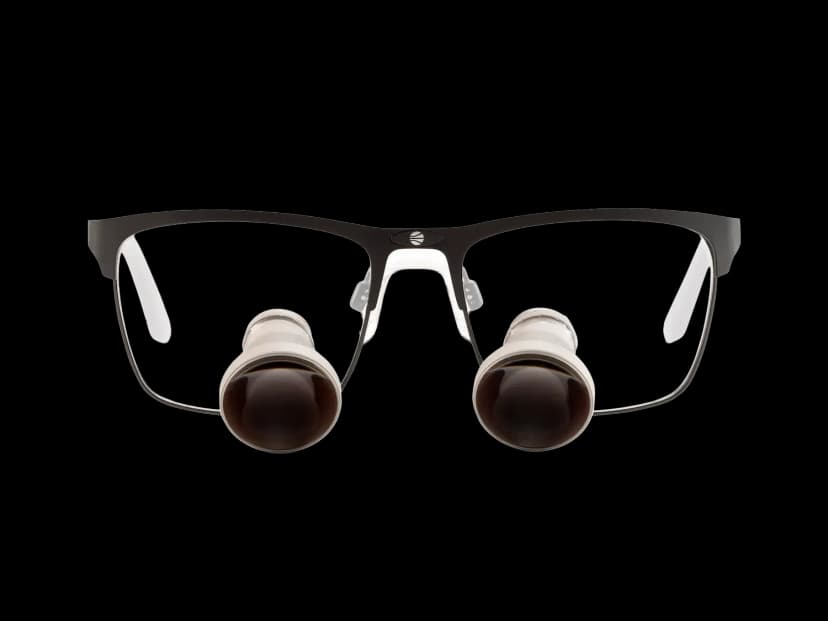
The HDL™ 2.5 Macro is the example of premium galilean optics in its range: fixed 2.5x magnification with the largest field of view in its category, fine annealed glass optics and elongated bevel.
How prismatic loupes work
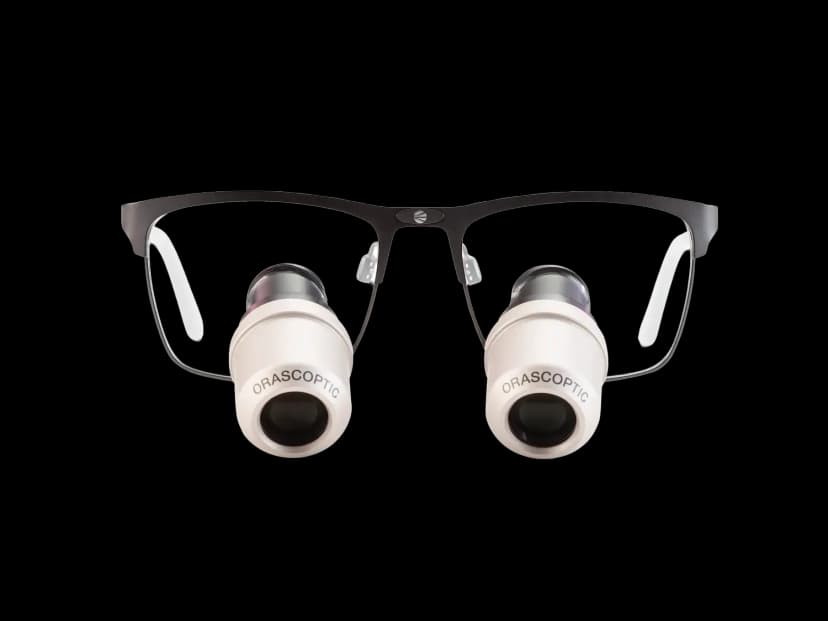
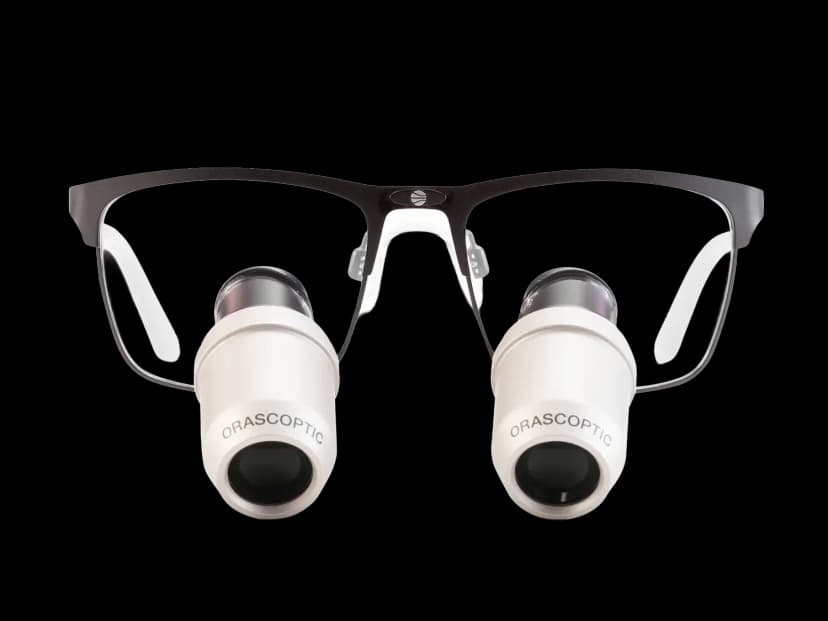
Prismatic loupes incorporate in their optical path one or more prisms —typically Schmidt or Pechan type— that internally reflect the light beam before delivering it to the surgeon's eye. This multiple reflection serves two functions: corrects optical aberrations and uprights the image (which without the prism would reach the eye inverted).
The prismatic architecture breaks the galilean ceiling:
- Allows high magnifications (3.5x, 4.5x, 5.5x) while maintaining edge-to-edge optical quality
- Delivers wider field of view at equivalent magnifications than galilean equivalents
- Reduces chromatic aberrations and peripheral distortions
In exchange, prisms add weight and increase manufacturing cost. A 3.5x prismatic loupe weighs between two and three times what a 2.5x galilean weighs, and the difference shows in long sessions if the system is not ergonomically compensated.
The current range includes several prismatic magnifications: HDL™ 3.5x, HDL™ 4.5x and HDL™ 5.5x, with expanded visual fields that measurably improve usability compared to previous generations.
Technical comparison: galilean vs prismatic
| Parameter | Galilean | Prismatic |
|---|---|---|
| Useful magnification range | 2.0x – 3.0x | 3.0x – 6.0x |
| Edge optical quality | Decreases with magnification | Constant edge to edge |
| Field of view at equivalent magnification | Narrow | Wide |
| Depth of focus | High | Medium |
| Chromatic aberration | Perceptible at high magnification | Minimal |
| Weight per optic | Low (15–20 g) | Medium-high (30–60 g) |
| Manufacturing cost | Low | High |
| Tolerance to imperfect posture | High | Medium |
| Microsurgery suitability | Limited | Standard |
When to choose galilean
The galilean loupe remains the correct option in several contexts:
- 2.5x magnification as first loupe: maximum depth of focus and wide field facilitate postural adaptation of the surgeon new to loupes
- Superficial general surgery: procedures where moderate magnification covers needs and lightness prevails over maximum magnification
- Long sessions where weight is critical: when the surgeon carries cervical history or performs prolonged sessions, the extra 15-20 grams of a prismatic can penalize more than the optical gain
- When budget is decisive: a premium galilean is more affordable than its prismatic equivalent
A properly manufactured 2.5x galilean remains a first-tier clinical tool. It is not an "entry-level" option in pejorative terms: it is the optimal architecture for its range.
When to choose prismatic
From 3.5x onward, prismatic stops being an option and becomes the standard:
- Vascular and nerve microsurgery: 4.5x–5.5x magnifications are only clinically useful with prismatic architecture
- Fine reconstructive plastic surgery: combination of detail and field of view that galileans cannot offer
- Procedures where sub-millimeter detail is central: ophthalmic surgery, fine maxillofacial, advanced ENT
- Experienced surgeons with stable caseload: once practice is settled at a high magnification, prismatic is the only option offering the optical quality the trained eye distinguishes
The additional weight is compensated when the system incorporates deflection prisms (ergonomic range) or when the loupe sits on a lightweight premium frame.
The frontier between galilean and prismatic: around 3.0x
Between 2.8x and 3.2x lies the choice frontier. Premium 3.0x galileans exist, but their quality already approaches the limit their architecture permits. 3.0x prismatic loupes also exist, but sacrifice part of the typical prism advantage to keep weight contained.
In practice, the decision at 3.0x usually resolves toward the prismatic system for two reasons: (1) if the surgeon needs 3.0x, it is very likely they will move to 3.5x in the future, and migration between prismatic optics is more natural than between distinct architectures; (2) peripheral optical quality at 3.0x already begins to show in favor of the prism.
Frequently asked questions
Does a 2.5x prismatic loupe make sense?
Technically yes, but it is not clinically justified. At 2.5x the galilean architecture offers excellent optical quality with much lower weight. Prismatic designs pay off from 3.0x onward; below that, the additional cost and weight do not compensate for the optical gain.
Do galileans age worse than prismatic loupes?
No. Durability depends primarily on optical glass quality, anti-reflective coating and mechanical mounting. A premium galilean can last 15 years without noticeable loss of optical quality. The equivalent prismatic the same. The difference lies at purchase, not in aging.
Is chromatic aberration noticeable in a 2.5x galilean?
Minimally. At 2.5x residual chromatic aberration is below the perceptible threshold for the eye in normal surgical conditions. It begins to be noticed from 3.0x and becomes perceptible at 3.5x if the loupe is galilean, which is why prismatic architecture takes over the medium-to-high range.
Is a prismatic loupe always better than a galilean?
No. At low magnifications (2.5x–3.0x) the galilean offers better weight-to-optical-quality ratio. At high magnifications (3.5x onward) the prismatic is clearly superior. The choice depends on the magnification clinically useful for the surgeon's practice, not on architecture itself.
Can galilean and prismatic be combined in the same surgeon?
Yes, although it is not common. Some surgeons with very varied caseload have two systems: 2.5x galilean for general vision and 4.5x prismatic for microsurgery. Investment is higher but allows optimal optical coverage at each work phase.
Choosing between galilean and prismatic: technical criterion
The choice between galilean and prismatic architecture is not a matter of brand or fashion: it is of useful magnification. Each architecture has its optimal range and works worse outside it. The galilean shines at 2.5x with light weight and generous field. The prismatic is the standard from 3.5x with peripheral optical quality and clinically useful high magnifications.
In the loupe catalog both architectures are represented in their optimal ranges: premium galilean in HDL 2.5 Macro, prismatic in HDL 3.5x, 4.5x and 5.5x. The right choice begins by defining the magnification the surgeon's clinical practice needs.
To evaluate the most suitable magnification and configure the loupe by specialty, request technical advice.