

Surgery and equipment
OPELA III Cx: criteria for assessing wearable lighting in the operating room
Technical guide to assessing OPELA III Cx in the operating room: illuminance, adjustable spot, battery life, ergonomics, and criteria for requesting a demo.
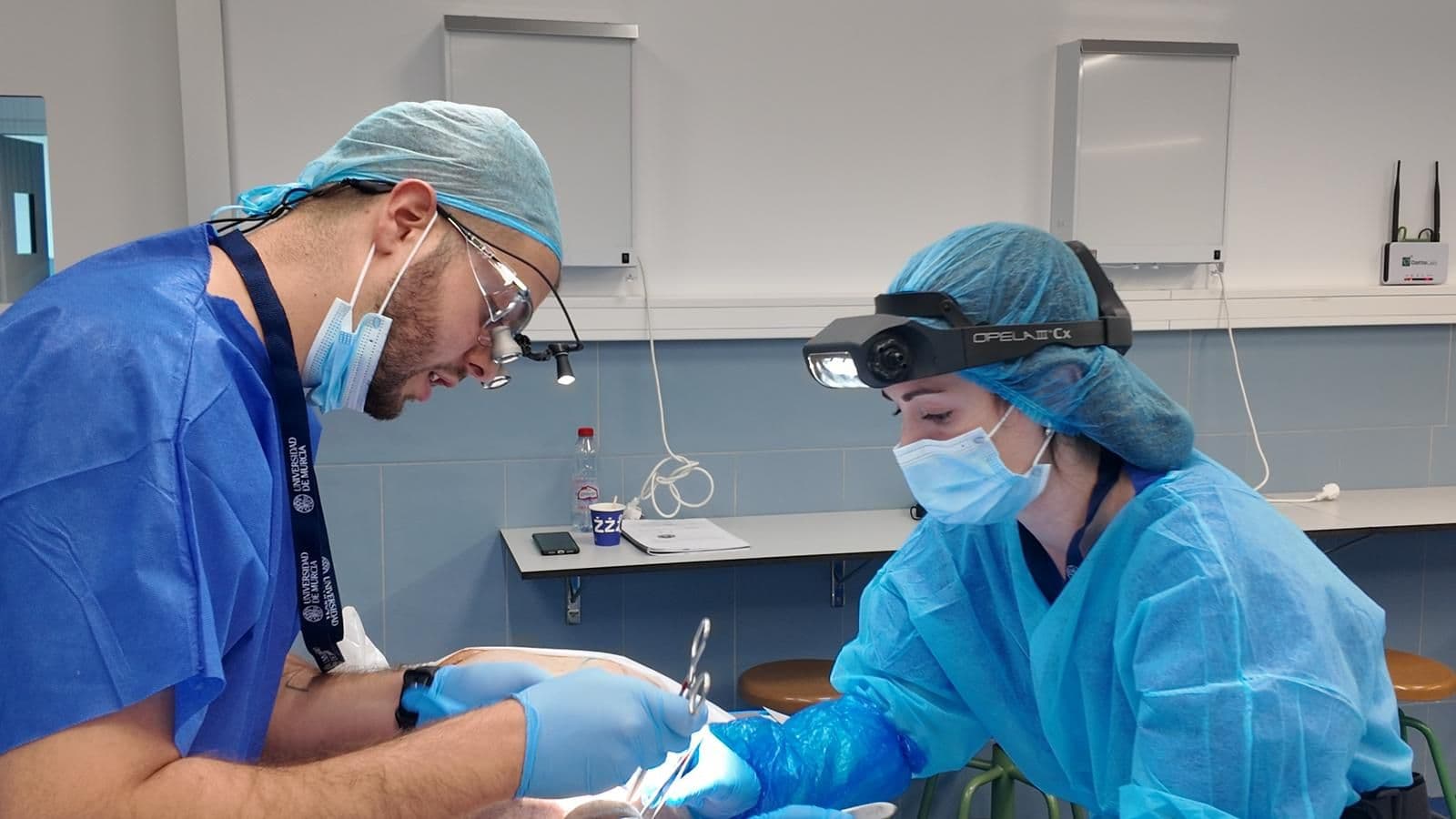
OPELA III Cx is a wearable surgical illuminator from Taiyo Corporation designed to provide frontal light in the operating room without external cabling. Its evaluation should focus on illuminance, spot adjustment, battery life, ergonomics, and its real fit within the surgical team’s workflow.
OPELA III Cx as wearable lighting for surgery
OPELA III Cx is part of the Surgery equipment from Optimedic, aimed at professionals who assess surgical technology based on technical criteria and day-to-day use. Its approach is not limited to adding a light source above the professional’s head.
The key is to integrate frontal illumination, autonomous power supply, and ergonomic adjustment into a wearable system. This makes it possible to work without cabling to an external source, which is practical when the team moves around the table, changes position, or needs to keep the work area clear.
The OPELA III Cx product sheet presents it as a wearable surgical illuminator from Taiyo Corporation. To assess it correctly, it should be considered as part of the surgical environment, not as an isolated accessory.
Central illuminance and IEC60601-1 standard
The first technical data point worth reviewing is its central illuminance of 160.000 lux. This figure helps contextualize the system’s ability to concentrate light along the working axis, especially when the procedure requires depth of field or visual access to narrow areas.
Illuminance alone should not be the only selection criterion. How the light is distributed, how the spot adapts to the surgical field, and how the system behaves during prolonged use are also important. In the operating room, intense lighting that is difficult to adjust may be less practical than a balanced solution.
Another relevant point is compliance with IEC60601-1 applied to surgical luminaires. In a professional healthcare environment, regulatory compliance is part of the technical, documentary, and safety assessment before incorporating technology into the surgical area.
Practical criteria for evaluating OPELA in the operating room
OPELA should be evaluated in real use situations or through a technical demonstration that reproduces the team’s workflow. The most useful criteria are those that directly affect visibility, mobility, and integration into the procedure.
| Criterion | What to observe |
|---|---|
| Adjustable spot | Range from 6 to 23 cm and adaptation to field size |
| Intensity | 5 levels to tailor the light to the surgical moment |
| Shadows | Behavior in deep fields and with instruments in the area |
| Mobility | No cabling or external power source during use |
| Ergonomics | Stability of the headband and comfort during long sessions |
The adjustable spot from 6 to 23 cm allows the beam diameter to be adapted to the area of interest. A small field may require concentration; a wider area may benefit from greater spread. This flexibility is useful when the team alternates between exposure, dissection, inspection, or closure phases.
The 5 intensity levels make it possible to adapt the light to the context without relying on a single setting. The goal is not to always work at maximum power, but to have room to adjust the illumination to the tissue, field depth, and combination with other light sources.
It is also worth observing shadow reduction in deep fields. Frontal lighting follows the professional’s line of sight, so it can be useful when overhead luminaires create shadows due to the position of hands, instruments, or team members. This assessment should be made case by case.
Daily use: battery life, charging, weight, and fit
Beyond light output, a wearable system should be evaluated for how it behaves during a working day. With OPELA III Cx, practical data help anticipate how it will integrate into the operating room routine.
The system offers up to 20 hours of battery life with 2 batteries and charging in 3 hours. These data are important for planning battery rotation, availability between procedures, and material organization by the team. Battery life should be reviewed in relation to the usual duration of procedures and internal logistics.
The indicated weight is 310 g. In a head-mounted solution, weight and its distribution influence perceived comfort, especially when used for extended periods. That is why the test should include fit, stability, and tolerance to movement.
The ergonomic headband should provide a secure fit without compromising comfort. In the operating room, system stability is essential so that the light follows the working point without requiring constant adjustments.
When to request a demonstration of OPELA III Cx
It makes sense to request a demonstration when the team wants to check whether a wearable solution fits its surgical workflow better than other lighting options. It is also relevant when there are deep fields, frequent position changes, or a need to reduce dependence on cabling and external sources.
Before deciding, it may be helpful to review the general context of wearable frontal lighting in the operating room and the functional comparison between portable and overhead surgical lighting. For a product-oriented evaluation, the Surgery product catalog helps place OPELA III Cx within the full range of available solutions.
Frequently asked questions
What is OPELA III Cx?
OPELA III Cx is a wearable surgical illuminator from Taiyo Corporation. It is designed to provide frontal lighting in the operating room without external cabling or a separate power source during use. Its evaluation should consider illuminance, adjustable spot, battery life, weight, ergonomics, and suitability for each team’s workflow.
What is the key data point for OPELA in surgical lighting?
The main data point is its central illuminance of 160.000 lux, together with compliance with IEC60601-1 applied to surgical luminaires. This combination makes it possible to assess both the central lighting capability and the technical and regulatory fit within a professional healthcare environment.
When is it advisable to request a demonstration of OPELA III Cx?
It is advisable to request a demonstration when the team needs to verify the spot, intensity, headband stability, and shadow reduction in its own setting. The trial makes it possible to assess whether wearable lighting adapts to the procedure, the available space, and the surgical team’s habits.
Next step for surgical teams
The choice of OPELA III Cx should be based on technical criteria and a representative use test. To resolve questions about configuration, demo availability, or suitability for the surgical environment, the team can request information about OPELA III Cx.