

Surgery and equipment
MicroAire PAL: criteria for assessing control and ergonomics
Practical guide to assessing MicroAire PAL in assisted liposuction: movement control, ergonomics, workflow, and fit with your clinic’s procedures.
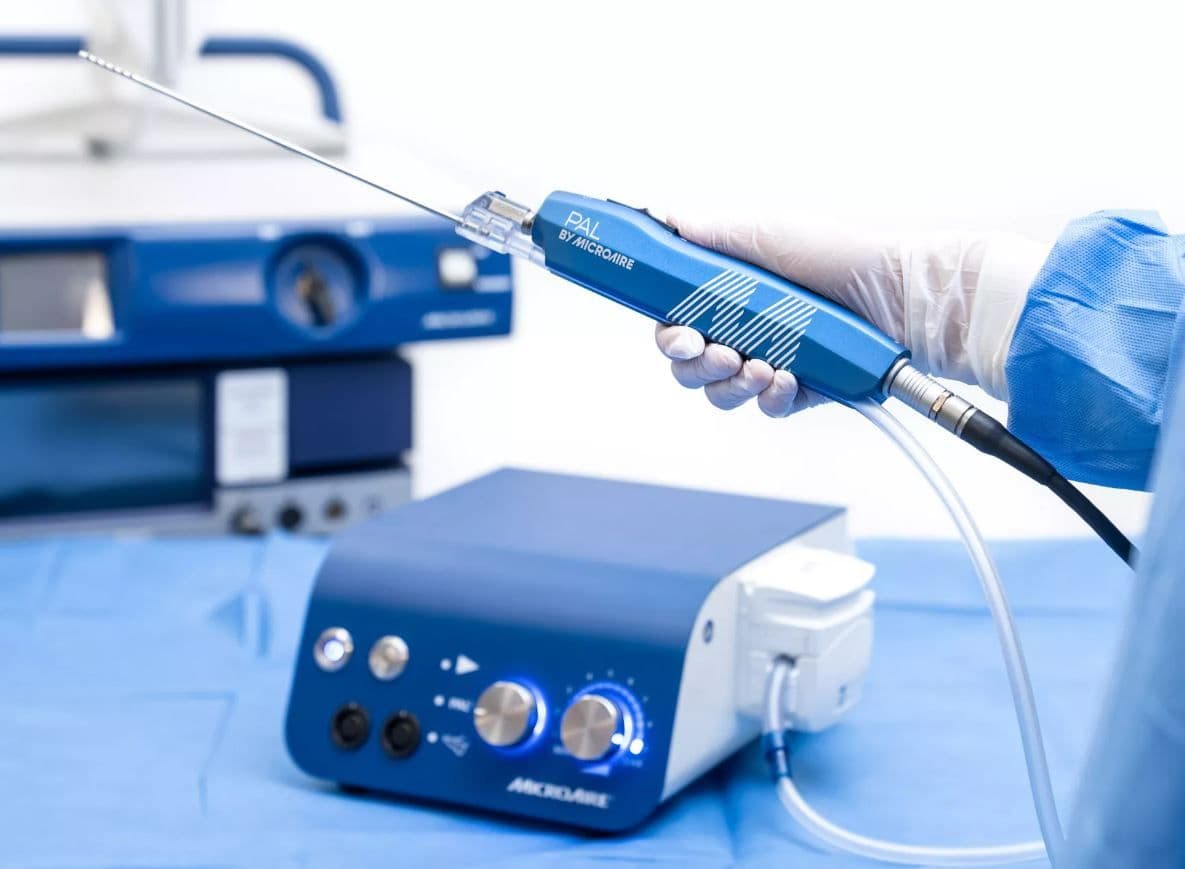
MicroAire PAL is an assisted liposuction system that is often evaluated when a clinic is looking for greater movement control, ergonomics, and consistency in the surgical workflow. Before making a decision, it is worth reviewing how it fits with the surgeon’s technique, the available equipment, and the type of procedures performed.
What to assess in MicroAire PAL before adding it
Interest in MicroAire PAL often arises in plastic and aesthetic surgery teams that already perform liposuction and want to assess whether an assisted system can be integrated into their way of working. The question is not only the device itself, but how it relates to the indication, surgical planning, and operating room dynamics.
In an initial assessment, it is advisable to avoid two extremes: relying only on the technical datasheet or expecting a universal answer. A system may be suitable for one procedure profile and less of a priority for another. That is why the analysis should start from the team’s real-world practice.
Within Optimedic’s Surgery range, MicroAire PAL is positioned in the field of equipment for plastic and aesthetic surgery, with an approach aimed at professionals looking for specific solutions for assisted liposuction procedures. The technical review should help determine whether it is worth a demonstration or a more detailed discussion.
Movement control: operational precision without clinical promises
One of the main criteria when assessing MicroAire is movement control during cannula work. In assisted liposuction, the goal of the system should not be framed as a guarantee of outcome, but as a mechanical aid that may influence how the surgeon manages the surgical gesture.
The useful question is not whether the system by itself “improves” a procedure, but whether the assisted movement pattern is compatible with the professional’s technique. This includes the way different anatomical areas are approached, sensitivity to cannula advancement, and the surgeon’s preference for certain working rhythms.
It is also worth assessing the team’s familiarity with motorized or assisted systems. If the team already works with surgical equipment from the Surgery products division, the discussion can focus on integration and use. If there is no previous experience, more attention will need to be devoted to training, handling, and adaptation.
Ergonomics: posture, grip, and continuity of movement
Ergonomics is another common reason for showing interest in MicroAire PAL. In liposuction procedures, repetitive movement, the length of certain interventions, and the need to maintain manual control make the system’s design relevant for the surgeon and the team.
When reviewing ergonomics, it is advisable to look at specific aspects:
- How the handpiece adapts to the surgeon’s usual grip.
- Whether the perceived weight and balance suit the working style.
- How the cabling or connection is arranged within the surgical field.
- What interaction it requires from the assistant or operating room staff.
- Whether use supports a comfortable sequence of movements for the professional.
This is not about claiming that a system eliminates physical fatigue. In a rigorous healthcare environment, fatigue depends on many factors: procedure duration, posture, operating table, technique, instrumentation, and team organization. The reasonable approach is to assess whether the system’s ergonomics support the surgeon’s movement without adding unnecessary friction.
Workflow: from setup to use in the operating room
An assisted liposuction system should also be analyzed from a workflow perspective. For a clinic, the decision does not depend solely on the lead surgeon: preparation, sterilization, instrumentation, coordination with anesthesia, and operating room pace are all involved.
Before moving forward, the team may want to ask a short list of questions:
| Criterion | Practical question |
|---|---|
| Preparation | Does the setup fit the current operating room routine? |
| Instrumentation | Can the staff clearly identify each component? |
| Procedure | Does the system fit into the surgeon’s usual sequence? |
| Cleaning and reprocessing | Can the internal circuit handle the required steps? |
| Support | Does the team know whom to consult if technical questions arise? |
This analysis avoids assessing MicroAire PAL as an isolated element. In a clinic, any addition must coexist with schedules, internal protocols, and surgical preferences. The better this context is understood, the more useful the subsequent commercial and technical discussion will be.
Adoption curve: training, team, and realistic expectations
The adoption curve is a key point when introducing new equipment. Even when a system is intuitive for a surgeon, the rest of the team needs to understand its setup, basic use, care, and possible operational issues.
In practice, it is useful to distinguish between three levels of adoption:
- Lead surgeon: assesses the feeling of control, compatibility with their technique, and handling preferences.
- Operating room team: learns setup, material placement, and assistance during the procedure.
- Clinical management: reviews fit with scheduling, maintenance, support, and usage planning.
Training should not be seen as a formality. It is part of the decision. A system may be technically appealing, but if the team does not have the time to incorporate it properly, adoption may be less smooth. That is why, before requesting a formal proposal, it is useful to clarify who will use it, in which procedures, and at what approximate frequency, without needing to set fixed figures.
Fit with the clinic’s procedure profile
Not all clinics evaluate MicroAire PAL for the same reasons. Some may focus on common body procedures; others on specific areas or on standardizing an already established aesthetic surgery workflow. The starting point should be the clinic’s real case mix.
At this stage, the team can organize procedures by complexity, usual duration, treated areas, and the surgeon’s technical preferences. This review helps decide whether it is worthwhile to explore the MicroAire PAL system further or whether it is better to first review the overall equipment needs.
It may also be useful to read related content from another angle. For example, the guide on how to choose an assisted liposuction system for a clinic addresses the decision from the perspective of introducing the system into the clinical setting. By contrast, the comparison between assisted liposuction with MicroAire PAL and the traditional technique focuses on differences in technical approach. This article comes earlier: the criteria that should be organized before speaking with an advisor.
MicroAire PAL within Optimedic’s Surgery range
Optimedics Surgery brings together equipment aimed at healthcare professionals who need specific solutions for the operating room and specialized procedures. In that context, MicroAire PAL is part of the offering for plastic and aesthetic surgery in Spain, with technical guidance to assess its fit.
The purpose of the advisory support is not to replace the surgeon’s clinical judgment, but to help translate practical needs into an organized review: which procedures are performed, what expectations the team has, what conditions the system must meet, and what support the clinic requires.
This approach is especially useful when the clinic is not looking for an immediate purchase, but for an informed discussion. Before moving forward, it may be enough to review operational compatibility, resolve handling questions, and confirm whether the system deserves a demonstration or a more specific proposal.
Frequently asked questions
What should a clinic assess when interested in MicroAire PAL?
It should assess movement control, ergonomics, workflow, the adoption curve, and fit with its usual procedures. MicroAire PAL should not be analyzed only by its technical features, but by how it would integrate into the surgical routine and the team’s way of working.
Is MicroAire PAL intended for any liposuction procedure?
Suitability depends on the surgeon’s criteria, the type of procedure, the treated areas, and operating room organization. The recommended approach is to review the clinic’s usual cases and discuss them with a technical advisor before deciding whether the system fits its needs.
Does the ergonomics of MicroAire guarantee less surgeon fatigue?
It should not be presented as a guarantee. Physical fatigue depends on many factors, such as procedure length, posture, technique, and the surgical environment. Ergonomics should be assessed by observing whether the grip, balance, and handling support the professional’s way of working.
When does it make sense to request information about MicroAire?
It makes sense when the clinic has already identified a specific need: reviewing gesture control, organizing workflow, assessing team adoption, or exploring whether assisted liposuction fits its procedures. A technical conversation helps clarify doubts before moving forward.
Next step to assess the fit
When the team is clear about what it wants to evaluate, the most practical step is to request a technical discussion. To review procedures, ergonomics, workflow, and the availability of advisory support, you can request information about MicroAire PAL and assess whether the system fits the clinic’s way of working.