

Ergonomic surgical loupes: a guide to knowing when they are worth it
A practical guide to understanding what ergonomic surgical loupes are, which criteria to assess, and when a steep-angle configuration may be worth it.
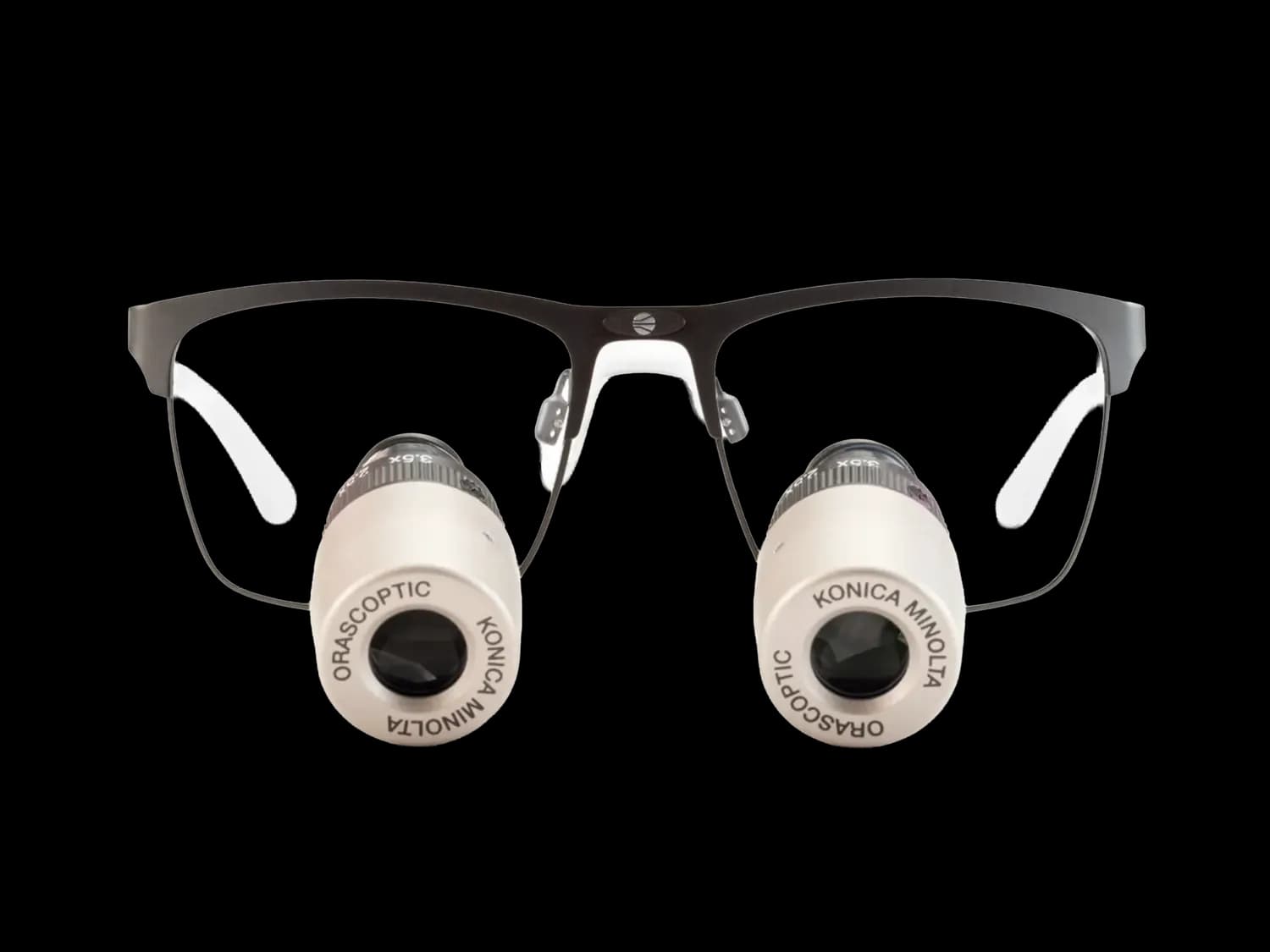
The ergonomic surgical loupes are magnification systems designed to facilitate a more neutral working posture during clinical procedures. They usually combine declination angle, working distance, weight, field of view and individual adjustment to help the professional look at the operative field without excessively flexing the neck and torso.
What ergonomic surgical loupes are
Talking about ergonomic surgical loupes is not only about magnification. Ergonomics depends on how magnification is integrated into the professional’s real posture: patient height, head position, working distance, type of procedure, lighting and duration of use.
With conventional loupes, the user looks through the eyepieces at a given angle toward the surgical field. In ergonomic or steeper-angle designs, the optics aim to allow a more downward gaze while the head remains in a less flexed position. The goal is to support a more neutral posture, not to promise the disappearance of discomfort or replace a full ergonomic assessment.
This category includes TTL (through-the-lens) configurations and solutions with optics designed to increase the downward viewing angle. Models such as ErgoZoom are an example of loupes designed for professionals who want to review their posture without giving up magnification tailored to their work.
It is also worth distinguishing ergonomics from immediate comfort. A loupe may feel different during the first uses because it changes the way you look, the position of the head or the perception of the field. That is why adaptation is part of the selection process.
Elements that make loupes ergonomic
Ergonomics in surgical loupes is built from several factors. None of them works in isolation. An appropriate configuration combines measurement, testing and adaptation to the clinical context.
Declination angle
The declination angle is the angle at which the gaze descends toward the working field through the loupes. A greater angle can allow work with less head inclination, provided it is well matched to the working distance and the professional’s usual position.
There is no universal angle for everyone. It depends on anatomy, specialty, chair or table height, and the way the patient is positioned. An incorrect measurement can create a forced posture even if the loupe is technically ergonomic.
Working distance
Working distance is the separation between the professional’s eyes and the operative field when maintaining the usual posture. It is one of the most important data points because it affects focus, depth of field and body position.
If the selected distance is too short, the user may tend to move closer to the field. If it is too long, visual control may be lost or postural compensations may appear. That is why it should be measured in a situation as close as possible to real work.
Weight and load distribution
Total weight matters, but so does how it is distributed across the frame, nose bridge and temples. A lighter system is not always more stable if the load is not balanced. Likewise, adding a headlight can change the sensation of load.
The frame, temple adjustment, bridge position and stability when moving the head are part of ergonomics. On days with multiple procedures, small fit issues can become more noticeable.
Field of view and depth of field
Field of view determines how much is seen through the loupes without moving the head. Depth of field indicates the range in which the image remains in focus when the distance changes slightly.
Both factors are related to magnification. With higher magnification, the need for precision in posture and working distance usually increases. That is why choosing more magnification is not always the most comfortable option for every procedure.
When ergonomic surgical loupes are worth it
Ergonomic surgical loupes are usually worth it when the professional needs to combine visual precision with a sustained posture over long periods. They are not essential for every profile, but they are an option worth considering when posture affects working comfort.
A common case is long or repetitive procedures. In surgery, dentistry, microsurgery, periodontics, endodontics, implantology or advanced dental hygiene, keeping visual attention on a small field can encourage static postures. An ergonomic configuration can help review that relationship between vision and body position.
They may also be relevant when the professional already uses conventional loupes and notices that they work with the head too tilted. In that scenario, the change is not just about buying another loupe, but about analysing whether declination, working distance and magnification are still appropriate.
Another frequent situation is the transition to higher magnifications. As magnification increases, field of view and depth of field may change. If the professional does not adapt posture, lighting and observation technique, they may end up compensating with the neck or torso.
The decision also depends on the specialty. Someone who alternates brief examinations with detailed procedures does not have the same needs as someone who works for long periods in a small field. That is why it is advisable to start from real use, not from a generic recommendation.
For professionals who are already assessing the impact of posture, it may be useful to complement this reading with the article on ergonomics, neck pain and the use of loupes in surgery, focused on habits and postural factors.
Practical criteria for choosing
Choosing ergonomic surgical loupes should balance vision, posture and adaptation. The table below summarises the main criteria without turning them into rigid rules.
| Criterion | What to assess | Why it matters |
|---|---|---|
| Magnification | Level of detail required in the specialty | Affects field, depth of field and postural demands |
| Working distance | Measurement in real clinical posture | Helps avoid leaning in or compensating |
| Declination angle | Direction of the gaze toward the field | Influences head and neck flexion |
| Field of view | Area visible without moving the head | Affects orientation and workflow |
| Depth of field | Useful focus margin | Helps with small adjustments without losing sharpness |
| Frame | Stability, fit and weight distribution | Determines comfort and optical position |
| Lighting | Compatibility with headlight | Improves consistency between visual axis and light |
| Adaptation | Progressive use period | Allows the new working posture to be integrated |
Choosing magnification according to the procedure
Magnification should match the level of detail required by the procedure. In general use, moderate magnification can offer a balance between field, depth of field and ease of adaptation. In more precision-demanding work, higher magnification can provide detail, but it requires greater control of distance and focus.
The practical question is not “which magnification is better”, but “which magnification allows enough detail and a sustainable posture for that indication”. At this point, a guided trial avoids decisions based only on specifications.
Reviewing TTL versus flip-up
TTL loupes integrate the eyepieces into the frame lens, with a customised configuration. Flip-up models allow the optics to be lifted away and may offer more mechanical adjustment room. In ergonomics, both options should be assessed by how they position the gaze, not only by their format.
To go deeper into this decision, you can consult the guide on TTL vs flip-up loupes by specialty, which addresses usage differences and selection criteria.
Considering the headlight
Lighting is part of visual ergonomics. When the light axis does not follow the visual axis, the professional may compensate with head movements or postural changes. That is why it is advisable to review compatibility with the headlight from the start.
Added weight, battery position and the type of fastening influence the balance of the set. An ergonomic loupe poorly balanced by the lighting system may lose part of its practical usefulness.
Transition from conventional loupes
Moving to ergonomic surgical loupes may require an adaptation period. The professional changes the way they orient their gaze, the position of the head and, in some cases, the way they organise the working field.
During the first uses, it is usually reasonable to start with familiar, lower-complexity procedures, always within the professional’s clinical judgement. This allows posture to be adjusted without adding an excessive learning curve.
It is also important to review patient height, stool or chair position, distance to the field and instrument placement. If the environment does not help, the loupe may not deliver the expected ergonomic benefit.
For users coming from lower magnifications, it is worth paying attention to the field of view. A simultaneous change in posture, magnification and working distance can be demanding. In some cases, a gradual transition makes it easier to integrate the new system.
Checklist before deciding
Before choosing ergonomic surgical loupes, it is advisable to answer a series of practical questions. The checklist helps organise the decision and detect whether a trial or technical advice is needed.
- Which procedures take up the most time in daily practice?
- Does the usual posture require sustained head or torso flexion?
- Has the working distance been measured in a realistic position?
- Does the chosen magnification fit the required field of view?
- Does the depth of field allow small adjustments without losing focus?
- Does the frame keep the optics stable during usual movements?
- Will a headlight be used from the start?
- Is the total weight balanced between optics, frame and lighting?
- Is there room for a progressive adaptation period?
- Has the configuration been tested with a position similar to real clinical use?
This review does not replace a personalised assessment. It helps you prepare the conversation with a technician better and avoid making the decision based only on magnification or on the initial feeling.
In the surgical loupes section of Optimedic, you can review magnification solutions for different professional profiles. For cases with specific postural needs, advice helps you adjust configuration, frame and lighting.
Frequently asked questions
Do ergonomic surgical loupes eliminate neck pain?
It should not be framed that way. Ergonomic surgical loupes can be part of a strategy to work in a more neutral posture, but they do not guarantee the disappearance of discomfort. Neck pain depends on multiple factors: overall posture, working time, physical condition, furniture, technique and rest habits.
What is the difference between ergonomic loupes and conventional loupes?
The main difference lies in how they orient the gaze toward the working field. Ergonomic models usually seek a declination angle that allows you to look downward with less head flexion. They also require precise measurement of working distance, frame and use position.
When is it worth considering a steep-angle design?
It is usually worthwhile in long procedures, repetitive work in a small field or when the professional notices sustained neck flexion with their current loupes. It may also be interesting when reviewing higher magnifications, always with a trial adapted to the specialty.
Can they be used with a headlight?
Yes, provided the configuration is compatible and well balanced. The headlight should follow the visual axis without adding excessive front weight or forcing you to modify your posture. That is why it is advisable to assess loupe, frame and lighting as a whole, not as separate accessories.
How long does adaptation take?
Adaptation time varies depending on the user, magnification, previous experience and type of procedure. The important thing is to plan progressive use, review working posture and request adjustments if persistent discomfort or difficulty maintaining focus appear.
Next step for assessing an ergonomic configuration
Choosing ergonomic surgical loupes means adjusting magnification, working distance, angle, frame and lighting to real clinical use. To compare options, you can review the range of surgical loupes from Optimedic or request advice on surgical loupes from a specialised technician.