Ergonomics and health · Surgical Loupes
Surgeon Ergonomics and Cervical Pain with Loupes: TTL, Declination Angle and Prisms
Surgeon cervical pain with loupes has a technical cause: insufficient declination angle, mis-fitted working distance or absence of deflection prisms. We analyze the factors and the technical solutions.
Surgeon cervical pain with loupes is not an inevitable consequence of the profession: it is a technical problem with an identifiable cause. A mis-configured loupe —insufficient declination angle, wrong working distance or absence of deflection prisms— forces the surgeon to tilt the cervical spine to reach the focal plane. Accumulated over operating-room sessions, the result is chronic cervicalgia.
Why mis-configured loupes generate cervicalgia
Professional cervicalgia in surgeons using surgical loupes has three structural factors:
Sustained posture under load. The human head weighs between 4.5 and 5 kg in neutral position. When tilted forward 30°, the apparent cervical load rises to over 15 kg. Maintaining that load through four or five hours of surgery is a clinical recipe for chronic cervicalgia.
Gaze angle toward the field. Any surgical procedure requires looking downward. The technical question is how much the gaze descends (ocular rotation) and how much the head descends (cervical rotation). The right loupe optimizes the first movement and minimizes the second.
Repetition over time. Damage does not appear in a single session: it appears after months and years of the same poorly fitted posture. By the time pain arrives, the postural pattern is fixed and correction requires both equipment change and postural retraining.
In our surgical fitting methodology we treat these three factors as calibratable parameters, not as fatalities of the profession.
The role of the declination angle
The declination angle is the key optical parameter of an ergonomic loupe. It defines how much the optical axis of the loupe deviates from the horizontal eye axis. The higher that angle, the less the surgeon must lower their head to focus on the field.
In traditional loupes the angle typically sits at 25-30°, forcing cervical tilt to complement the downward gaze. In ergonomic designs the angle rises to 35-45°, allowing the head to remain closer to neutral position while the gaze drops to the field through ocular rotation.
The difference between 25° and 40° of declination is the difference between finishing a plastic surgery day with stiff or relaxed cervicals. It is not a minor figure on paper: it is one of the factors with the greatest medium-term impact on the surgeon's professional health.
Custom TTL vs flip-up
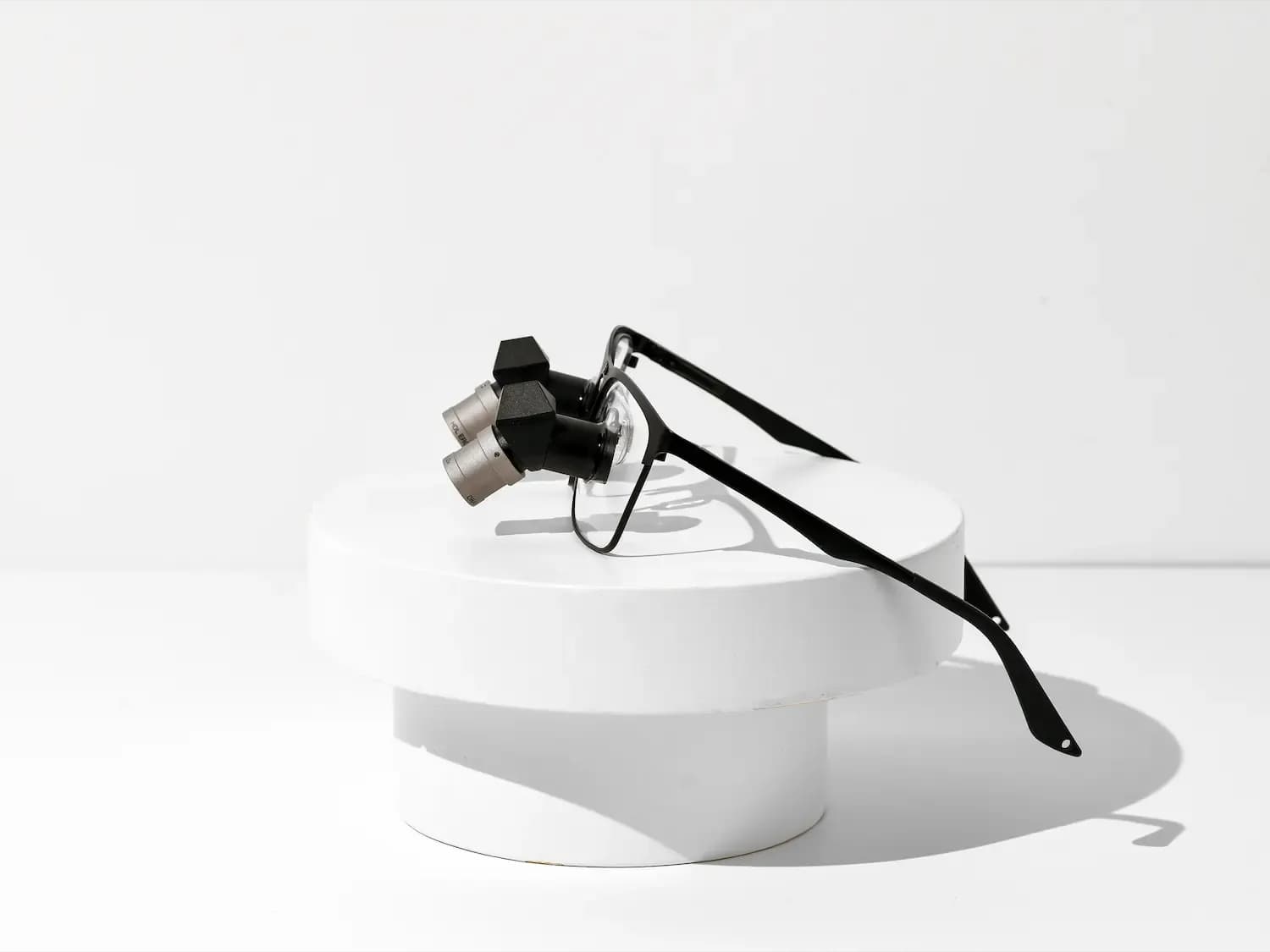
Custom through-the-lens (TTL) loupes are manufactured with a declination angle adapted to the surgeon's physiognomy and posture. The optic is integrated into the lens and calibration is permanent. This is ergonomically superior because the angle is measured in real operating-room posture, not standardized.
Flip-up loupes have a fixed declination angle at the hinge. They allow equipment sharing and lifting the optic when not in use, at the cost of not being calibrated to the millimeter for the individual surgeon. In long sessions and demanding specialties the difference shows.
The technical decision for surgeons with stable caseload and high volume is clearly in favor of TTL. Flip-up remains valid in training contexts or where equipment rotates.
Deflection prisms: the ergonomic generation
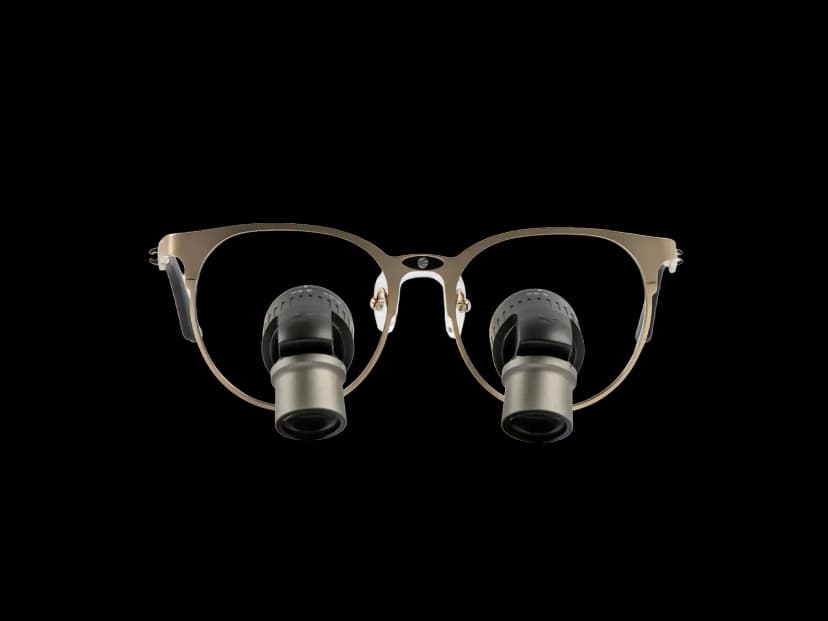
The most significant recent advance in loupe ergonomics are deflection prisms. Instead of simply tilting the lens, these optics use an internal prism that deflects the visual beam downward without the surgeon having to rotate the eye or tilt the head.
In practice this means the surgeon looks straight ahead —head upright, cervical spine in neutral position— and yet sees the operating field as if at a slightly tilted plane. The spine is protected from sustained flexion.
This optical architecture is available in different magnifications:
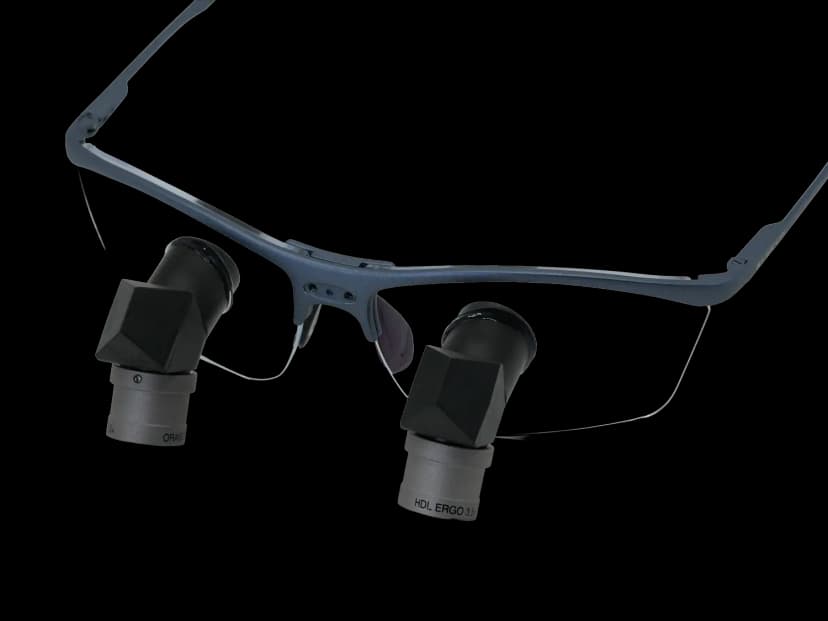
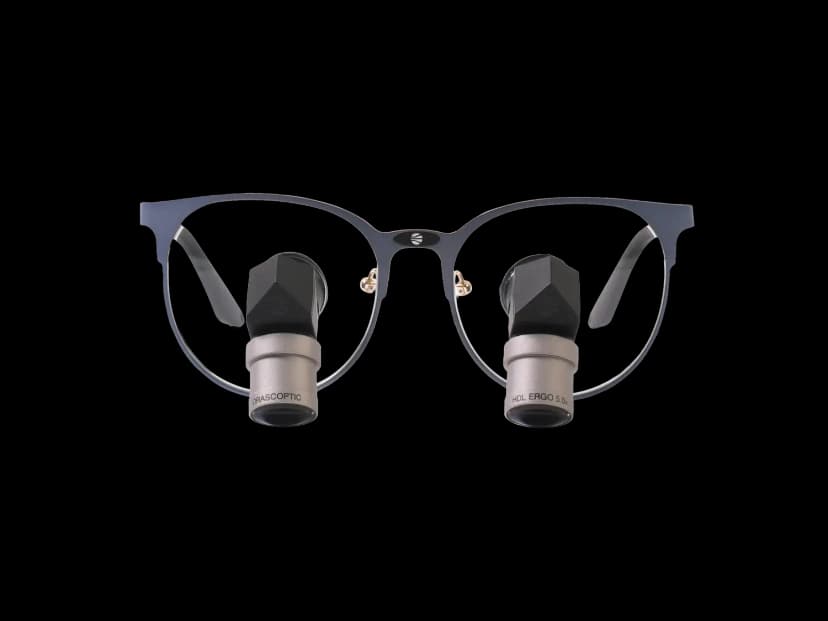
- HDL Ergo™ 3.5x: intermediate magnification with deflection prisms, profile for versatile procedures with long sessions
- HDL Ergo™ 5.0x: the highest fixed magnification available in ergonomic optics, indicated for microsurgery where before one had to choose between precision and posture
- ErgoZoom™: the first system combining variable magnification and deflection prisms, with 3.5x and 5.5x magnifications
They are not loupes for everyone: they carry higher cost and slightly higher weight than a standard optic. But in surgeons with long caseload and previous cervicalgia, the functional difference is what justifies the change.
Postural habits in the operating room that help
The right loupe solves the optical cause, but the surgeon's posture in the operating room also matters. Four habits that reduce cervical load in long sessions:
- Surgical table height: adjust the table to the surgeon's posture, not the other way around. The table should allow the surgeon to keep elbows at 90° with the back straight
- Active breaks between phases: stretching cervicals and trapezius for 30 seconds every hour reduces accumulated stiffness
- Seating with correct lumbar support: when the procedure is performed seated, lumbar fit affects cervical posture
- Periodic review of the loupe fitting: working distance changes slightly over time (posture, vision changes, habits). An annual calibration review prevents drift
None of these habits replaces a correctly configured loupe, but the sum of the four multiplies the protective effect.
Frequently asked questions
Is surgeon cervicalgia always due to loupes?
Not always, but mis-configured loupes are a documented and frequent cause. Other factors —table height, general posture, prior physical condition— add up. When the surgeon reports cervical pain and uses loupes daily, the first thing to review is equipment calibration.
Do cervical exercises help if the loupe is mis-fitted?
They help relieve symptoms, but do not resolve the cause. If the surgeon returns every day to a posture forced by a poorly calibrated loupe, the damage reappears. Postural retraining and exercises should be combined with technical correction of the equipment.
What age or years of practice typically mark cervicalgia onset?
In surgeons with mis-configured loupes, symptoms typically appear between 40 and 50 years of age, after 10-15 years of practice. With properly calibrated ergonomic equipment from the outset, the pattern shifts significantly —or does not appear— in most professionals.
Are ergonomic loupes with deflection prisms suitable for all magnifications?
They are available in intermediate and high magnifications (3.5x to 5.5x). At 2.5x they do not bring significant advantage because working distance allows neutral posture without additional prisms. At 3.5x and above is where the ergonomic difference shows most.
Should one switch from standard to ergonomic loupes if cervicalgia is already present?
Yes, but the transition is accompanied by postural adaptation. The cervical spine has spent years in a specific position and needs gradual retraining. It is advisable to combine the equipment change with physiotherapy follow-up during the first months.
Protecting the surgeon's cervical health with correct loupes
Professional surgeon cervicalgia is not destiny. It is the sum of technical decisions taken —or not taken— at the moment of choosing and calibrating loupes. A loupe with adequate declination, personalized distance and, when applicable, deflection prisms, marks the difference between a long, sustainable surgical career and a practice forced to scale down due to chronic musculoskeletal conditions.
In the approach we apply at Optimedic, ergonomics is not treated as an accessory attribute but as a central parameter of choice. It is what we call surgical fitting and is the reason we insist on an in-person assessment before configuring the equipment.
To review the fit of your current loupes or configure ergonomic equipment from scratch, request a technical assessment.