

Surgical Loupes · Clinical applications
Surgical loupes in plastic surgery: criteria before choosing magnification
A guide to assessing magnification, field of view, depth of focus, weight and posture before choosing surgical loupes in plastic surgery.
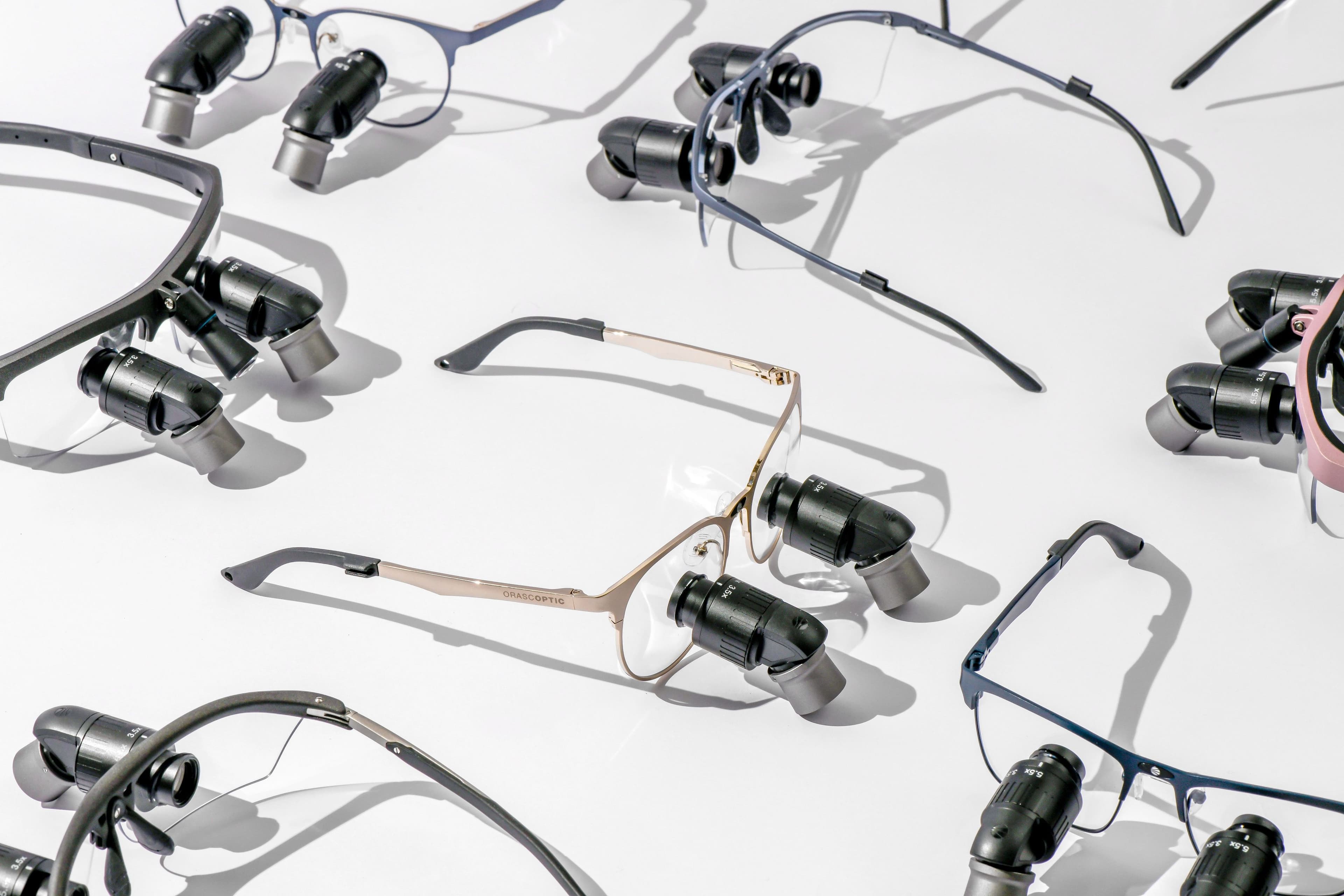
Surgical loupes in plastic surgery should be chosen by assessing magnification, field of view, depth of focus, weight and working posture according to the procedure. It is not just a matter of “seeing more”, but of maintaining useful, stable and ergonomic vision during procedures with different demands.
Surgical loupes in plastic surgery: why the criteria change depending on the technique
Plastic surgery combines procedures with very different working scales. A blepharoplasty, reconstructive surgery, scar revision or a procedure involving fine suturing do not require the same balance between detail, field width and freedom of movement.
For this reason, the choice of surgical loupes should not be based on magnification alone. It is also worth analysing how much the professional moves during the procedure, what working distance is maintained, whether they need to alternate between direct and magnified vision, and what weight they can tolerate during prolonged sessions.
In this context, Orascoptic surgical loupes allow solutions to be configured for different clinical profiles. The key is to relate each optical parameter to the actual way of working, rather than choosing an isolated configuration.
Magnification: more detail does not always mean a better decision
Magnification is the first criterion that is usually compared, but it is also one of the most likely to raise doubts. In plastic surgery, greater magnification can make it easier to visualise small structures, tissue edges or fine sutures. However, it can also reduce the width of the visual field and require greater precision in head position.
In procedures where a broad view of the surgical area is needed, moderate magnification may be more comfortable. By contrast, when the work is focused on fine, repetitive details, it may make sense to consider higher magnifications, provided the professional maintains a stable posture.
The decision should answer three questions:
- Does the procedure require an overall view or local detail?
- Does the working area remain stable or change frequently?
- Can the professional maintain the working distance without straining the neck and back?
A common mistake is choosing more magnification thinking only about precision. If the field becomes too limited for the procedure, the surgeon may need to reposition the head or torso more often. That dynamic can affect working comfort, even if the magnified image is technically appropriate.
Field of view: useful width for working continuously
The field of view is the area seen through the loupes. In plastic surgery it is particularly important because many procedures combine stages of anatomical orientation with stages requiring detail.
A wide field makes it easier to keep references of the surgical environment. This may be relevant in procedures where dissection, edge control, suture placement and intraoperative aesthetic review are alternated. A narrower field may be acceptable when the task is concentrated on a specific point for longer periods.
The choice of field depends on the relationship between magnification, optical design and working distance. In general, as magnification increases, the visible width tends to decrease. That is why it is useful to try different configurations before making a decision.
| Working situation | Usual optical priority | Risk if chosen poorly |
|---|---|---|
| Procedures with a broad view of the area | Wider field of view | Frequent repositioning |
| Fine suturing or local detail | Greater definition in a specific zone | Loss of peripheral references |
| Procedures with changing planes | Balance between field and magnification | More demanding visual adaptation |
| Prolonged sessions | Comfortable field and stable posture | Visual or cervical fatigue associated with postural effort |
This table does not replace a personalised trial, but it helps structure the technical discussion before requesting information about Optimedic loupes solutions.
Depth of focus: stability when the working plane changes
Depth of focus indicates the range over which the image remains in focus without the need to constantly change position. In plastic surgery, it can be a decisive criterion because the working plane does not always remain fixed.
When the procedure requires moving from a superficial area to a deeper one, adequate depth of focus helps maintain visual continuity. If the range is too limited for the technique, the professional may be forced to adjust posture or distance repeatedly.
This point is especially important in procedures where precision manoeuvres are alternated with assessment of contours, symmetry or tissue planes. The goal is not to maximise a single parameter, but to preserve a useful image within the real range of movement.
Before choosing surgical loupes, it is worth reviewing:
- The usual distance between the eyes and the surgical field.
- The variation in height between the planes treated.
- The need to move around the operating table.
- The continuous time of use during each procedure.
Comfortable depth of focus can reduce visual interruptions, but it must be assessed together with magnification. Higher magnifications may require greater adaptation in working position.
Working distance and posture: the loupe must adapt to the professional
Working distance is the separation between the professional’s eyes and the surgical field when maintaining a natural posture. In surgical loupes, this data determines both focus and ergonomics.
If the chosen distance does not correspond to the actual posture, the user may end up tilting the neck, raising the shoulders or leaning in more than necessary. In plastic surgery, where visual concentration can be maintained for long periods, these compensatory adjustments should not be part of the routine.
The assessment should be carried out by observing the professional in a position similar to that used in the operating room. It is not enough to measure while simply sitting or standing in a generic way. The table height, the type of procedure, the patient’s position and the way the instruments are held all affect the final distance.
It is also worth distinguishing between TTL (through-the-lens) systems and flip-up designs. TTL loupes are integrated into the lens and usually require a more personalised configuration. Flip-up models allow the optical system to be lifted, which can be useful when alternating frequently between magnified and direct vision. The choice depends on preference, technique and ergonomics.
Weight, frame and lighting: comfort during real use
Total weight does not depend only on the loupes. The frame, the type of optics and the possible addition of a frontal light all influence the sensation during the procedure.
In plastic surgery, the balance of the system is just as important as the weight itself. A lightweight configuration that is poorly balanced can cause discomfort on the nose bridge or require constant small adjustments. A well-fitted frame should remain stable without unnecessary pressure.
In addition, coaxial lighting can be useful when working in fields where ambient light does not reach easily. In that case, the illuminator should be assessed together with the required battery life, weight distribution and type of procedure. Optimedic has a specific category of Loupes and accessories, so it is advisable to review the options from a system perspective rather than as independent parts.
To compare configurations, the professional can consult the Optimedic catalogues and then confirm the choice with technical advice. The catalogue provides guidance, but the trial and adaptation to the user are what make it possible to fine-tune the decision.
Criteria by type of procedure in plastic surgery
There is no single configuration suitable for all plastic surgery. The choice of surgical loupes should be related to the most frequent procedures performed by each professional.
Eyelid surgery and small anatomical areas
In highly precise procedures on reduced areas, visual detail becomes more important. It may be reasonable to consider magnifications that allow small structures to be observed clearly, provided the field of view does not limit anatomical orientation.
Working distance should also be carefully managed. In facial areas, the professional may tend to move closer to the surgical field. If the loupe is not configured for a neutral posture, that approach can lead to sustained cervical flexion.
Reconstructive surgery and tissue revision
In reconstruction, visual needs can change during the procedure. There may be phases of dissection, edge preparation, tissue control and suturing. Here, the priority is often to balance magnification, field and depth of focus.
A field that is too narrow can make it difficult to see the context. Insufficient magnification may fail to provide the desired detail in certain phases. The technical discussion should focus on the tasks that take the most time and those that require the greatest precision.
Fine suturing and repetitive work
When the procedure includes fine suturing, visual stability is key. The loupe should allow the working point to remain in focus without forcing constant readjustments of the head or torso.
In this case, depth of focus and declination angle play an important role. The professional should be able to look at the surgical field with a comfortable tilt, avoiding repeated postural compensations.
Procedures with frequent changes in position
Some procedures require moving around the table or changing the approach angle. In these situations, a configuration that is too demanding may be less practical. The field of view, depth of focus and frame stability should be analysed especially carefully.
To broaden this specialty-specific approach, you can consult the article on surgical loupes in plastic surgery and selection criteria, which complements this guide from a clinical perspective.
Checklist before requesting advice
Before asking for information about surgical loupes, it is worth preparing a clear description of the usual practice. This allows the technical recommendation to be more precise.
Decision checklist:
- Specialty and most frequent procedures.
- Approximate continuous use time during the procedure.
- Usual posture: sitting, standing or alternating.
- Real working distance in the operating room.
- Need to alternate magnified vision and direct vision.
- Preference for TTL or flip-up, if there is previous experience.
- Sensitivity to weight on the nose, ears or neck.
- Need for associated frontal lighting.
With this information, the advice can focus on specific Orascoptic configurations and adaptation to the user. Optimedic acts as the official distributor in Spain and offers technical support to assess options for loupes, frames and lighting.
If the professional already has experience with loupes, it is also useful to indicate what feels comfortable and what they would change: magnification, field, weight, stability, posture or lighting. That comparison usually speeds up the selection.
Frequently asked questions
What magnification of surgical loupes is suitable for plastic surgery?
It depends on the procedure, working distance and the level of detail required. In plastic surgery, choosing the highest available magnification is not always advisable, because it can reduce the field of view. The recommended approach is to balance detail, visual width and postural comfort according to the most common techniques.
Is field of view more important than depth of focus?
Both parameters are important, but their weight changes depending on the procedure. The field of view helps maintain references of the surgical area. Depth of focus makes it easier to work when the plane varies. In dynamic procedures, the balance between both is often more useful than prioritising just one.
Are TTL loupes always preferable to flip-up models?
Not necessarily. TTL models are customised into the lens and can offer a very integrated experience. Flip-up models allow the optics to be lifted and direct vision to be alternated. The choice depends on technique, posture, previous experience and the professional’s preferences.
Is it advisable to add frontal lighting to surgical loupes?
It may be recommended when the surgical field requires directed and stable light. The decision should take into account the type of procedure, the added weight, the balance of the system and the way of working. The right approach is to assess the loupe, frame and illuminator as a complete system.
How can I request a personalised recommendation?
The most useful information to provide is specialty, frequent procedures, working distance, usual posture and optical preferences. With these data, a technician can guide the choice and propose suitable configurations. For plastic surgery, trial and personalised adjustment are especially relevant.
Next step to choose with confidence
Choosing surgical loupes for plastic surgery requires relating magnification, field, depth of focus, weight and posture to real procedures. To assess Orascoptic options and resolve technical questions, the professional can request information about surgical loupes from Optimedic.