Surgical Loupes · Clinical applications
Surgical Loupes for Maxillofacial Surgery: Technical Criteria and Recommended Magnification
Maxillofacial surgery combines deep field and sub-millimeter detail. We review technical criteria for surgical loupes in this specialty: magnification, lighting and postural ergonomics.
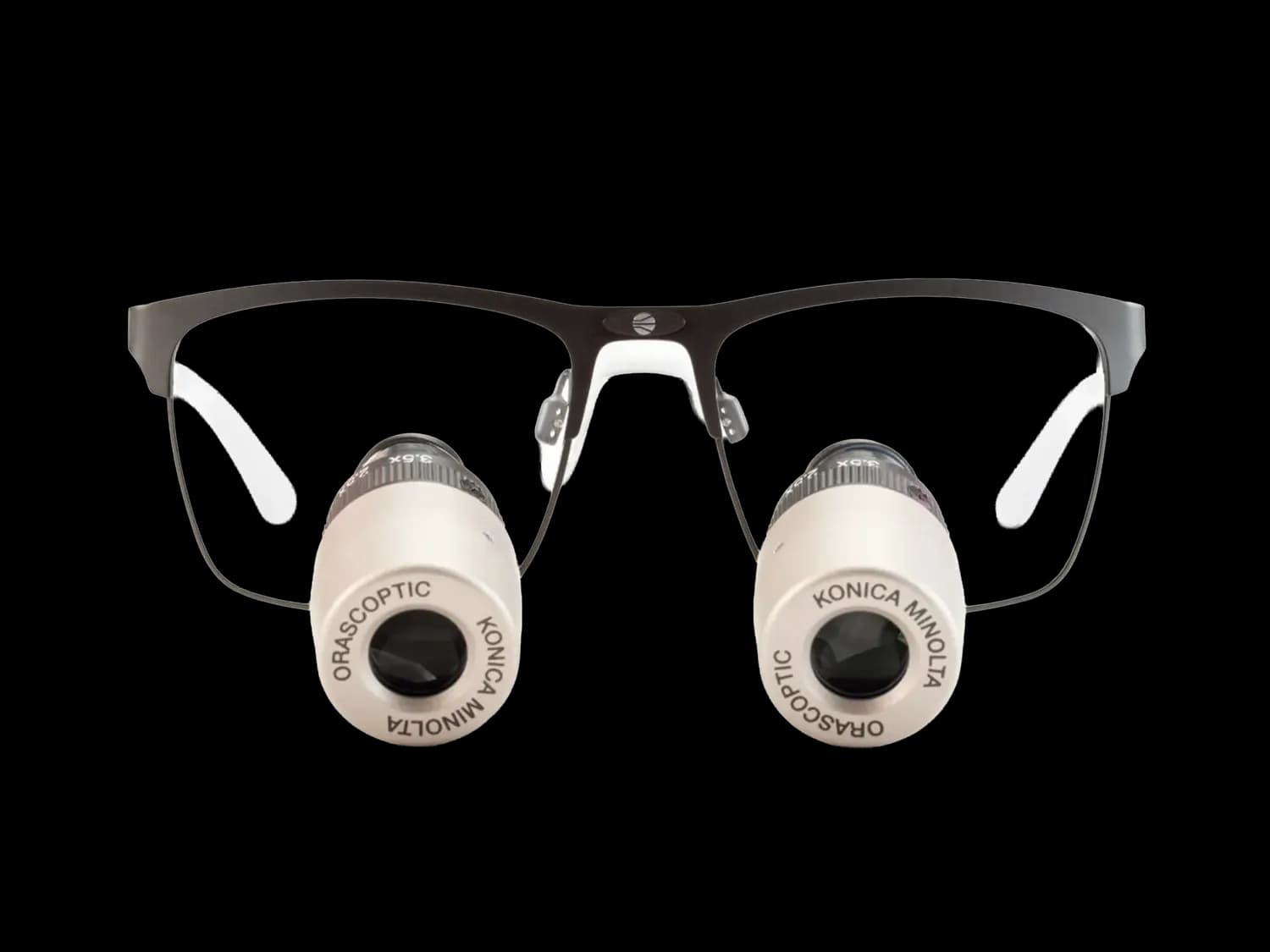
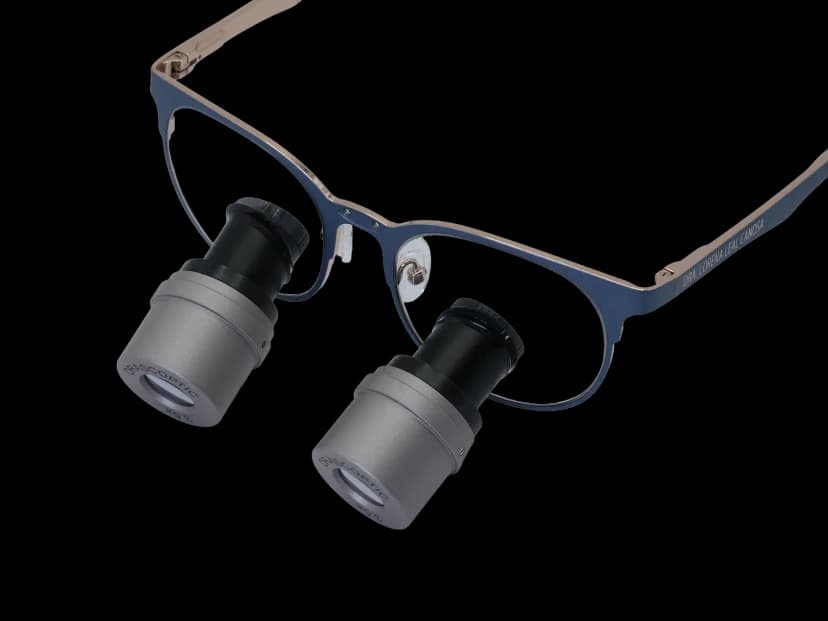
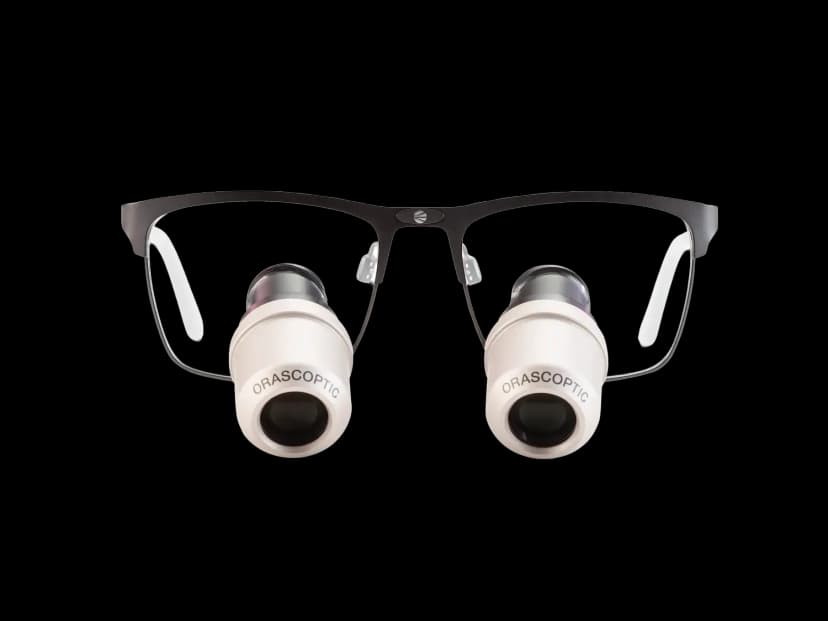
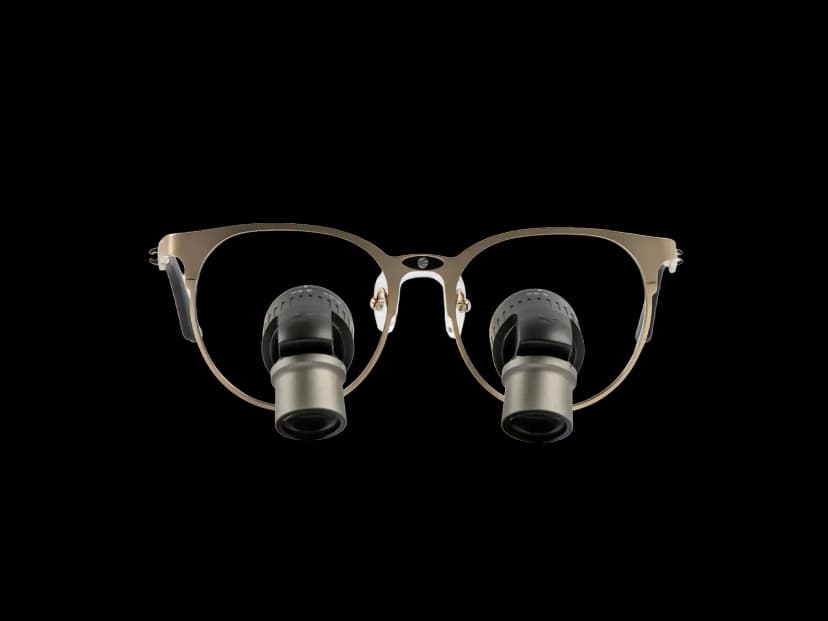
Surgical loupes for maxillofacial surgery should offer medium-high magnification (3.5x–4.5x), integrated frontal lighting to reach the oral cavity, and an ergonomic design that tolerates long sessions and the postural inclination typical of this specialty. The choice depends on procedure type —orthognathic, facial trauma, oncologic reconstructive, advanced implantology— and on weekly use frequency.
What maxillofacial surgery demands from the optics
Maxillofacial surgery works on an anatomical region with three characteristics that condition the choice of surgical loupes:
- Cavity depth: the oral cavity and orbital floor demand reaching planes several centimeters from the patient's facial plane. The optical system must allow maintaining a comfortable working distance without forcing the surgeon to tilt the head excessively
- Millimeter structures in bone and soft tissue: precise osteotomy planes, sensory nerves (inferior alveolar, infraorbital, mental), osteosynthesis plates. Anatomical detail must be distinguished with clarity
- Variability between procedures: a maxillofacial day may combine orthognathic (broad gestures), facial trauma (osteosynthesis with medium detail) and reconstructive (vascular microsurgery). Useful magnification varies within the same session
These three demands guide the criterion we apply in our surgical fitting methodology: the right loupe for maxillofacial must be versatile in magnification or, alternatively, have a variable system.
Recommended magnification by procedure
Orienting framework by maxillofacial subspecialty:
| Procedure | Recommended magnification | Technical rationale |
|---|---|---|
| Orthognathic surgery (mandibular and maxillary osteotomies) | 3.5x | Detail of osteotomy lines with broad field |
| Facial trauma (osteosynthesis) | 3.5x – 4.5x | Fine plates, screws, precise reduction planes |
| Oncologic reconstructive surgery | 3.5x | Combines broad dissection and vascular planes |
| Vascular microsurgery in flaps | 4.5x – 5.0x | Anastomosis of vessels < 2 mm |
| Advanced implantology (regeneration, sinus lift) | 3.5x | Detail on membranes and delicate planes |
| Facial nerve surgery | 4.5x | Identification and preservation of nerve fibers |
| Benign tumor pathology (cysts, lesions) | 3.5x | Dissection with global field vision |
For surgeons combining heterogeneous procedures in the same week, a variable magnification system such as ErgoZoom™ covers the 3.5x–5.5x range without removing the loupe, a real advantage when alternating between osteotomy and microsuture on the same day.
Custom TTL: the clinical option in maxillofacial
Maxillofacial surgery heavily penalizes any ergonomic compromise. For two reasons: sessions are long and posture over the field is among the most inclined of all surgical specialties (the patient's head sits low relative to the surgeon, forcing a sharply descended gaze).
In this context, custom through-the-lens (TTL) loupes are the default technical option. Custom calibration of working distance, interpupillary distance and declination angle is performed with the surgeon in real operating-room posture, not in neutral position.
Flip-up remains valid for residents in training or teams that rotate, but in experienced surgeons with stable caseload, the ergonomic difference of custom TTL is noticed at the end of every session.
Models such as HDL™ 3.5x and HDL™ 4.5x cover the most demanded range in maxillofacial with expanded field and high edge-to-edge resolution.
Frontal illumination in the oral cavity
From 3.5x onward, the field narrows and oral cavity depth generates shadows that overhead operating-room lighting cannot resolve. Maxillofacial surgery is probably the specialty in which the frontal headlight provides the clearest difference.
A coaxial headlight aligned with the visual axis projects homogeneous light over the magnified field within the cavity, eliminating shadows generated by the patient's own anatomy and the surgeon's hands over the working plane.
Two points to consider:
- Color temperature around 6,000 K: distinguishing between bone, mucosa and bleeding tissue requires neutral light. CRI 95+ is preferable to maintain color fidelity
- Steerable beam: the oral cavity is narrow. A beam that is too wide disperses outside the field; a beam too narrow leaves zones in shadow. Professional ranges allow some adaptation of the lighting pattern
The choice between loupe with integrated headlight or separate system in maxillofacial usually leans toward integrated for surgeon mobility and preference for no cable.
Ergonomics: the decisive medium-term factor
Professional cervicalgia in maxillofacial surgery is a documented reality directly linked to sustained posture of low gaze over the oral cavity. At 10-15 years of intensive practice, maxillofacial surgeons with mis-configured loupes typically present chronic cervical symptoms.
Two technical factors protect against this evolution:
High declination angle. Loupes with declination between 35° and 45° allow keeping the head closer to neutral position while the gaze drops to the field through ocular rotation. The difference between 25° and 40° of declination marks the difference between chronic cervicalgia and preserved cervicals in the medium term.
Deflection prisms in ergonomic loupes. Systems such as ErgoZoom keep the head upright while the image reaches the eye deflected downward internally. In maxillofacial surgery, where postural inclination is maximum, this type of optics is probably the ergonomic advance with the most clinical impact of the last decade.
Frequently asked questions
What magnification is most used in maxillofacial surgery?
3.5x is the most widespread magnification because it covers most gestures: orthognathic, facial trauma and non-microsurgical reconstructive. Surgeons with caseload oriented to vascular microsurgery move up to 4.5x. Below 3.5x detail begins to fall short for the fine planes of the specialty.
Is a variable magnification system worth it in maxillofacial?
Yes in versatile profiles. A surgeon combining orthognathic (3.5x), vascular microsurgery (4.5x–5.0x) and reconstructive in the same week benefits from a variable system covering the range with a single optic. For profiles focused on a single subspecialty, a well-calibrated fixed magnification is more efficient.
Is frontal illumination really essential in the oral cavity?
From 3.5x onward, practically yes. The oral cavity generates anatomical shadows that overhead operating-room light cannot resolve, and magnification narrows the field precisely where you most need illuminated detail. Maxillofacial surgeons who try integrated headlight in the oral cavity rarely return to operating without it.
What weight is acceptable in a maxillofacial loupe?
The complete system —loupe plus headlight, if added— should sit below 100 grams on the surgeon's nose. Above that, in long sessions, weight becomes an additional fatigue factor. Selection should prioritize lightweight materials without sacrificing optical quality.
Should the loupe fitting be reviewed over time?
Yes. The surgeon's posture changes with the years, vision changes too, and the frame itself can shift slightly with use. An annual fitting review —distance, angle, ergonomics— maintains optimal calibration and prevents the postural drift that ends up generating cervicalgia.
Configuring a surgical loupe for maxillofacial surgery with professional criterion
Maxillofacial surgery is one of the specialties that benefits most from a properly configured loupe and, simultaneously, one of the most penalized by mis-calibrated equipment. The combination of long sessions, inclined posture and oral cavity demands taking technical decisions with clinical, not commercial, criterion.
In the surgical fitting approach we apply at Optimedic, the configuration for maxillofacial is done in the operating room with the surgeon in their habitual posture, assessing magnification, working distance, declination angle, lighting system and ergonomic integration as a set. It is the way to avoid compromises the surgeon pays for during the rest of their career.
To configure a loupe adapted to your maxillofacial caseload, request personalized technical advice.