

Surgical Loupes · Ergonomics and health
Surgical loupes for neurosurgery: magnification, field and ergonomics
Technical guide for assessing surgical loupes in neurosurgery: magnification, depth of field, field of view, working distance and ergonomics.
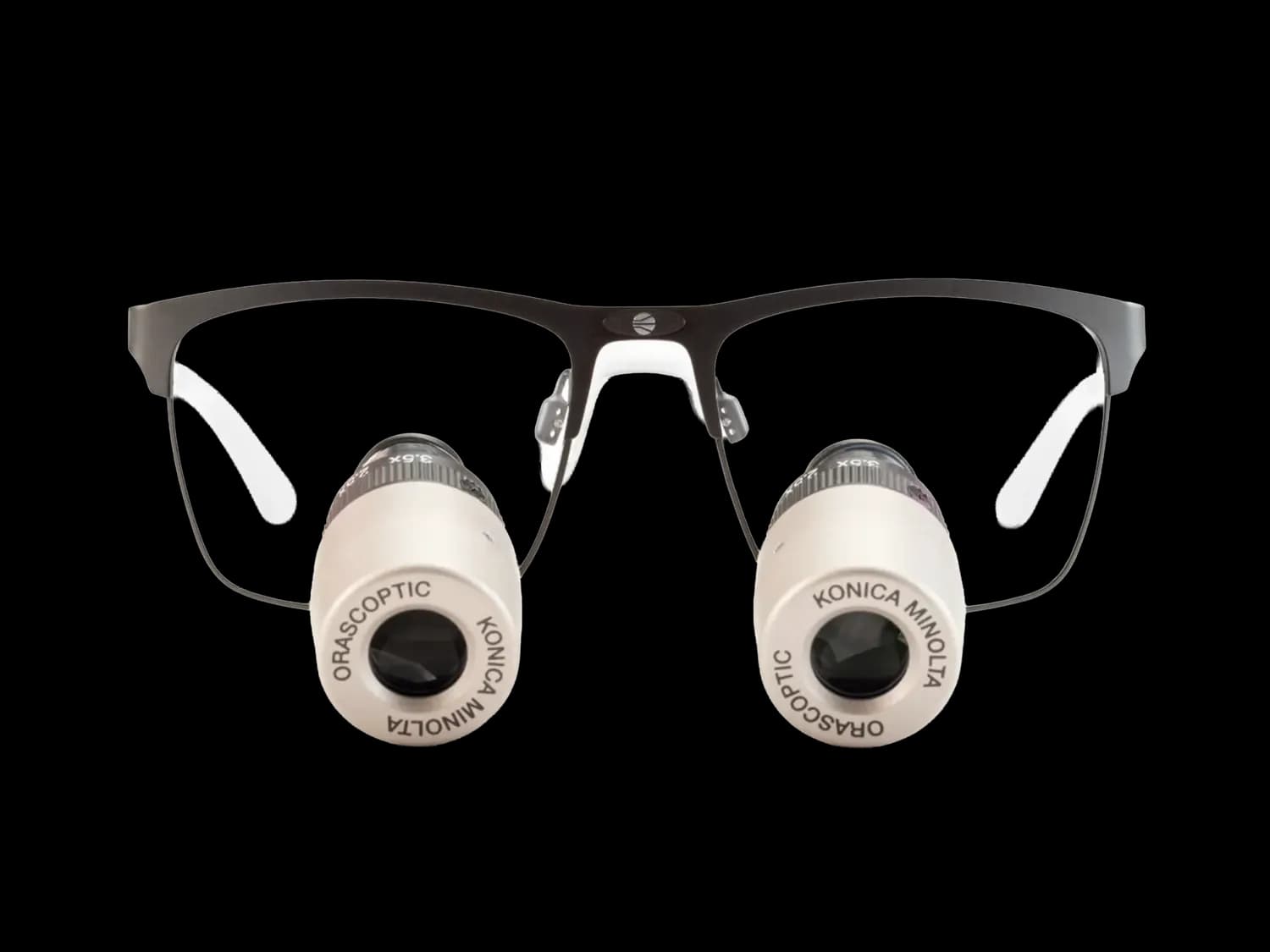
Surgical loupes for neurosurgery must be chosen by balancing magnification, depth of field, field of view, working distance and ergonomics. There is no universal configuration: the decision depends on the type of procedure, the sustained posture, the need for fine precision and the professional’s tolerance for each optical system.
Surgical loupes for neurosurgery: variables that influence the choice
In neurosurgery, magnification is not assessed in isolation. High magnification can facilitate visualization of fine structures, but it also usually requires greater postural control, increased stability and careful adaptation to the working field. For that reason, selection should start with a comprehensive assessment of the surgical environment.
The main variables are four: magnification, depth of field, field of view and working distance. Each one influences how you observe, move and maintain cervical alignment during prolonged or highly precise procedures.
The range of Orascoptic surgical loupes allows different solutions to be configured according to the specialty and the professional’s preference. In neurosurgery, this customization is especially relevant because small changes in working position can alter visual and postural comfort.
Magnification: visual precision without losing control of the environment
Magnification determines the level of detail perceived. In specialties with high visual demands, it can be tempting to always choose the highest available magnification. However, greater magnification is not always the most functional option if it reduces the useful field too much or makes spatial orientation more difficult.
In neurosurgery, magnification should be assessed in relation to:
- The type of surgical access and the depth of the field.
- The need to recognize peripheral anatomical landmarks.
- The usual duration of procedures.
- The stability of head, neck and shoulder position.
- The professional’s previous experience with high magnifications.
Prismatic loupes are often a common option when greater magnification is required while maintaining optical quality in fine tasks. Models such as HDL 4.5x may be suitable for professionals who need advanced magnification within a customized setup.
However, magnification should be tested with a realistic working distance. Assessing it only under static conditions or outside the surgical gesture can lead to a choice that is not representative.
Depth of field and field of view: a critical balance
Depth of field indicates the range in which the image remains sharp without changing posture or viewing distance. In neurosurgery, sufficient depth of field helps you work with small variations in plane without having to constantly readjust body position.
The field of view, meanwhile, determines the breadth of the area visible through the loupes. A wide field facilitates orientation, reading the anatomical surroundings and coordinating with instruments. When magnification increases, the field tends to become narrower, so the balance between both variables is essential.
| Variable | What it contributes | Risk if oversized or neglected |
|---|---|---|
| Magnification | Greater detail of fine structures | Smaller useful field or more demanding adaptation |
| Depth of field | Sharpness across small plane changes | If limited, it forces postural readjustment |
| Field of view | Orientation and control of the environment | If narrow, it may make peripheral reference difficult |
| Working distance | Posture and visual alignment | If it does not fit, it encourages cervical compensations |
The right choice does not seek to maximize every variable, but rather to prioritize the ones that best suit the procedure and the professional’s natural posture.
Working distance and ergonomics in prolonged procedures
Working distance is the separation between the eyes and the surgical field when the professional adopts their functional posture. In neurosurgery, this measurement should not be estimated generically, because the surgeon’s height, the table position, the type of access and postural habits all play a role.
A poorly adjusted working distance can cause neck flexion, shoulder elevation or repeated changes in posture. This is not only about comfort: it also affects visual stability during fine tasks.
To configure it correctly, the professional should be measured under conditions close to real practice. The assessment should include:
- Habitual working position.
- Operating table or surgical field height.
- Required declination angle.
- Frame type and facial adjustment.
- Compatibility with headlight illumination if used.
Ergonomic solutions aim to encourage a more aligned posture, reducing the need to flex the neck to look at the field. In this context, ErgoZoom offers an approach focused on visual ergonomics, especially useful when sustained posture is a priority criterion.
TTL, prismatic, ergonomic or variable magnification: when each option fits
The optical configuration should respond to the balance between precision, field, posture and adaptation. In neurosurgery, different approaches may be considered depending on the case.
TTL configuration
TTL (through-the-lens) loupes integrate the telescopes into the lens with a working distance and angle defined for the user. They usually provide a stable and personalized experience when the working posture is well measured. They fit professionals who have a fairly consistent surgical position and want a configuration tailored from the start.
Prismatic configuration
Prismatic loupes are considered when greater magnification and more detailed observation are required. They may be suitable for procedures where visual precision matters more than breadth of field. They require careful adaptation, especially if the professional has not previously worked with high magnifications.
Ergonomic configuration
Ergonomic loupes shift the visual axis to favor a more neutral head position. They are an alternative worth considering when sustained cervical flexion is a problem or when more sustainable postural habits are sought during prolonged procedures.
Variable magnification
Variable magnification can be useful when the same professional alternates between tasks with different visual needs. It allows magnification to be adjusted without changing loupes, although the choice should consider weight, adaptation and the real range of use in the operating room.
For a broader overview of magnification criteria, you can consult the guide on what magnification to choose in surgical loupes, useful as a starting point before a specific configuration for neurosurgery.
How to approach a customized Orascoptic configuration
A customized configuration starts by defining the main clinical use. It is not the same to prioritize maximum detail in a deep field as it is to seek versatility across procedures or improve posture during long days. The technical discussion should organize those priorities before selecting the model.
A practical approach can follow these steps:
- Define the predominant procedure type. Field depth, need for detail and required mobility.
- Measure the real working distance. Always from the functional posture, not from a forced position.
- Select the magnification range. Considering previous experience, required precision and visible field.
- Assess ergonomics and declination. Especially if sustained cervical flexion is present.
- Review lighting and frame. The set-up must be stable and compatible with the workflow.
- Test the configuration. Visual and postural perception should be evaluated before making the final decision.
The goal is for the loupes to support the professional’s technique, not force them to change the way they work in an uncomfortable manner. That is why, in specialties such as neurosurgery, individual technical advice is more reliable than a recommendation based on magnification alone.
Frequently asked questions
What magnification is recommended in surgical loupes for neurosurgery?
It depends on the type of procedure, the depth of the field and the professional’s experience with magnification. In neurosurgery, magnifications that allow fine detail are often considered, but the decision must be balanced with field of view, depth of field and postural comfort. A personalized trial is key.
Are prismatic loupes better for neurosurgery?
Prismatic loupes may be a good fit when greater magnification and visual precision are needed, but they are not automatically the right choice for every case. Working distance, posture, field of view and the professional’s tolerance for high magnification also matter.
What role does ergonomics play in neurosurgery?
Ergonomics is important because many procedures require sustained visual attention and stable postures. An appropriate configuration can promote a more comfortable alignment of head, neck and back, provided that the working distance and declination angle are correctly adjusted.
When should variable-magnification loupes be considered?
Variable magnification can be useful if the professional alternates procedures or surgical phases with different visual needs. Before choosing it, it is advisable to assess whether that range will actually be used, how it affects adaptation and whether ergonomics remains adequate.
Configure surgical loupes for neurosurgery with technical criteria
Choosing surgical loupes for neurosurgery requires combining optics, posture and working habits. The best decision comes from precise measurement and a trial focused on real use.
To assess an Orascoptic configuration adapted to specialties with high visual demands, you can request technical advice on surgical loupes with Optimedic.