

Surgery and equipment
OPELA III Cx: what it is and when it fits in the operating room
A brief guide to understanding what OPELA III Cx is, in which situations it can add value as wearable surgical lighting, and how to evaluate it in the operating room.
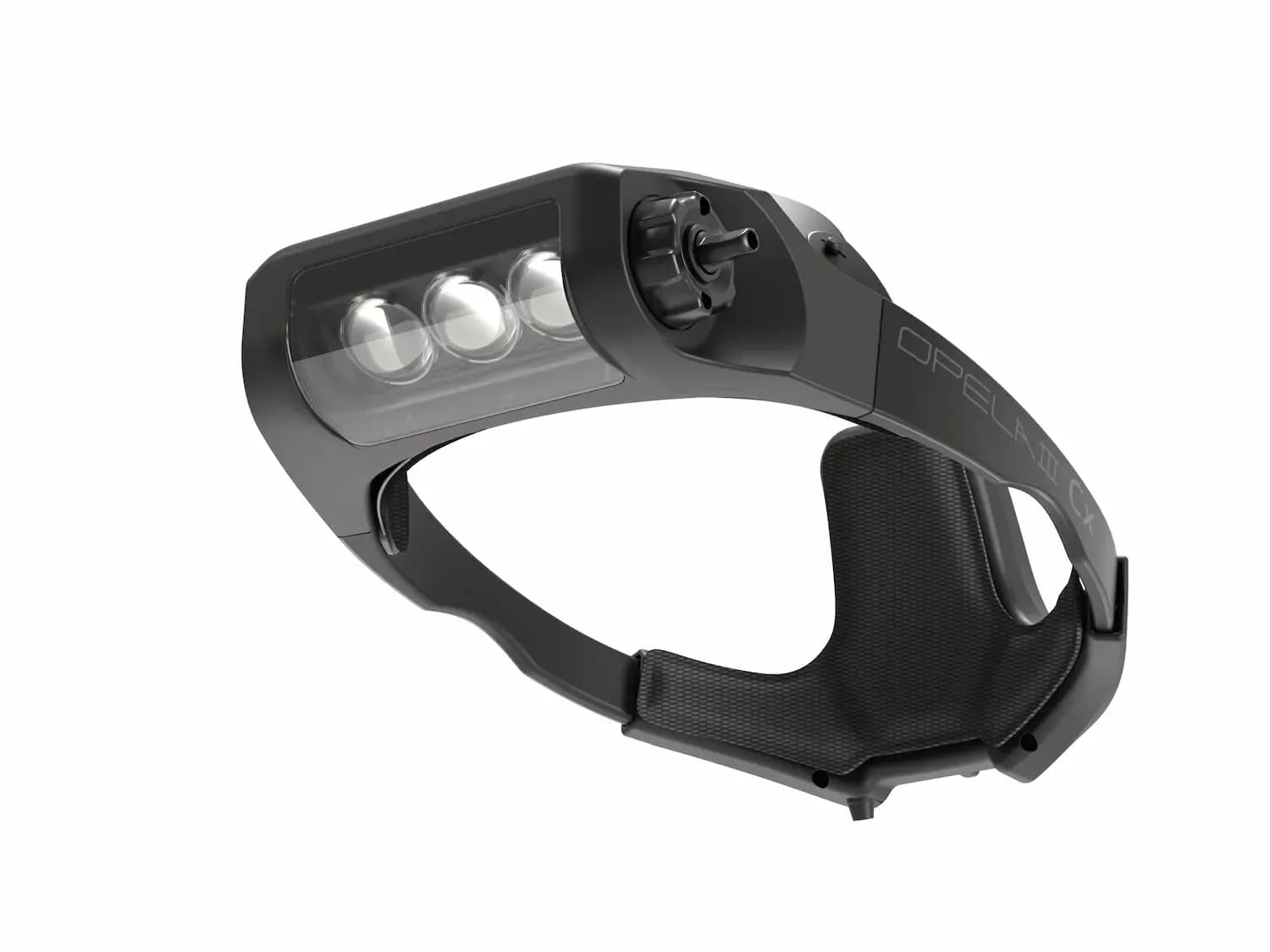
OPELA III Cx is a wearable surgical lighting system from Taiyo Corporation designed to provide light from the professional’s position. Its relevance comes into play when the team needs to assess portable lighting close to the working field and adaptable to specific operating room scenarios.
What OPELA III Cx is within surgical equipment
OPELA III Cx belongs to operating room lighting systems, but with an approach different from that of a fixed ceiling light. By definition, it does not replace other lighting resources: it is assessed as an additional tool for procedures in which it may be useful to have light from the professional’s own point of view.
Within the Optimedic Surgery product range, OPELA III Cx is presented as a wearable solution. This means its concept is based on accompanying the user’s movement rather than relying exclusively on a light source installed in a fixed position.
The OPELA III Cx product sheet allows you to review the product in more detail before assessing whether it fits a specialty, a type of intervention, or a specific operating room setup.
When wearable surgical lighting may make sense
A wearable system may be relevant when the surgical field requires frequent position adjustments, angle changes, or work in areas where ambient light does not always reach evenly. The key is not to promise more visibility, but to assess whether the light source better follows the real dynamics of the procedure.
Some contexts in which a professional evaluation may be worthwhile are:
- Procedures in which the team changes posture or access during the intervention.
- Situations where the working field is partially affected by hands, instruments, or the patient’s position.
- Operating rooms that need to complement their lighting setup without changing the main installation from the outset.
- Procedures in which several professionals need to coordinate their position around the surgical field.
In all cases, the decision should take into account the team’s ergonomics, compatibility with the operating room organization, and how it integrates with the rest of the equipment.
OPELA compared with other surgical field lighting needs
The usual question should not be whether OPELA replaces a ceiling light, but which specific need it is intended to address. Ceiling lighting serves a structural function in many operating rooms. A portable, wearable system, by contrast, may provide a light source more closely linked to the professional’s viewpoint.
| Operating room need | Evaluation approach |
|---|---|
| General field lighting | Review the main installation and its coverage |
| Support from the user’s position | Assess a wearable system such as OPELA III Cx |
| Frequent angle changes | Analyze whether portable lighting facilitates the workflow |
| Already defined operating room setup | Check how it integrates without altering the team’s dynamics |
For a broader conceptual comparison, you can consult the article on portable versus ceiling surgical lighting, which addresses differences in use without presenting them as mutually exclusive alternatives.
Criteria for assessing OPELA III Cx before adoption
Before incorporating any wearable surgical lighting system, it is advisable to observe the real procedure. The starting point is not the product, but the workflow: who operates, how the team is positioned, which areas of the field place the highest visual demands, and what limitations appear with the available lighting.
It is also important to review the environment. In an operating room with stable equipment, OPELA can be studied as a complement. In other cases, the priority may be to review the main lighting, the team layout, or coordination among professionals.
Within Optimedic’s Surgery division, technical evaluation helps organize these questions and avoid decisions based on a single feature alone. Fit depends on the intended use, not on a generic category.
Frequently asked questions
Does OPELA III Cx replace ceiling lighting?
It should not automatically be considered a replacement. OPELA III Cx is a wearable surgical illuminator, and its suitability is assessed according to the procedure’s needs, the operating room setup, and the role of the main lighting. In many scenarios, it can be considered a complementary resource.
Which professionals may evaluate OPELA in the operating room?
It may be of interest to surgical teams that need to review how light reaches the working field from the user’s position. The evaluation should involve those participating in the procedure and, when necessary, equipment or clinical purchasing managers.
When is a technical assessment advisable?
It is advisable when there is a specific need: angle changes, recurring shadows, limitations in visual access, or doubts about how to complement the existing lighting. An assessment makes it possible to review the context before deciding whether OPELA III Cx fits.
Where can I find more information about OPELA III Cx?
The next step is to review the product sheet and resolve any doubts with a technician. From the OPELA III Cx page, you can consult the available information and prepare a conversation focused on real operating room use.
Next step to evaluate OPELA
If the team is considering wearable surgical lighting, the sensible next step is to compare the intended use with the operating room configuration. To learn more or request an assessment, you can contact Optimedic about OPELA III Cx.