

Surgical Loupes
OmniOptic: when an interchangeable magnification loupe pays off
OmniOptic lets you work with different magnifications on the same frame. A guide to assessing when this system fits and how to define the right configuration.
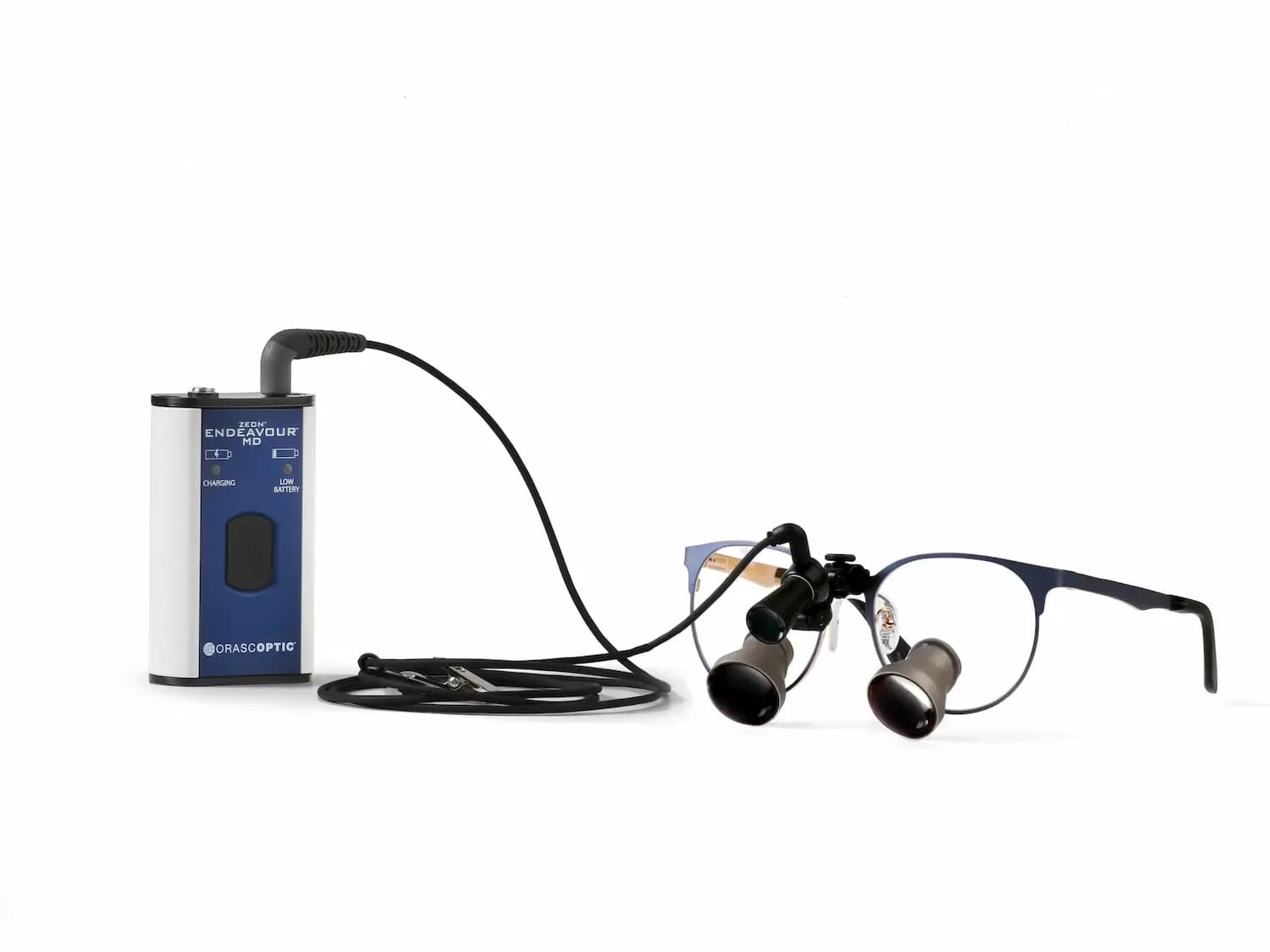
OmniOptic is a surgical loupe system with interchangeable magnification designed for professionals who need to adapt magnification to the procedure. Its magnetic attachment allows you to switch between 2.5x, 3.5x, 4.5x and 5.5x telescopes on the same frame, while maintaining the defined working distance.
What sets OmniOptic apart from a conventional loupe
With a conventional loupe, magnification is tied to a fixed telescope. If the professional wants to move from moderate magnification to a higher one, they normally need to change systems or have another complete configuration.
OmniOptic takes a different approach: one base allows different interchangeable telescopes to be used. The goal is not to choose a single magnification for every scenario, but to configure a system that can support different types of procedure.
The key difference lies in the magnetic attachment, which makes it easy to switch between magnifications without replacing the frame. In practice, this is especially useful when the schedule combines interventions with different working fields, levels of detail and visual concentration times.
To review the product within the range, you can consult the OmniOptic by Orascoptic product page or the full surgical loupes category.
OmniOptic and working distance: why it matters
One of the relevant features of OmniOptic is that the working distance is maintained when changing telescope. This avoids each transition between magnifications requiring a posture readjustment, a change in patient position or a modification of draping.
In clinical use, working distance affects cervical ergonomics, visual comfort and positional stability during the procedure. If each magnification required a different distance, the professional would have to compensate with postural changes or modify the way they work.
Keeping that reference allows the choice of magnification to focus on the optical needs of the clinical act: a wider field of view for certain phases, greater magnification for fine detail, or a progressive combination depending on the specialty.
This does not mean that all magnifications are suitable for all users. Visual adaptation, previous experience with loupes and specialty remain important factors. For that reason, it is advisable to define the configuration with technical guidance.
Professional profiles for which OmniOptic is a good fit
OmniOptic may make sense when a professional does not always work with the same magnification need. It can also be an option when progressive evolution toward higher magnifications is expected, without replacing the entire system from the outset.
It is especially suitable for these profiles:
- Professionals who alternate procedures with different levels of optical detail.
- Users who want to start with moderate magnification and move toward higher magnifications.
- Clinics where the same specialty combines broad orienting phases with finer working phases.
- Professionals who value keeping the same frame and working distance while adjusting magnification.
The choice should not be based only on the number of available magnifications. Depth of field, field of view, perceived weight, frame type and individual tolerance to high magnifications are also important.
If the main criterion is selecting the initial magnification, this guide on which magnification to choose in surgical loupes and depth of focus may be useful.
Telescopes, frames and available configuration
OmniOptic supports 2.5x, 3.5x, 4.5x and 5.5x telescopes. This combination covers everything from common magnifications in general procedures to more demanding options for work requiring greater visual precision.
| Element | Available options |
|---|---|
| System | OmniOptic with magnetic attachment |
| Magnifications | 2.5x, 3.5x, 4.5x and 5.5x |
| Working distance | Maintained when changing telescope |
| Compatible frames | DragonFly Pro, DragonFly Neo, Tempo, Tempo Refined Fit, Rydon, Triumph and Phantom |
Frame selection also influences the user experience. Factors such as facial fit, stability, bridge type, compatibility with headlight illumination and support preferences should be assessed alongside magnification.
For profiles working long hours with magnification, it is advisable to test the complete configuration: frame, telescope, working distance and lighting if applicable. The loupe is not chosen in isolation, but as part of an optical and ergonomic system.
How to assess whether OmniOptic is worth it
OmniOptic is worthwhile when the variability of procedures justifies having more than one magnification on a single platform. It can also be interesting when the professional wants to avoid making an overly narrow decision about future magnification.
Before deciding, it is worth reviewing four questions:
- Do the usual procedures always require the same level of detail?
- Is there a plan to move to higher magnifications over time?
- Is the current working distance well defined?
- Does the chosen frame suit daily use and the planned illumination?
If the answer points to changing needs, OmniOptic can offer flexibility without breaking the professional’s postural reference. If, on the other hand, the clinical workflow is very stable and the ideal magnification is already known, a fixed loupe may be enough.
Frequently asked questions
What is OmniOptic?
OmniOptic is a surgical loupe system with interchangeable telescopes using magnetic attachment. It allows 2.5x, 3.5x, 4.5x and 5.5x magnifications to be used on the same compatible frame, while maintaining the working distance when changing telescope.
Does OmniOptic force you to change posture when changing magnification?
It should not require redefining posture when changing telescope, because the working distance is maintained. Even so, proper posture depends on an accurate initial measurement, correct frame adjustment and the professional’s visual adaptation to each magnification.
Who may OmniOptic be recommended for?
OmniOptic may suit professionals who alternate procedures with different optical needs or who want to progress to higher magnification without changing the entire system. It is an option worth considering when magnification flexibility is more important than always working with a single magnification.
What magnifications does OmniOptic support?
The system supports 2.5x, 3.5x, 4.5x and 5.5x telescopes. The choice should take into account specialty, working distance, field of view, depth of focus and previous experience with surgical loupes, especially at higher magnifications.
Next step to define the configuration
The best way to assess OmniOptic is to review the procedure, target magnification, working distance and frame together. To define a suitable configuration, request technical advice on OmniOptic surgical loupes and the available trial options.