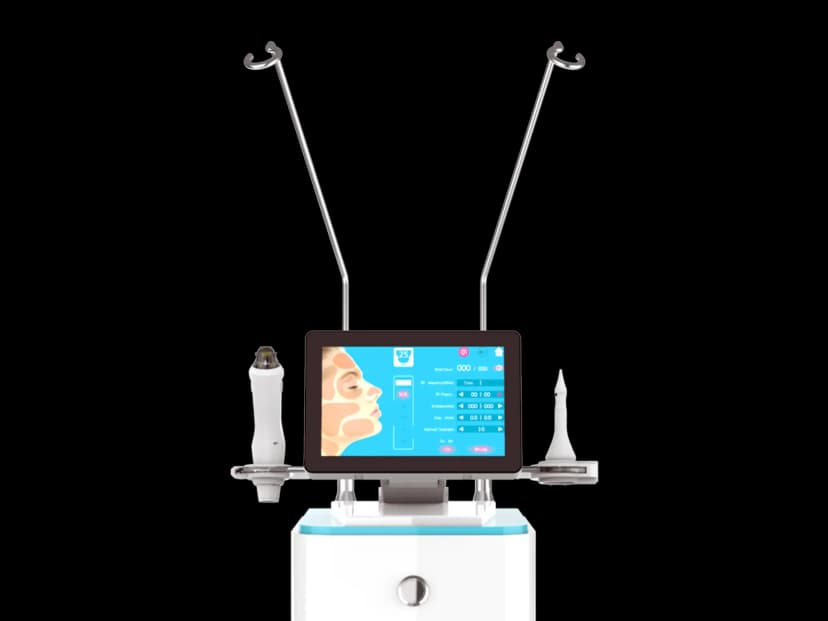

Surgery and equipment
The best technology does not decide for the professional. It helps them decide better
The integration of new platforms does not change the professional's role. On the contrary, it places even greater value on clinical judgment. We examine how aesthetic medical technology can become a tool to expand the physician's decision-making capacity without replacing their experience.

Aesthetic medical technology has evolved significantly in recent years. However advanced a platform may be, one element remains that no innovation can replace: the professional's clinical judgment. The true contribution of technology is to provide more tools for decision-making, not to replace it.
Aesthetic medicine remains a clinical discipline
Technological innovation is often presented as the main driver of change in aesthetic medicine.
However, behind every treatment there is a clinical process that begins long before any device is activated.
It all starts with an individual patient assessment, the identification of their needs, the definition of realistic goals, and the selection of the most appropriate strategy.
Technology is part of that process, but it does not lead it.
It is the professional's judgment that determines how, when, and why each tool should be used.
No two patients are the same
Even when two people seek consultation for the same reason, their needs may be very different.
Skin quality, the degree of skin ageing, medical history, expectations, and lifestyle mean that each case requires a specific assessment.
For this reason, aesthetic medicine is moving further and further away from standardised protocols and evolving toward treatments tailored to each patient.
This ability to personalise depends, to a great extent, on the professional's experience and clinical judgment.
Technology expands the physician's possibilities
A platform should not limit the specialist's way of working.
Its role is to provide the flexibility needed to adapt treatment to different clinical scenarios.
The more options professionals have to plan a procedure, the greater their ability to respond to each patient's needs.
Innovation, therefore, is not only about incorporating new features.
It is also about providing tools that respect the physician's freedom to decide.
Technology as support for clinical judgment
When a platform is designed to integrate naturally into the practice, it stops being the main focus.
It becomes a resource that makes the professional's daily work easier.
This allows attention to remain where it should always be: on the patient, on clinical assessment, and on treatment planning.
Technology provides possibilities.
Medical judgment decides how to use them.