Surgical Loupes
Surgical Loupes with LED Light: When an Integrated Headlight Pays Off
An integrated LED headlight on loupes provides coaxial light onto the magnified field and removes shadows. We analyze when it pays off and which specifications to evaluate.
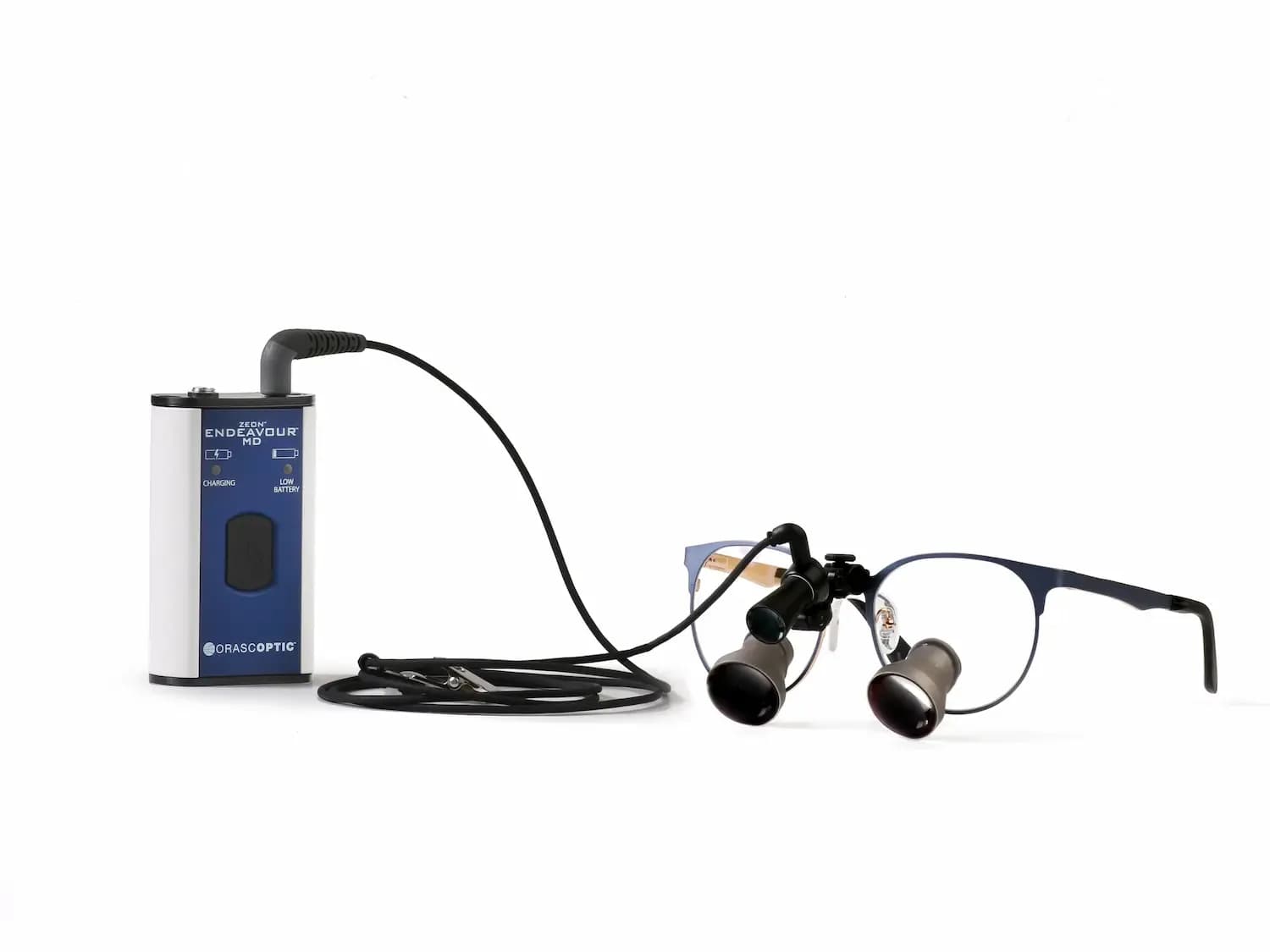
Surgical loupes with LED light integrate a frontal headlight that projects coaxial light along the surgeon's visual axis. Compared to relying solely on operating-room overhead light, they eliminate shadows in deep cavities, improve contrast over the magnified field and are especially useful from 3.5x magnification onward. The decision to add one depends on procedure type and session duration.
What an LED headlight adds to loupes
Overhead operating-room lighting —orientable ceiling lamps— is sufficient for general vision, but creates shadows in deep anatomical cavities or when the surgeon's head tilts over the field. As surgical loupes magnification increases, those shadows become critical: the field narrows and any poorly lit zone limits gesture precision.
An LED headlight projects a beam of light from the surgeon's own head, aligned with the line of sight. The light hits the field from the same angle the eye looks at it, so it does not generate lateral shadows. This is called coaxial illumination.
Within the usual range of surgical loupes, the headlight solves three problems: insufficient contrast on dark or blood-covered tissue, shadows in cavities (oral, pelvic, open thoracic), and dependence on the surgeon's posture relative to the overhead lamp.
Frame-integrated headlight vs separate system
Current headlights come in two configurations:
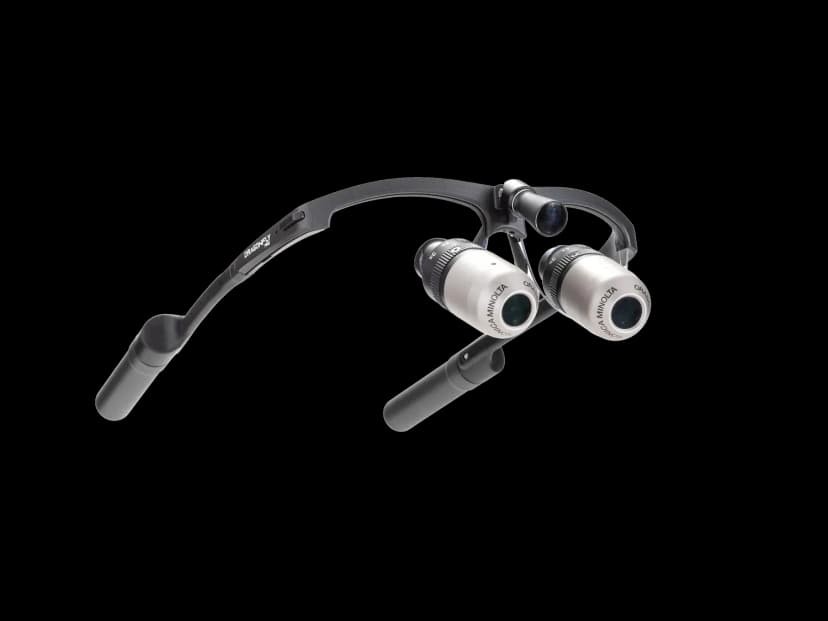
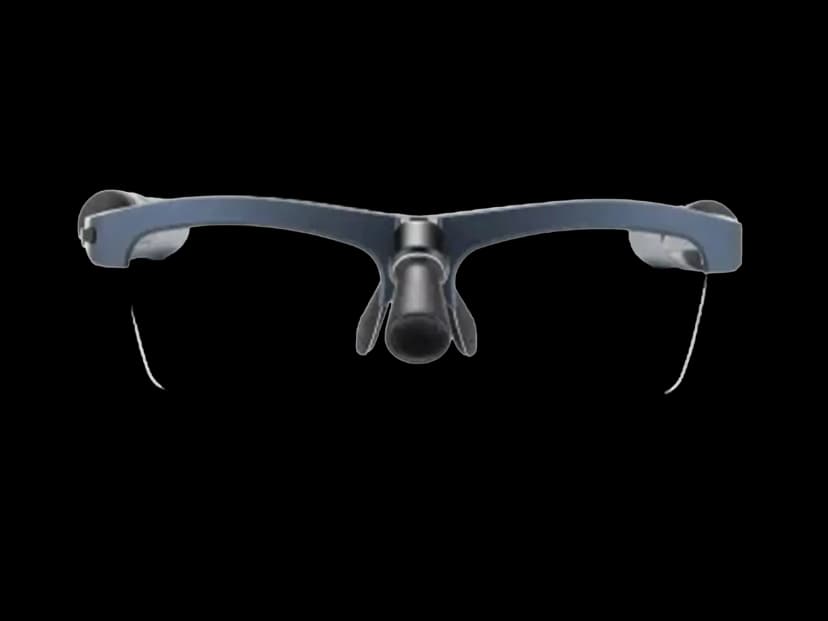
Integrated into the frame. The LED module, battery and connection are built into the loupe frame itself. The Dragonfly™ NEO range exemplifies this approach: no external cables, no belt battery pack and enough autonomy for a full operating-room session.
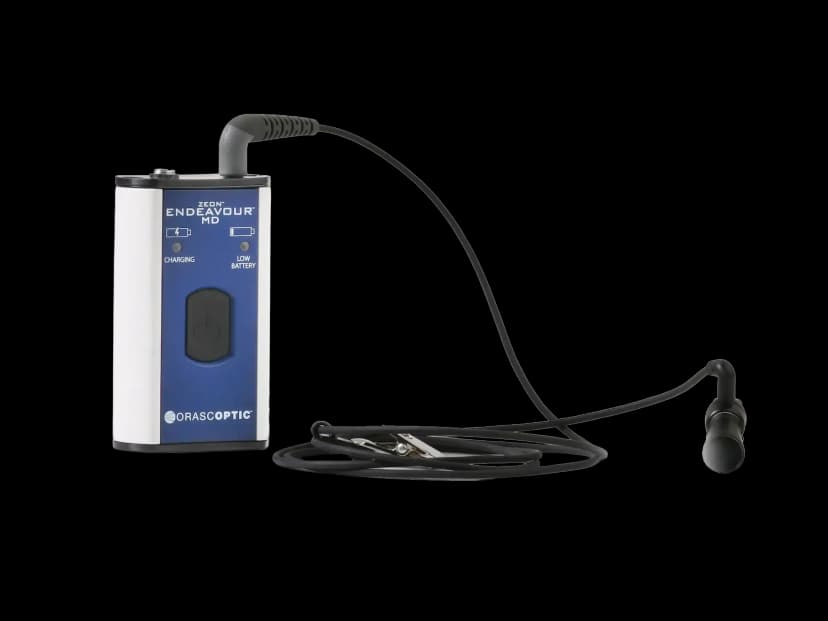
Separate system with battery pack. The LED module mounts on the loupe but draws power from an external battery connected by cable. It allows higher luminance and longer autonomy, at the cost of discomfort when the surgeon moves around.
The current trend in professional loupes is integration: lighter frames, no cables and a battery sufficient for most sessions. The packed system is reserved for contexts requiring very high luminance and many uninterrupted hours.
Specifications to evaluate in an LED headlight for loupes
Four parameters determine the clinical adequacy of the headlight:
| Parameter | Typical professional range | Impact |
|---|---|---|
| Luminance | 60–120 lm on loupe, 200+ on surgical headlight | Ability to light deep cavities |
| CRI (Color Rendering Index) | 90+ desirable, 95+ ideal | Color fidelity of tissue and blood |
| Color temperature | 5,500–6,500 K (neutral daylight) | Detail and contrast perception |
| Autonomy | 4–8 h full session | Need or not for intra-session battery swap |
| Module weight | < 30 g on the loupe | Cumulative load on nose and cervical area |
A high CRI is especially relevant in surgery: red and pink tissues must be distinguished with precision, and a low CRI flattens those differences. Color temperature around 6,000 K is considered neutral and approaches the spectrum of daytime sunlight.
When the headlight becomes essential
Three contexts where the headlight stops being optional and becomes indispensable:
Magnifications from 3.5x onward. Field of view narrows, depth of focus too. Any shadow over the magnified field is immediately perceived as loss of detail.
Procedures in deep cavities. Oral surgery, ophthalmology, ENT, gynecology, urology, open thoracic surgery. Overhead light does not reach the working plane with enough intensity.
Operating rooms with limited or variable lighting. Centers without premium ceiling lamps, shared operating rooms where lamp position isn't always optimal, or procedures performed in non-conventional rooms.
When integration doesn't pay off
Not every profile needs a headlight. It doesn't pay off in:
- 2.5x loupes with wide field and high depth of focus, in superficial general surgery
- Surgeons with short caseload (procedures under one hour) where overhead-light inconvenience is bearable
- Centers with recent premium operating-room lamps that cover the working field with real coaxial light
In those contexts, adding a headlight means extra weight, battery care and one more component to maintain.
Available models and positioning
The current frontal headlight range covers different profiles:
- Dragonfly™ NEO: full frame integration, 98 lumens, CRI 95, ~6 h autonomy. Entry to the Dragonfly line
- Dragonfly™ PRO: professional-grade integrated headlight with superior luminance and duration
- Endeavour MD™: pack system for high luminance and extended autonomy in long sessions
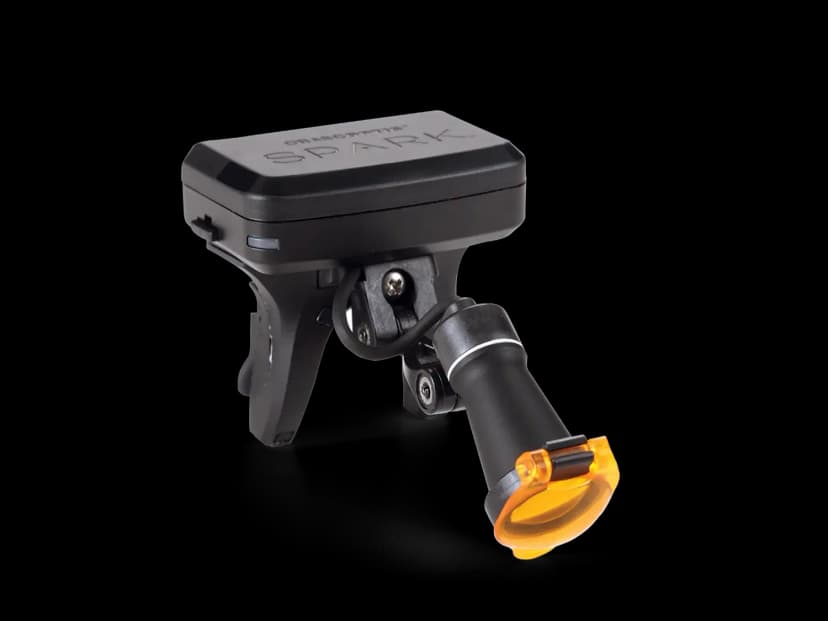
- Spark™: entry option balancing performance and weight
The choice between integrated and pack reduces in practice to session duration and willingness to carry a cable. For ambulatory surgeons and mixed consultations, integrated. For multi-hour operating rooms with demanding luminance, pack.
Frequently asked questions
From what magnification is a headlight always worth wearing?
From 3.5x the difference is clearly noticed, and from 4.5x it is practically essential. At 2.5x it remains optional and depends more on the procedure's anatomical cavity than on magnification itself.
How much does the module weigh on the head?
Current integrated systems sit between 20 and 30 grams over the frame. Added to a 60–80 gram loupe, the set lands at around 90–110 grams on the nose, perfectly tolerable in long sessions.
Does the battery last a full surgical day?
Professional integrated models declare 4 to 8 hours of continuous autonomy. For longer days, a battery swap during the intermediate break or a pack system that doubles autonomy is considered.
Does the integrated headlight heat up?
High-efficiency LEDs dissipate little heat in normal use. Professional systems incorporate passive dissipation and, in some models, a thermal sensor. The sensation of heat on the forehead only appears in extremely long sessions with sustained maximum luminance.
Can the loupe be bought without headlight and added later?
Yes. Purchase can be sequential: first the loupe, then the headlight if the surgeon confirms their practice requires it. In that case it is convenient to verify mechanical compatibility of the frame with the intended headlight model.
Deciding between a loupe with or without headlight
Adding an LED frontal headlight to surgical loupes multiplies the system's performance at medium and high magnifications and in procedures with anatomical-cavity components. The additional investment is clinically justified when the three factors —magnification, specialty and duration— point in that direction.
For basic magnifications in superficial general surgery it remains dispensable. The decision should be made after assessing the real procedure mix, not as an automatic purchase attached to the loupe.
To configure loupe plus headlight adapted to your caseload, contact the Optimedic team.