
Surgery and equipment
Surgical field visualization also shapes decision-making
Decision-making during a procedure depends on multiple factors. Among them, the quality of surgical field visualization plays a fundamental role. We examine how lighting and technological integration help create a more efficient environment for the professional.
Surgical field visualization is an essential part of the decision-making process during a procedure. Before every technical action, there is a continuous process of observation, interpretation and clinical assessment in which the quality of the perceived image plays a decisive role.
Before acting, the surgeon interprets what they see
Every surgical procedure involves a constant sequence of decisions.
Each movement is preceded by a visual analysis of the operative field, the identification of anatomical landmarks and the assessment of the next step in the procedure.
Although the professional's experience and knowledge are the factors that support these decisions, both depend on a prior condition: having adequate visualization.
Visual information is the starting point on which intraoperative judgment is built.
Visualization is much more than simply "seeing well"
At times, the quality of visualization is associated only with having sufficient lighting.
However, effective perception of the surgical field depends on the interaction of multiple elements:
| Element | Contribution during the procedure |
|---|---|
| Lighting | Supports uniform visualization of the working area. |
| Direction of light | Keeps the area of interest illuminated as the procedure progresses. |
| Ergonomics | Helps maintain a stable posture during observation. |
| Magnification systems | Improve the perception of anatomical details when the procedure requires it. |
| Technological integration | Reduces the need for adjustments that interrupt workflow. |
These factors do not act independently. They are part of the same ecosystem designed to support surgical practice.
Lighting also plays a role in the decision-making process
Lighting does not make clinical decisions.
But it does help create the conditions necessary for the professional to correctly interpret the surgical field.
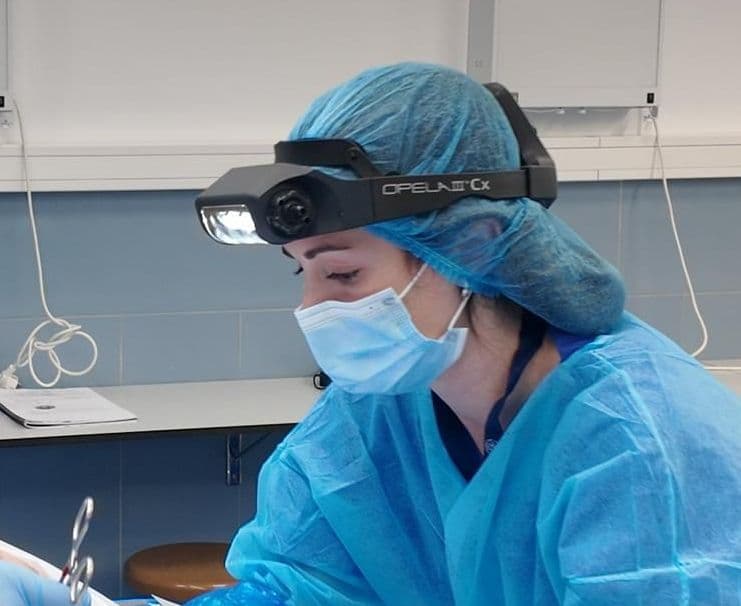
When the light remains aligned with the direction of gaze and follows the surgeon's movements, the need for readjustments during the procedure is reduced.
This supports a smoother working experience and helps maintain focus on technique and anatomy rather than on the equipment.
In this context, lighting ceases to be an accessory element and becomes part of the professional's visual environment.
Designing a coherent visual environment
Technological advances in the operating room have shown that efficiency does not depend solely on incorporating new devices.
It also depends on the ability to integrate each tool into the usual workflow.
Surgical loupes, visualization systems and lighting should not be understood as independent solutions, but as elements that jointly contribute to the perception of the operative field.
This approach is especially relevant in procedures that require continuous observation and a high degree of precision.
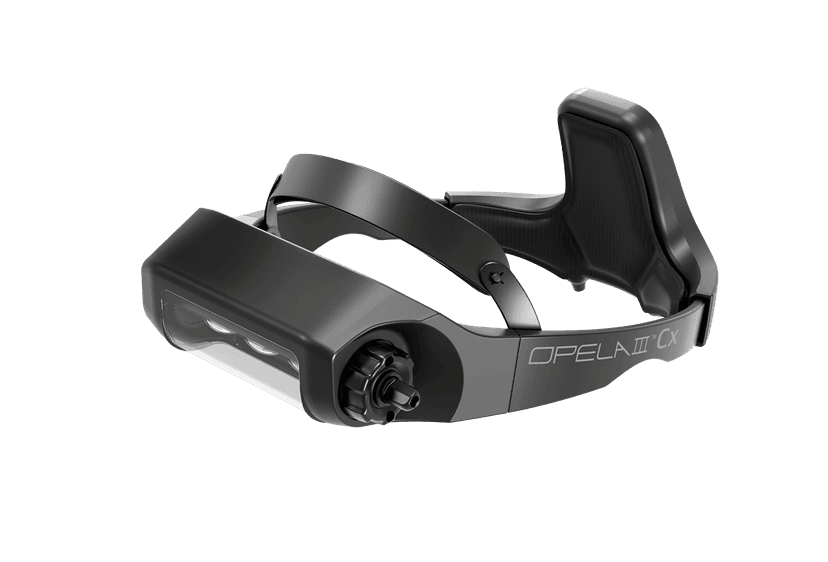
Opela III Cx: lighting integrated into the professional's vision
Within this philosophy, Opela III Cx has been designed so that lighting naturally follows the direction of the professional's gaze.
By integrating with the surgeon's visual field, it helps maintain consistent illumination over the area of interest without relying on continuous adjustments during the procedure.
More information about this solution is available at Opela III Cx. You can also explore the rest of the Surgery solutions or contact our team through Contact.
Observing with precision is also part of the procedure
Surgery does not begin with the first technical action.
It begins when the professional correctly interprets the surgical field and plans the next step.
For this reason, the quality of visualization should not be understood solely as a technical matter, but as an element that supports the decision-making process throughout the entire procedure.
Designing an efficient visual environment means providing the professional with the conditions needed to focus on what truly matters: the procedure and the patient.
Frequently asked questions
Why is surgical field visualization important during a procedure?
Because the surgeon makes decisions continuously based on the available visual information. Adequate visualization helps identify anatomical structures and follow the progress of the procedure.
Does lighting only affect visibility?
Lighting is part of the professional's visual environment. Its integration with the rest of the equipment can help maintain consistent perception of the surgical field and support a more continuous workflow.
What role does a lighting system such as Opela III Cx play?
Opela III Cx is designed to provide illumination aligned with the direction of the professional's gaze, integrating naturally into surgical practice.
How does Optimedic support hospitals and professionals?
Optimedic advises hospitals, clinics and specialists on selecting visualization, lighting and surgical equipment solutions tailored to the needs of each procedure.
Visualization is also part of surgical precision
Precision does not depend solely on technique or experience. It also requires an environment that facilitates observation and reduces interference during the procedure.
At Optimedic, we work with technologies that help integrate lighting, visualization and ergonomics into the surgical workflow, offering solutions such as Opela III Cx, designed to support the professional where every decision truly begins: in the way the surgical field is observed.