
Surgical Loupes · Ergonomics and health
DragonFly Pro: when to prioritize lightness in long surgeries
Practical guide to assessing DragonFly Pro within the Orascoptic ecosystem when weight, balance, and the full setup matter in prolonged procedures.
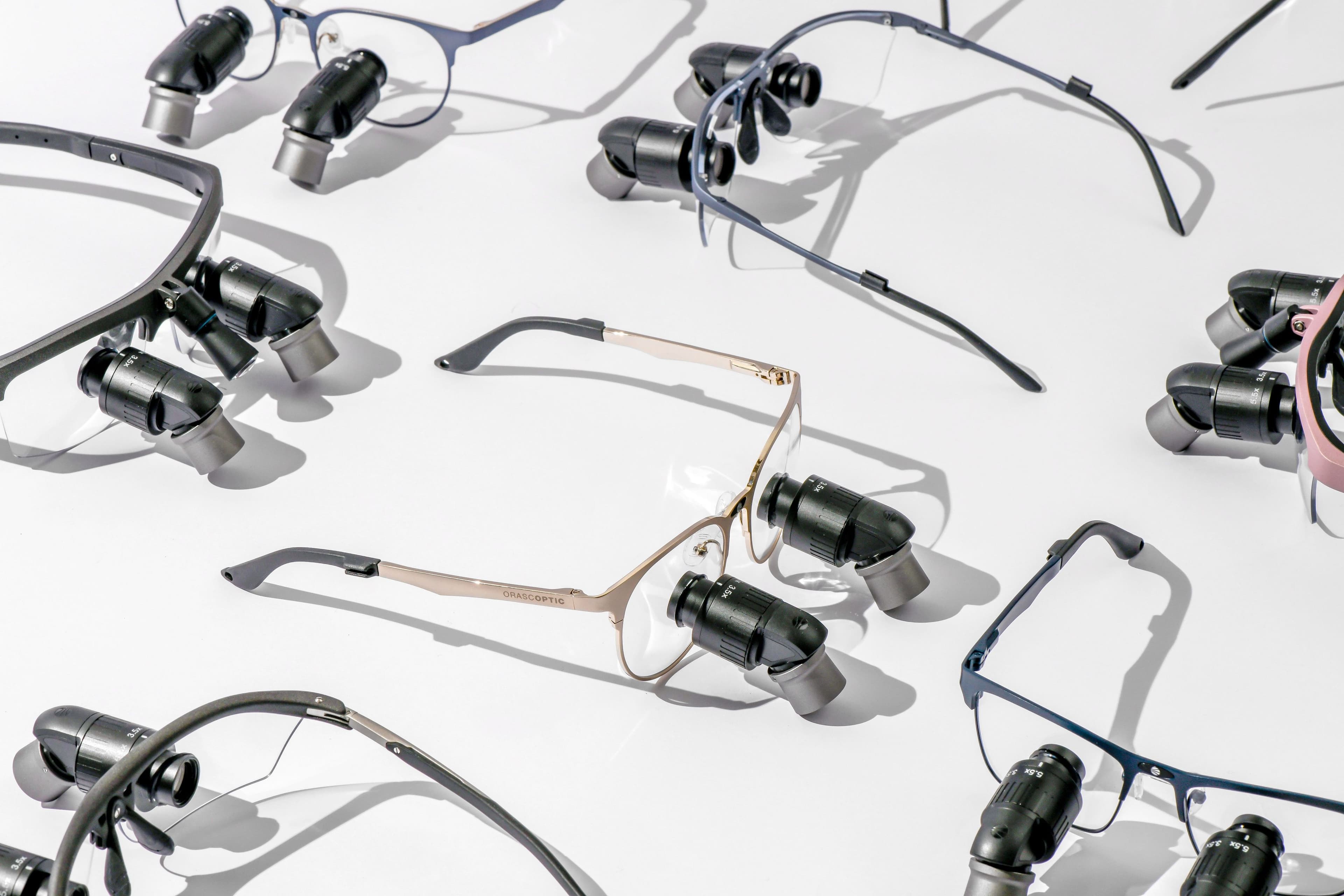
DragonFly Pro is a frame from the Orascoptic ecosystem that can make sense when the professional is looking for a lightweight, well-balanced setup for long procedures. Its selection should be assessed together with the loupes, working distance, and frontal lighting, not as an isolated component.
DragonFly Pro within the Orascoptic ecosystem
In the configuration of surgical loupes, the frame is not a secondary detail. It is the support point of the entire system: optics, possible frontal illuminator, and adaptation to the professional’s face. For that reason, DragonFly Pro should be understood as part of a complete solution within the Orascoptic range available at Optimedic.
The choice of a frame influences the feeling of stability, weight distribution, and comfort during extended use. In specialties where the professional maintains the same posture for long periods, these factors can affect the tolerance of the equipment throughout the day.
Before deciding, it is advisable to review the range of Optimedic Loupes solutions, where frames, loupes, and lighting are approached as complementary elements. This perspective helps avoid unbalanced configurations: a frame suitable for one type of optics may not be the right option if a frontal illuminator is added or the magnification is changed.
When to prioritize DragonFly Pro for lightness and balance
Prioritizing DragonFly Pro may be reasonable when the main criterion is to maintain a comfortable setup during long surgeries, extended clinical sessions, or repetitive procedures. Lightness should not be understood only as lower weight, but as a combination of fit, stability, and proper load distribution.
In practice, this approach is worth considering when several conditions apply:
- The professional works in sustained postures for long periods.
- Loupes are used routinely, not just occasionally.
- Frontal lighting is part of the clinical setup.
- There is sensitivity to nasal, auricular, or cervical pressure.
- A frame is needed that follows movement without creating a feeling of instability.
The goal is not to attribute any direct clinical effect to a frame, but to choose a support that is consistent with the real way of working. In long procedures, small fit issues can become more noticeable than in occasional use.
Usage variables to consider before choosing the frame
Choosing DragonFly Pro should be done by considering the whole setup. The same frame may behave differently depending on the selected magnification, working distance, or type of frontal lighting included.
| Variable | Why it matters |
|---|---|
| Magnification | Determines the type of optics, the field of view, and depth of focus. |
| Working distance | Must adapt to the professional’s actual posture, not the other way around. |
| Frontal lighting | Adds a component to the setup and requires assessing balance and fixation. |
| Facial fit | Determines stability, contact points, and the sense of comfort. |
| Procedure duration | Makes weight, pressure, or poor adaptation issues more apparent. |
At this point, reviewing the category of Orascoptic loupes frames allows you to compare options from the perspective of fit and intended use. The frame should support the optics, not limit them.
Lighting also deserves attention. In many surgeries, a well-integrated headlight makes it easier to work with an illuminated field without relying solely on ambient light or the external lamp. That is why, if lighting is expected to be used, it is advisable to review the frontal illuminators for loupes before finalizing the setup.
When to review the complete configuration
Choosing DragonFly Pro in isolation may be insufficient if the professional has not yet defined magnification, working distance, or the need for lighting. In those cases, the decision should be expanded into a full system review.
This review is especially useful when changing specialties, increasing daily wearing time, or moving from working without integrated lighting to adding a frontal illuminator. It is also recommended if recurrent discomfort appears related to frame support, head inclination, or the need to lean too close to the working field.
A balanced configuration combines three aspects: vision, posture, and intended use. If one of them is defined without considering the others, the result may not fit the professional’s day-to-day work.
Frequently asked questions
Is DragonFly Pro suitable for long surgeries?
DragonFly Pro can be considered for long surgeries when a lightweight and balanced frame is sought within the Orascoptic ecosystem. Suitability depends on the complete setup: type of loupe, magnification, working distance, need for frontal lighting, and fit on the professional’s face.
Should DragonFly Pro be chosen before the loupes?
Not necessarily. The frame, loupes, and illuminator should be selected as a system. Defining magnification and working distance first helps determine which frame offers the best fit and balance for the real way of working.
Does frontal lighting affect the choice of DragonFly Pro?
Yes. Adding a frontal illuminator changes the setup and can influence the feeling of weight, stability, and load distribution. That is why it is advisable to assess the frame together with the headlight, especially if it will be used during prolonged procedures.
When is it advisable to request advice about DragonFly Pro?
It is advisable to request advice when use will be frequent, procedures are long, or there are doubts about magnification, working distance, and lighting. Guided fitting allows the complete setup to be assessed before arranging a demonstration.
Assess DragonFly Pro with a guided demo
Before deciding, it is recommended to review fit, intended use, and the complete setup. To assess DragonFly Pro within a loupes and lighting system, you can request technical advice on illuminators and configuration from the Optimedic team.